


Decodable Books for UFLI Foundations Lesson 99: -s/-es
We believe every child deserves books they can decode with confidence, one spelling pattern at a time. The stories for UFLI Lesson 99 use the suffixes -s and -es, as in ants, cats, boxes and wishes. Children see how a small ending changes what a word means, and several of these s and es books are free to read online.
Free

Dog Springs at the Ball!
Coach Vic pulls a mysterious ball from an old trunk and promises to teach the kids his favourite game ever. There’s just one rule: no feet allowed! But Dog has other ideas about who really gets to play with that ball. Will Dog manage to keep his paws on the prize? Created to align with the UFLI Foundations scope and sequence (Lesson 99: -s/-es), this book practises words like ‘paws’, ‘hands’, ‘grins’, ‘snatches’, ‘hugs’.
Free

Is This the Hard Part?
Gran has a plan: make the best coconut bars in the world, starting from scratch. That means growing the trees, building a rickety lift to reach the coconuts, and cranking a wobbly wheel with all her might. Every step feels harder than the last, so is this finally the hard part? Created to align with the UFLI Foundations scope and sequence (Lesson 99: -s/-es), this book practises words like ‘arms’, ‘branches’, ‘jars’, ’lids’, ’trees’.
Free
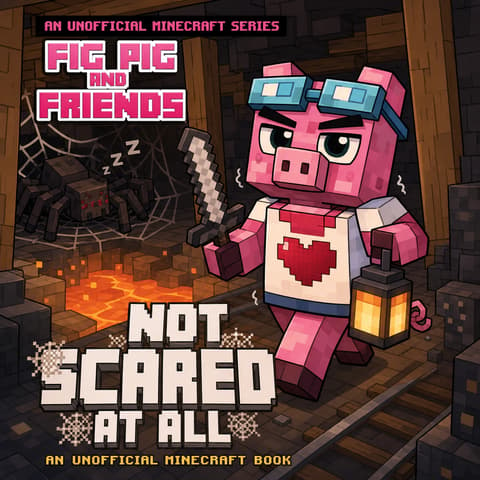
Not Scared at All
Fig Pig grabs his pickaxe, straps on his boots, and marches into the mine without a shiver of fear, sure this will be the day he finds the finest coal ever seen. But deep in the dark, old tracks, strange treasure, and something with legs far too big are waiting for him. Will he make it back out before the mine shows him why he should be scared? Created to align with the UFLI Foundations scope and sequence (Lesson 99: -s/-es), this book practises words like ‘coins’, ‘holds’, ’looks’, ’tracks’, ‘boots’.
Free
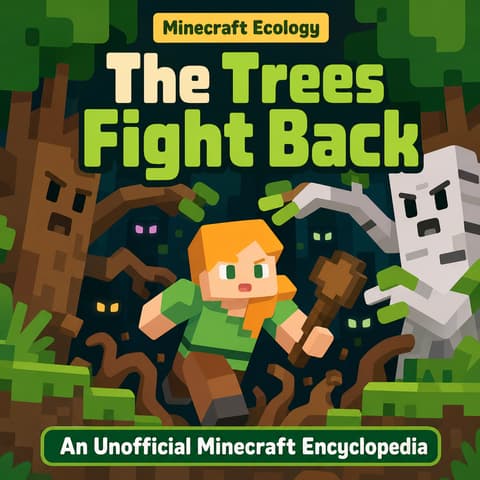
The Trees Fight Back
Deep in the forest, tall trees stretch overhead, their branches almost touching, while dark shade keeps the ground cool below. A player needs wood to make tools, boats, and homes, but the woods hide sneaky mobs behind every trunk. Will the player gather what they need before something jumps out from the shadows? Created to align with the UFLI Foundations scope and sequence (Lesson 99: -s/-es), this book practises words like ’trees’, ‘branches’, ’trunks’, ‘homes’, ‘stumps’.

Hands Off Jin's Pen!
A girl can’t stop staring at her brother’s perfect handwriting and his shiny ink pen. One day, with him out of the house, she sneaks to his desk and finds something odd stuck to the pen, something that makes bottle caps jump and paper clips leap all on their own. What could this strange little block really be? Created to align with the UFLI Foundations scope and sequence (Lesson 99: -s/-es), this book practises words like ‘caps’, ‘hands’, ‘sticks’, ‘coins’, ‘pens’.
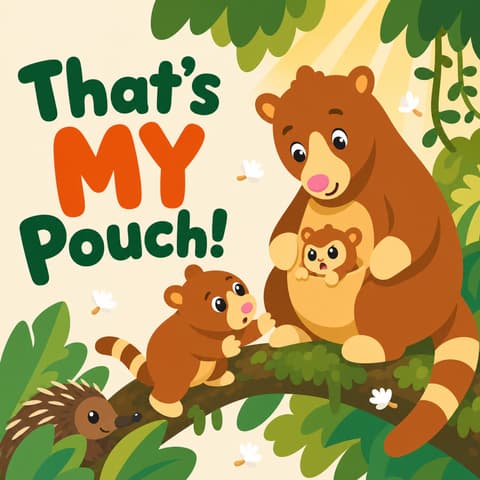
That's MY Pouch!
A baby wallaby has the cosiest spot in the whole rainforest: Mum’s pouch. But when a shiny blue feather, a fat red berry, and soft white flowers all end up tucked inside too, is there room left for anything else, including Big Brother, who is starting to feel a little pushed out? Created to align with the UFLI Foundations scope and sequence (Lesson 99: -s/-es), this book practises words like ‘holds’, ’looks’, ‘branches’, ‘pauses’, ‘catches’.
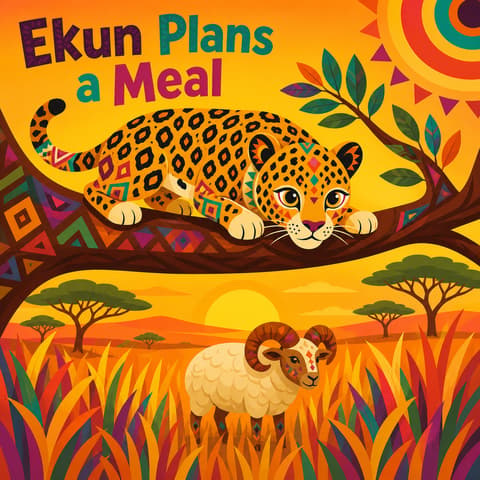
Ekun Plans a Meal
Ekun the leopard has been watching a slow, fat ram named Agbe for three days, and his stomach is empty. Ekun has claws, fangs, and speed on his side, so why does this ram seem so calm? Created to align with the UFLI Foundations scope and sequence (Lesson 99: -s/-es), this book practises words like ‘horns’, ‘hides’, ‘ribs’, ‘claws’, ‘runs’.

Hands Off My Towel
A gust of wind rips a favourite towel off the line, sending it sailing into the clouds. A girl finds it first and uses it to dry her hands, then a man scoops it up, and by dusk an old man has claimed it too. Will the towel ever make its way home? Created to align with the UFLI Foundations scope and sequence (Lesson 99: -s/-es), this book practises words like ‘grins’, ‘holds’, ‘splashes’, ‘blows’, ’trips’.

Ned Blows It
Ned is stomping through the desert in full armour, hunting treasure in a crumbling stone ruin full of traps. When his hunt for food goes badly wrong and something starts creeping closer in the sand, will Ned survive long enough to eat like a king? Created to align with the UFLI Foundations scope and sequence (Lesson 99: -s/-es), this book practises words like ‘sands’, ‘stones’, ’traps’, ‘shadows’, ‘kings’.
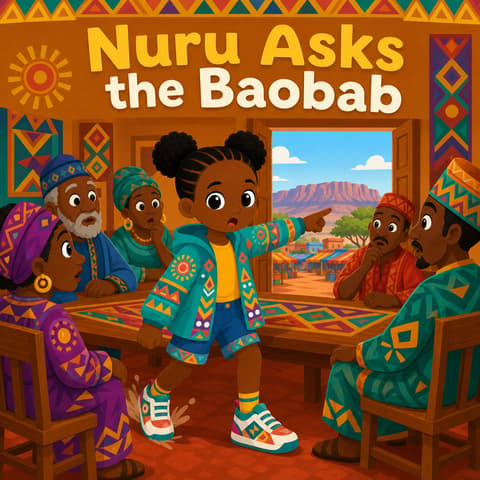
Nuru Asks the Baobab
High on a red sand ridge, an ancient baobab grows alone above a village by the sea, said to be too wise and too busy for children’s questions. But when the village well suddenly stops giving water and days of grown-up arguing lead nowhere, a girl named Nuru wonders if the old tree might know something everyone else has missed. What will she find when she finally asks? Created to align with the UFLI Foundations scope and sequence (Lesson 99: -s/-es), this book practises words like ‘climbs’, ‘shouts’, ‘stops’, ‘digs’, ‘grins’.
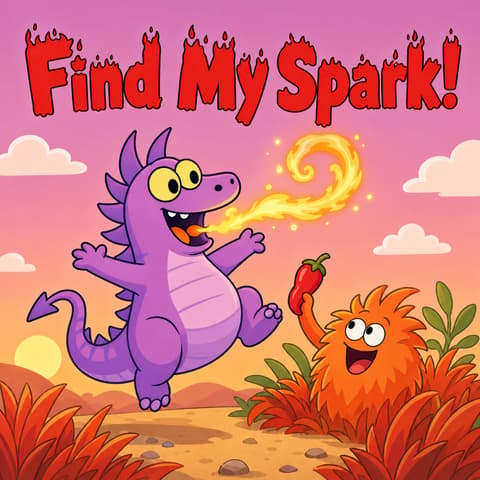
Find My Spark!
Dragon is sure he’s a natural at breathing fire, so why bother practising before the big test? He’d rather lounge on the hillside eating snacks than train with the other dragons sitting in neat rows. But when test day comes and only smoke drops from his mouth instead of flame, will Dragon find a spark of hope before it’s too late? Created to align with the UFLI Foundations scope and sequence (Lesson 99: -s/-es), this book practises words like ‘snacks’, ‘rows’, ‘drops’, ‘sparks’, ‘boats’.
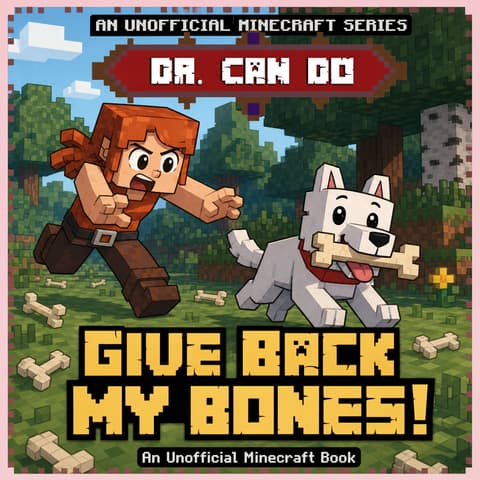
Give Back My Bones!
Jill has twelve bones and a plan: tame the wild wolf she found by the pond. But every time she gets close, the wolf snatches a bone and bolts into the trees, again and again, until Jill’s pockets feel light and her patience feels thin. Will she ever earn this cheeky wolf’s trust? Created to align with the UFLI Foundations scope and sequence (Lesson 99: -s/-es), this book practises words like ‘bones’, ‘bags’, ‘hopes’, ’looks’, ‘plans’.
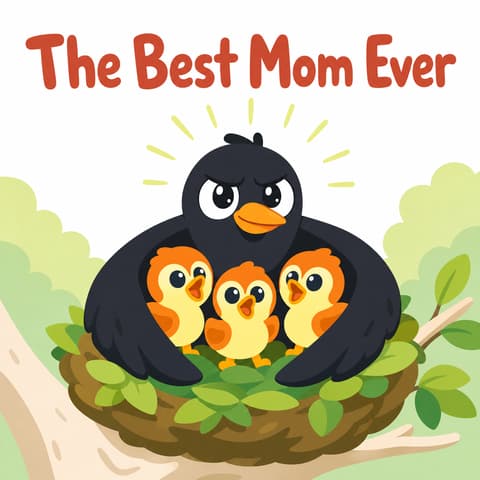
The Best Mum Ever
Bird has been guarding her eggs for weeks, humming the song her own mum once sang to her. But when her hungry tummy leads her off to chase worms over the hill, something else finds the nest first. Will she make it back before the biggest moment of her life happens without her? Created to align with the UFLI Foundations scope and sequence (Lesson 99: -s/-es), this book practises words like ‘chicks’, ‘wings’, ‘branches’, ’eggs’, ‘worms’.

His Magic Won't Sit Still
A Mage has a secret: his magic won’t stay quiet. At night, when the town sleeps, sparks fizz through his hands and he sneaks off to play “just one prank” on his sleeping neighbour. But as bricks, cactus plants, and glowing lava pile up behind him, will he ever manage to stop before someone catches him? Created to align with the UFLI Foundations scope and sequence (Lesson 99: -s/-es), this book practises words like ‘sparks’, ’looks’, ‘grins’, ‘chickens’, ‘holds’.
Decodable Books Created to Align with the UFLI Foundations Scope and Sequence
Frequently Asked Questions
When do you add -s and when do you add -es?
Most words simply take -s, as in cats, dogs and ants. Words that end in s, x, z, ch or sh take -es, as in buses, boxes, buzzes, lunches and wishes, because the extra syllable makes the word easier to say. Children working on UFLI Lesson 99 get used to checking that last sound before they choose the ending.
How can I teach the suffixes -s and -es?
A simple test is to say the word with its ending and listen for an extra beat: box becomes boxes with two beats, while cat becomes cats with just one. You can also point out that -s sounds like /s/ in cats but /z/ in dogs, which is normal. To see why word parts like these matter, read our guide to decoding and morphology.
How are -s and -es used in a sentence?
The same endings do two jobs. On nouns they show more than one, as in two foxes ran, and on verbs they show that one person or thing is doing the action, as in she runs or he fixes it. Reading both kinds in short stories helps children notice the ending and think about what it means, which supports understanding as well as decoding.
Why don't we say sheeps?
Some English nouns break the -s pattern. Words like sheep, fish and deer stay the same for one or many, and others change inside the word, like mouse and mice. When young children say sheeps or mouses, it usually shows they have learned the regular pattern and are applying it everywhere, which is a normal step in language development.
Bookbot is not endorsed by or affiliated with UFLI (the University of Florida Literacy Institute) or Jolly Learning Ltd. UFLI Foundations and Jolly Phonics are trademarks of their respective owners.