


Decodable Books for UFLI Foundations Lesson 76: Ending Patterns Review
Every child deserves the chance to see their hard work come together in one story. Written for UFLI Lesson 76, these decodable books review recent word endings, such as tch and dge, long vowels in child and cold, y as a vowel in my and baby, and -le in table. Mixed stories help each pattern stick.
Free

Trust The Tricky Book
Ned’s shed looks drab, and The Book has a plan involving a beach, blue sand, and something mysterious hiding underneath it. Ned digs up sticky mud balls, bakes them into bricks, and shapes them into little pots, but the flowers he needs to fill them turn out to be guarded by a very grumpy problem of their own. Will Ned’s plan for a happy, sunny shed survive plenty of buzzing trouble? Created to align with the UFLI Foundations scope and sequence (Lesson 76: Ending Patterns Review), this book practices words like ‘sticky’, ’lucky’, ‘plenty’, ‘silly’, ’empty’.
Free

I Should Not Grab It
Deep in a dark cave, a miner’s pickaxe strikes something that glows green in the wall. One touch sends up a hiss, a blast, and a swirl of light, and suddenly the miner is standing outside under open sky, far from home, with mobs closing in fast. Can this lucky miner find safe ground before the wild bunch catches up? Created to align with the UFLI Foundations scope and sequence (Lesson 76: Ending Patterns Review), this book practices words like ‘find’, ’lucky’, ’tumble’, ‘hide’, ‘safe’.
Free

Two Tiny Grins
Steve has explored every cave and ocean, seen it all - until he finds a hidden pool with two little creatures grinning up at him. One climbs out and sits at his feet like a soggy little dog. Could this soggy, silly buddy really be picking him? Created to align with the UFLI Foundations scope and sequence (Lesson 76: Ending Patterns Review), this book practices words like ‘happy’, ‘buddy’, ‘wiggle’, ‘snuggle’, ‘soggy’.
Free
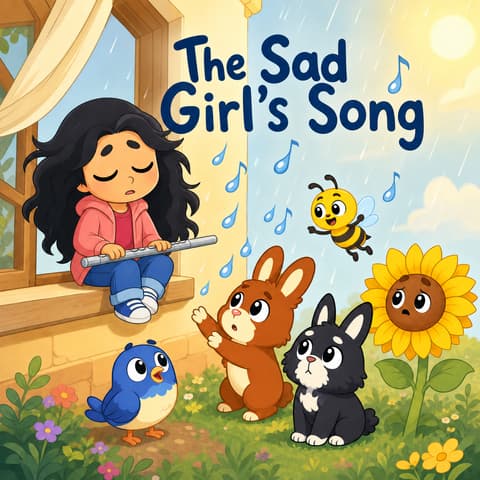
The Sad Girl's Song
A girl sits by her window playing a sad, sad song on her flute, and her tears drift up into the sky until the clouds themselves start to cry. Soon rain is falling all over the garden, puzzling a sunny rabbit and soaking a worried sunflower. Who could be playing a song so sad it makes the sky weep? Created to align with the UFLI Foundations scope and sequence (Lesson 76: Ending Patterns Review), this book practices words like ‘cry’, ‘sky’, ‘soggy’, ‘giggle’, ‘happy’.
Free

Wild Vines Topple All!
Wild vines twist and stretch across the land, and some even split in two at a tree trunk to grow in both directions! Little curls grip on so tight they do not budge, but thick tangles can block the sun and leave an old plant weak and ill. Will anyone manage these wild vines before they take it all? Created to align with the UFLI Foundations scope and sequence (Lesson 76: Ending Patterns Review), this book practices words like ’tangle’, ‘budge’, ‘dangle’, ‘chubby’, ‘giggle’.
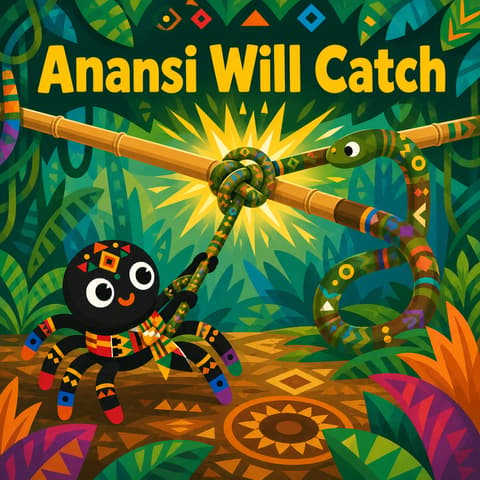
Anansi Will Catch
Anansi the spider wants Nyame’s stories for the whole world, but the Sky-God demands a bold price: bring back four dangerous, tricky creatures alive. Sly Anansi has a plan for each one, from a boastful python to a sticky little doll set out as bait. Can a tiny spider really pull off such a giant task? Created to align with the UFLI Foundations scope and sequence (Lesson 76: Ending Patterns Review), this book practices words like ‘sticky’, ‘stretch’, ’tumble’, ‘grumble’, ’tremble’.

Can Ajapa Find Gold?
Ajapa is a sly, tricky old tortoise who finds a magic golden tree deep in the jungle during a dry, hungry season. Sharing its fruit makes him the town hero, but one night greed whispers a dangerous idea: why take just one batch when he could take piles more? Created to align with the UFLI Foundations scope and sequence (Lesson 76: Ending Patterns Review), this book practices words like ‘find’, ‘gold’, ‘sly’, ’tricky’, ‘struggle’.

A Wild Walk
Ben’s dog Rex bursts out the door for “just a short walk,” and before long he’s chasing a lady’s umbrella straight into the sky. Over hilly paths, past a hedge, and into a scratchy tangle, Rex won’t stop, no matter how loudly Ben calls him back. Will Ben ever catch his wild, wiggly dog? Created to align with the UFLI Foundations scope and sequence (Lesson 76: Ending Patterns Review), this book practices words like ‘wild’, ‘hilly’, ‘hedge’, ’tangle’, and ‘wobble’.

Siti Holds the Coconut
Siti lives with her uncle among the coconut palms, doing all the chores while she waits for parents who sailed away and never came back. One morning she finds a strange golden coconut that hums instead of rattling, and she holds it close all through the night until, with a crack, it splits wide open. What could possibly be curled up inside, waiting for her? Created to align with the UFLI Foundations scope and sequence (Lesson 76: Ending Patterns Review), this book practices words like ‘hold’, ‘gold’, ‘shiny’, ‘snuggle’, ‘stretch’.
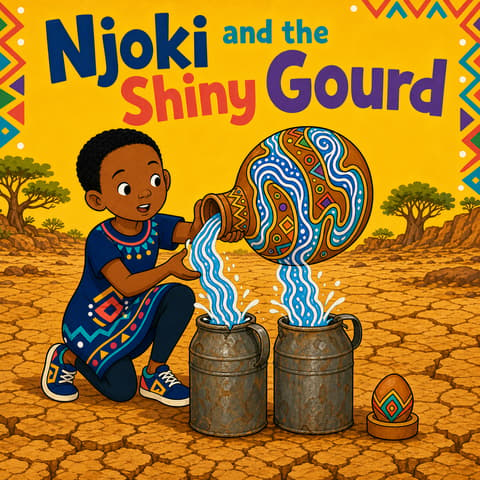
Njoki and the Shiny Gourd
Njoki treks to the dry riverbed every morning to find water for her sick mother and little brothers, and one day she digs up a strange, gourd hidden in the sand. Cold water pours out when she asks it softly, but a neighbor spots the full pot and wants more than her share. Will Njoki’s tiny secret survive being shared? Created to align with the UFLI Foundations scope and sequence (Lesson 76: Ending Patterns Review), this book practices words like ’trickle’, ‘ripple’, ’tremble’, ’twinkle’, ‘dusty’.
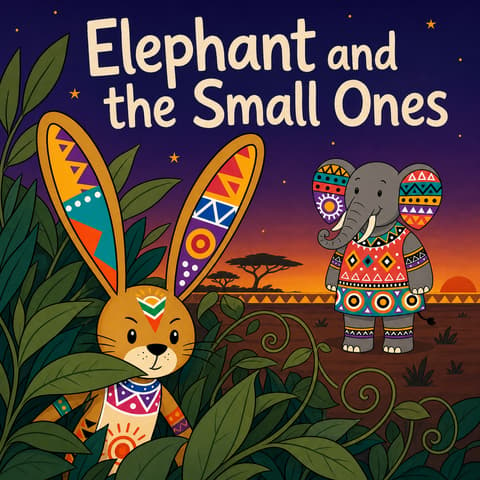
Elephant and the Small Ones
Elephant stomps through the small ones’ gardens like he owns the veld, and nobody dares stop him. Hare has a different idea: he weaves a bridle from dry grass and waits for his moment. Can one clever hare turn the biggest, boldest creature on the veld into an unlikely hero? Created to align with the UFLI Foundations scope and sequence (Lesson 76: Ending Patterns Review), this book practices words like ‘behind’, ‘muddy’, ‘kindly’, ’tremble’, ‘bridle’.

Lekimani by the Cattle
Lekimani has always dreamed of becoming a Maasai warrior, brave and strong enough to guard the herd. When a wild lion begins circling the camp at night, the elders are far away and someone must stand watch. Could a boy who is not yet a warrior find the courage to protect his cattle alone? Created to align with the UFLI Foundations scope and sequence (Lesson 76: Ending Patterns Review), this book practices words like ‘huddle’, ’tremble’, ‘wobble’, ’topple’, ‘snatch’.
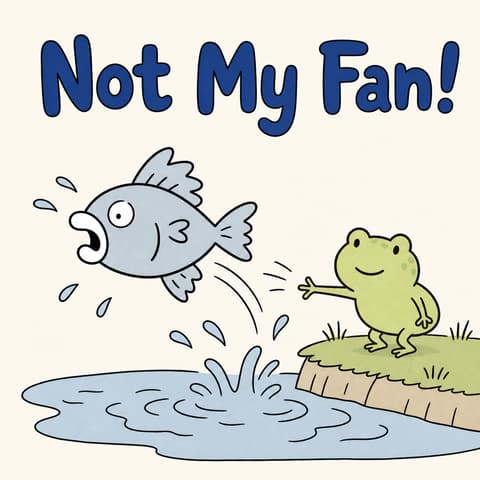
Not My Fan!
Fish is done being a fish. Legs look fun, wings look fun, everything looks better than fins, so he flops out of the water to try being a rabbit, then a bird. When a grinning cat says she’s his biggest fan, Fish is thrilled, until she lunges with her claws out. Will Fish ever find a buddy who actually likes fish for being fish? Created to align with the UFLI Foundations scope and sequence (Lesson 76: Ending Patterns Review), this book practices words like ‘wobble’, ‘silly’, ‘giggle’, ‘happy’, ‘snuggle’.

Bones Got My Bones
Skel is missing something in his big, sunny field, so he finds the perfect pup and calls him Bones. But happy little Bones loves bones a bit too much, and soon Skel’s own bones start going missing. Can Skel find a kindly way to teach his silly, bold pup to stop snatching his bones? Created to align with the UFLI Foundations scope and sequence (Lesson 76: Ending Patterns Review), this book practices words like ‘gobble’, ‘kindly’, ‘snatch’, ‘stumble’, ‘wild’.

The Cloud Above Diane
A girl loves littering more than anything else in the whole world. But one morning she wakes up to find a smelly, buzzing cloud of trash hovering above her bed, and it follows her everywhere she goes. Her friends won’t sit with her, her only pal is a little rat, and no matter how far she runs, the mess stays right behind her. Can she ever get rid of it? Created to align with the UFLI Foundations scope and sequence (Lesson 76: Ending Patterns Review), this book practices words like ‘smelly’, ‘bunny’, ‘catch’, ‘hill’, and ‘still’.

Not That Kind of Dog
A little dog watches her Mom leave every morning and waits for her chance. The moment the car turns the corner, she is off, jumping fences, chasing music, and finding a jazzy new friend in a garden full of petals. Can she make it home before Mom finds out where she has really been? Created to align with the UFLI Foundations scope and sequence (Lesson 76: Ending Patterns Review), this book practices words like ‘fly’, ‘sky’, ‘wiggle’, ‘catch’, ’lucky’.

Zom's Big Idea
Zom isn’t much of a farmer, but his animals never seem to mind. When he invites the whole village for a fresh-air country getaway, the people can’t wait to pack their bags. Will they get the cozy farm holiday they were promised? Created to align with the UFLI Foundations scope and sequence (Lesson 76: Ending Patterns Review), this book practices words like ‘happy’, ‘buddy’, ’little’, ‘mucky’, ’trudge’.
Decodable Books Created to Align with the UFLI Foundations Scope and Sequence
Frequently Asked Questions
When do you use tch and dge?
Both endings come straight after a short vowel at the end of a one-syllable word: tch for /ch/, as in match, and dge for /j/, as in badge. After a long vowel or a consonant, children use ch or ge instead, as in coach, bench, page and hinge. The National Reading Panel (2000) found that guided oral reading with feedback supports fluency, so listening to your child read these words aloud is time well spent.
What are the most common word endings for early readers?
Beyond suffixes like -s, -ed and -ing, early readers meet a set of spelling patterns at the ends of words: tch, dge, y, -le, and families like -ild, -old and -ind. Knowing these word endings lets a child read the last chunk of a word quickly, which frees attention for meaning. Our guide to decoding and morphology explains how word parts like these build longer words.
What is the ending of a word called?
When an ending adds meaning, like -ed in jumped or -ing in jumping, it is called a suffix. Spelling patterns such as tch and dge are not suffixes, because catch and badge are whole words, so teachers often call them word endings or final spelling patterns. The part of a syllable from the vowel onward, such as -atch in catch, is also called the rime.
How can I tell if my child is ready to move past UFLI Lesson 76?
A good sign is that your child reads review words such as by, my, itch, edge and little smoothly, without sounding out every letter. Try one of the ending patterns decodable books for UFLI Lesson 76 and listen for hesitations. If one pattern keeps causing trouble, reread a few books that focus on it before moving on, and see our guide to reading fluency for what smooth reading sounds like.
Bookbot is not endorsed by or affiliated with UFLI (the University of Florida Literacy Institute) or Jolly Learning Ltd. UFLI Foundations and Jolly Phonics are trademarks of their respective owners.