


Decodable Books for UFLI Foundations Lesson 65: -ing
We believe every child deserves access to quality reading materials that nurture a lifelong love of learning. This set of decodable books for UFLI Lesson 65 focuses on the suffix -ing, added to base words to show an action that is happening. Children read ing words such as acting, jumping, fishing and resting, and learn to spot the base word first.
Free

Hum It, Bug!
Bug has a big feeling in her belly and one loud wish: she wants to sing. There’s just one problem - she’s never sung a note in her life. She tries a wet song, a long song, a loud song, even a sad song, but none of them fit. Will Bug ever find a song that’s really her own? Created to align with the UFLI Foundations scope and sequence (Lesson 65: -ing), this book practices words like ‘singing’, ‘jumping’, ‘calling’, ‘rolling’, ‘wishing’.

Jill and the Hot Rock
Jill mines better than anyone in the village, and her friends love the piles of gold, coal, and redstone she brings back. But what happens if Jill ever stops? Dr Can Do is thinking hard about it, and soon the whole group is standing at the edge of a huge, hot cave, handing out pickaxes for a very risky trip. Will they find what they need without falling into the lava? Created to align with the UFLI Foundations scope and sequence (Lesson 65: -ing), this book practices words like ‘standing’, ’thinking’, ‘falling’, ‘handing’.
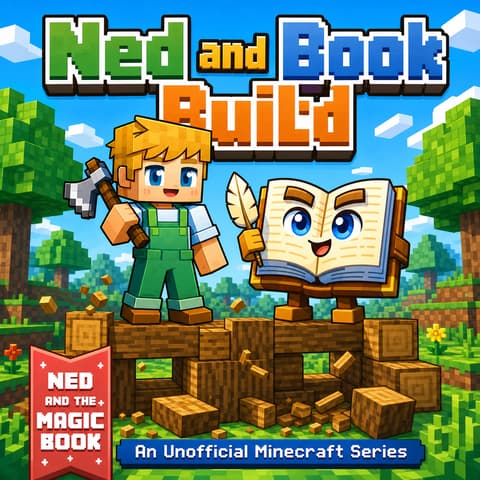
Ned and Book Build
Ned’s tiny shed is too small, so he grabs his axe and dreams up plans for a big new house with rooms he can finally fit through. The Book pops up, willing to help with chapter after chapter of building tips, but will Ned actually follow the instructions this time? Created to align with the UFLI Foundations scope and sequence (Lesson 65: -ing), this book practices words like ‘axing’, ‘checking’, ‘stacking’, ‘fixing’, ‘resting’.
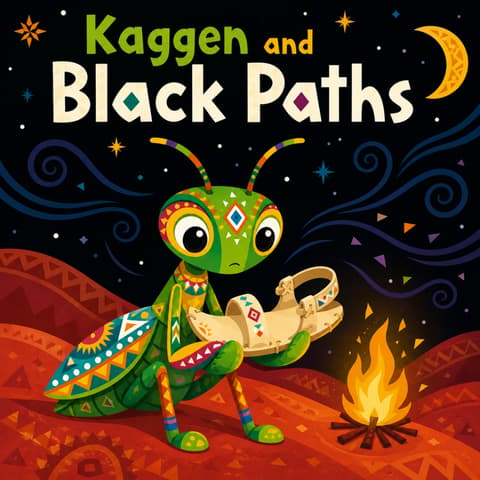
Kaggen and Black Paths
Kaggen the Mantis sits on a dark dune, and the night is so black that hunters lose their paths and a little kid goes yelling for her mom. He tries buzzing fireflies, but they keep falling and winking out. Then, hunching by his old sandal, glinting in the firelight, thinking and thinking, he gets a wild idea. Can a worn-out shoe ever light up the whole sky? Created to align with the UFLI Foundations scope and sequence (Lesson 65: -ing), this book practices words like ‘buzzing’, ‘falling’, ‘glinting’, ‘hunching’, ’thinking’.
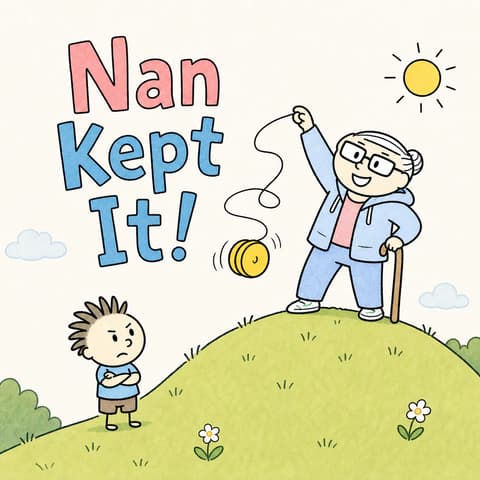
Nan Kept It!
Sam’s yo-yo is missing, and no matter where he looks, it’s nowhere to be found! He dumps out his toy box, checks behind the books, and even asks the baby, but still no luck. Then he spots someone on the hill outside, swinging something yellow through the air. Could that be his yo-yo? Created to align with the UFLI Foundations scope and sequence (Lesson 65: -ing), this book practices words like ‘hunting’, ‘checking’, ‘crashing’, ‘swinging’, ‘flicking’.

Stop That Cat!
A girl loves watching the birds fill the tree each spring morning, but she knows a certain black cat has Plans. Between helping Grandad in the garden and dusting up the house with Mom, she keeps one eye on the door. Will the cat stay shut inside, or is it already dashing for the yard? Created to align with the UFLI Foundations scope and sequence (Lesson 65: -ing), this book practices words like ‘dashing’, ‘helping’, ‘dusting’, ‘sprinting’, ’nesting’.
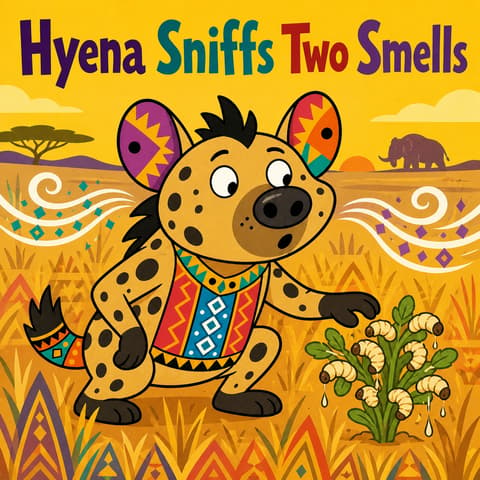
Hyena Sniffs Two Smells
Hyena’s nose is a marvel and a curse: he can sniff two feasts at once, but he can never choose between them. One day he catches the smell of a cooking fire on one side and a lion’s kill on the other, and this time the choosing goes wildly wrong, sending him sprinting, pulling, and stumbling toward a buzzing surprise. Will his nose finally get him into more trouble than he can handle? Created to align with the UFLI Foundations scope and sequence (Lesson 65: -ing), this book practices words like ‘sniffing’, ‘panting’, ‘yelling’, ‘jumping’, ‘dashing’.
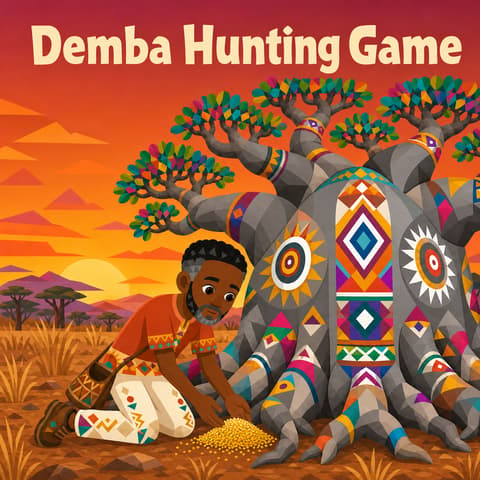
Demba Hunting Game
Demba the hunter leaves millet at the roots of an old baobab tree every morning, even in the driest years when the animals seem to vanish. When his daughter Awa notices him growing quiet with worry, a strange voice rises from the tree itself and offers him one gift. What will Demba choose to ask for? Created to align with the UFLI Foundations scope and sequence (Lesson 65: -ing), this book practices words like ‘resting’, ’thinking’, ‘asking’, ‘checking’, ‘helping’.

Can Bella Do It All?
Bess is the fastest bee in the hive, and everyone knows it. When she spots a glowing flower deep in the dark woods, she decides she doesn’t need her helpers at all. But the flower isn’t what it seems, and Bess is soon wilting and sinking, calling out for pals who aren’t there. Will anyone hear her? Created to align with the UFLI Foundations scope and sequence (Lesson 65: -ing), this book practices words like ‘filling’, ‘sniffing’, ‘rushing’, ‘clinging’, ’thanking’.
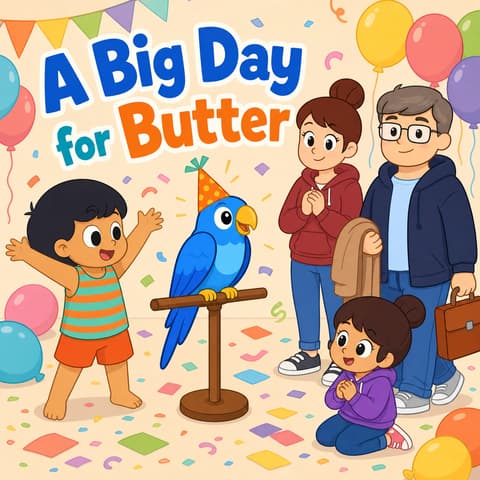
A Big Day for Butter
Ben has big plans for the summer holidays, but Mom is hanging washing, Dad is rushing to work, and his sister is crafting something for school. No one has time to play with him. So Ben comes up with a plan involving his family’s parrot, Pip, and gets busy crafting, printing and yelling out the details. Will his big idea finally get everyone together? Created to align with the UFLI Foundations scope and sequence (Lesson 65: -ing), this book practices words like ‘crafting’, ‘rushing’, ‘yelling’, ‘printing’, ‘hanging’.

Thugs on the Hill!
Two pillagers are lurking on the hill, and the village bell is clanging fast. While everyone else hides indoors, one brave player is calling for help, yelling at the crossing mobs, and swinging into action with an iron golem and two loyal dogs by their side. Will they be thrilling enough to save the village? Created to align with the UFLI Foundations scope and sequence (Lesson 65: -ing), this book practices words like ‘calling’, ‘yelling’, ‘swinging’, ‘crossing’, ‘panting’.

Lost in the Black!
Ned is completely lost in the dark woods with only his talking book for company, and things are about to get worse. When an arrow suddenly strikes him from nowhere, he realizes something is hiding in the trees, watching, waiting. Can Ned find a way to survive the night and make it home safely? Created to align with the UFLI Foundations scope and sequence (Lesson 65: -ing), this book practices words like ‘dashing’, ‘ducking’, ‘panting’, ‘squinting’, ‘yelping’.

Made to Go Fast
Dash was built to be fast, but Cal drives so slowly that even bikes on the lane pass them by. Dash is wishing for speed, watching the clock and rushing through every wash and buff. Then a new driver shows up with a big grin and a promise to go fast. Will he take Dash on the ride Dash has always wanted? Created to align with the UFLI Foundations scope and sequence (Lesson 65: -ing), this book practices words like ‘wishing’, ‘rushing’, ‘buffing’, ’thinking’, ‘flashing’.
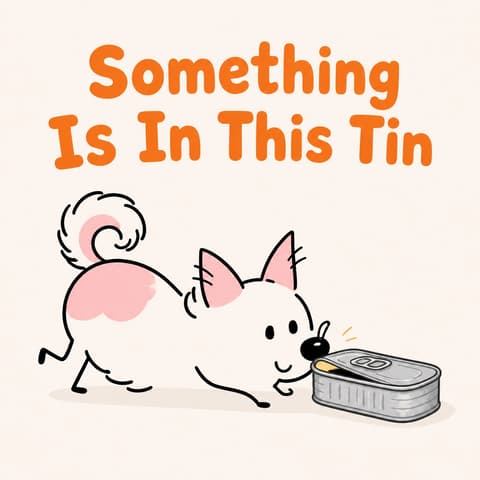
Something Is In This Tin
Dog finds a tin on the floor and just has to know what’s inside. One knock later, bright yellow paint goes everywhere, and Dog can’t resist rolling, splashing, and showing off the mess to Cat. But Cat is sitting on two tins of her own, not blinking, not impressed. Will Cat stay calm, or is more trouble about to go gushing across the floor? Created to align with the UFLI Foundations scope and sequence (Lesson 65: -ing), this book practices words like ‘splashing’, ‘rolling’, ‘blinking’, ‘gushing’.

Brave Birds at Play
A girl on the tallest fence post is yelling that she’s the best bird in the whole yard, while a small white bird watches quietly from the leaves below. Nearby, another bird is standing tall on a hill, thinking she might already be the true best of all. Who will end up proving it? Created to align with the UFLI Foundations scope and sequence (Lesson 65: -ing), this book practices words like ‘standing’, ‘yelling’, ’thinking’, ‘dashing’.
Decodable Books Created to Align with the UFLI Foundations Scope and Sequence
Frequently Asked Questions
What are words ending in ing called?
When -ing is added to a verb, as in jumping or resting, grammar books call the new word a present participle, or a gerund when it works like a noun. For young readers, it is enough to know that -ing is a suffix that shows an action is going on. Spotting suffixes quickly is part of decoding and morphology, which helps with longer words.
How do children use -ing words in sentences?
Children usually meet -ing words after a helping word like is, am or was, as in the dog is sniffing or we were resting. Reading these phrases in stories shows how the ending adds meaning, not only sound. Asking your child to act out a sentence, such as I am jumping, is a playful way to connect the word to what it means.
What are some ing words for beginning readers?
Good first ing words keep the base word unchanged, such as acting, jumping, fishing, resting, helping, singing and thinking. Children can read the base word, then add the ending, which makes long words feel manageable. The books for UFLI Lesson 65 put words like these into short stories, so children meet the suffix in context.
Is the ing in king the same as the -ing suffix?
The letters are the same, but the job is different. In king, ring and sing, ing is part of the base word and cannot be removed, while in jumping or fishing, -ing is a suffix added to a word that makes sense on its own. Stanovich (1986) showed that confident decoders tend to read more and build vocabulary faster, and noticing word parts like this is one small step in that direction.
Bookbot is not endorsed by or affiliated with UFLI (the University of Florida Literacy Institute) or Jolly Learning Ltd. UFLI Foundations and Jolly Phonics are trademarks of their respective owners.