


Decodable Books for UFLI Foundations Lesson 94: ea /ĕ/, a /ŏ/
Literacy changes lives, and it starts with books a child can read on their own. Written for UFLI Lesson 94, these stories focus on ea saying short e, as in head and bread, and a saying short o after w, as in was, wad and want. Children learn to try more than one sound, and a free title is available to read online.
Free

Hum It, Bug!
Bug feels a fizzy, buzzy urge to sing, but there’s just one problem: she has never sung a single note in her life. She asks Duck, Frog, and Big Bird to teach her, but their songs are too wet, too long, or too loud. Could a tiny cricket’s bright chirp finally be the song that’s just right for her? Created to align with the UFLI Foundations scope and sequence (Lesson 94: ea /ĕ/, a /ŏ/), this book practices words like ‘ready’, ‘instead’, ‘breakfast’, ‘sweating’, and ’thread’.

Ned and Book Build
Ned’s shed is too small, so he’s got a plan to build the perfect house, and his sneaky helper, The Book, has a chapter for everything. But Ned never quite follows instructions, so will his big build go the way he wants? Created to align with the UFLI Foundations scope and sequence (Lesson 94: ea /ĕ/, a /ŏ/), this book practices words like ‘already’, ‘ahead’, ‘sweat’, ‘steady’, and ‘squashed’.

Mine or Starve
Jill’s the only one in the village who can mine, and her friends have gotten used to it. But when Dr Can Do wonders what happens if Jill ever takes a trip, Tom realizes no Jill means no coal, no coal means no oven, and no oven means no pumpkin pie. Could they really learn to mine for themselves before it’s too late? Created to align with the UFLI Foundations scope and sequence (Lesson 94: ea /ĕ/, a /ŏ/), this book practices words like ‘already’, ‘ahead’, ‘dread’, ‘steady’, ‘sweat’.
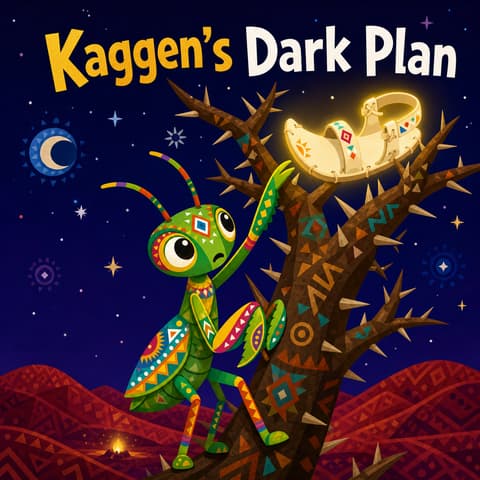
Kaggen's Dark Plan
Kaggen the Mantis can’t stand another dark night in the Karoo, so he flings glowing fireflies into the sky, but they only drift back down. When his own worn old sandal flies off his foot and lands in the dust, glowing faintly gold in the firelight, could it hold the answer he needs? Created to align with the UFLI Foundations scope and sequence (Lesson 94: ea /ĕ/, a /ŏ/), this book practices words like ‘spread’, ’thread’, ‘watches’, ‘heavens’, ‘bedspread’.

Nan Kept It!
A yo-yo has vanished, and no amount of searching turns it up. Toy boxes get dumped, drawers get emptied, and still nothing. Could someone else already have it? Created to align with the UFLI Foundations scope and sequence (Lesson 94: ea /ĕ/, a /ŏ/), this book practices words like ‘ahead’, ‘breath’, ‘dread’, ’thread’, ‘already’.

Stop That Cat!
A girl loves watching the birds in her garden each morning, but she has to stay ready for one sneaky black cat with big plans of its own. When a loud thump echoes from inside the house, she rushes in to check, only to find the cat already missing. Could it already be heading somewhere it shouldn’t? Created to align with the UFLI Foundations scope and sequence (Lesson 94: ea /ĕ/, a /ŏ/), this book practices words like ‘ready’, ‘heading’, ‘watching’, ‘already’, ‘instead’.

Hyena Wants Both
Hyena’s nose is so good he can smell two feasts at once, and that is exactly his problem. When the wind blows two ways, he wants both meals, and refuses to pick just one. What happens when a hyena tries to chase two smells at the same time? Created to align with the UFLI Foundations scope and sequence (Lesson 94: ea /ĕ/, a /ŏ/), this book practices words like ‘head’, ‘ahead’, ‘wants’, ‘instead’, ‘breath’.
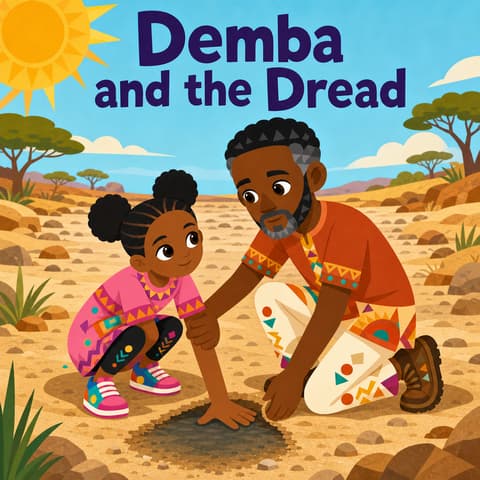
Demba and the Dread
Demba is a hunter who never earns much, but every morning he still leaves grain at the roots of an old baobab tree. When the weather turns dry and the herds wander far ahead of him, his sharp daughter Awa watches him hide his dread. Then one evening at the tree, Demba hears a voice, and it wants to give him a gift. What will he ask for? Created to align with the UFLI Foundations scope and sequence (Lesson 94: ea /ĕ/, a /ŏ/), this book practices words like ‘dread’, ‘ahead’, ‘wander’, ‘breakfast’, ‘wealthy’.
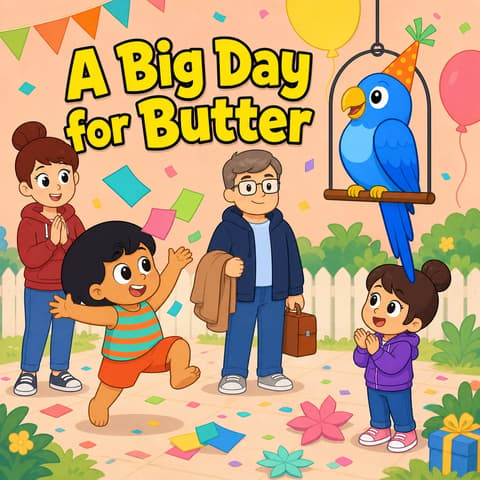
A Big Day for Butter
Bon has big plans for summer, but Mom has washing, Dad has work, and Su has her own project. Will anyone want to play with him? Then he spots Su’s colorful paper and gets an idea involving Butter, the family’s feathery parrot. Created to align with the UFLI Foundations scope and sequence (Lesson 94: ea /ĕ/, a /ŏ/), this book practices words like ‘ready’, ‘spread’, ‘feathery’, ‘breakfast’, ‘swallows’.

The Lost Bee
Bess is the fastest bee in the hive, and she’s sure she doesn’t need her team to fetch the queen’s nectar. But when a glowing purple flower up ahead catches her eye, she flies off alone, chasing something far more dangerous than she knows. Will Bess make it back before the forest swallows her whole? Created to align with the UFLI Foundations scope and sequence (Lesson 94: ea /ĕ/, a /ŏ/), this book practices words like ‘ahead’, ‘instead’, ‘ready’, ’threat’, ‘wants’.
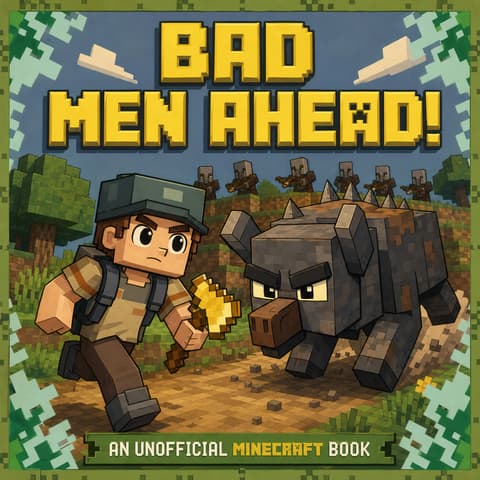
Bad Men Ahead!
A pillager raid is closing in on the village, and one defender, an iron golem, and two loyal dogs are all that stand ahead of the danger. Waves of foes keep coming, but nothing has prepared them for the huge beast that watched from the trees. Can they hold their heads high and stop the threat before it’s too late? Created to align with the UFLI Foundations scope and sequence (Lesson 94: ea /ĕ/, a /ŏ/), this book practices words like ‘ahead’, ‘dread’, ‘bread’, ‘watched’, ‘heads’.
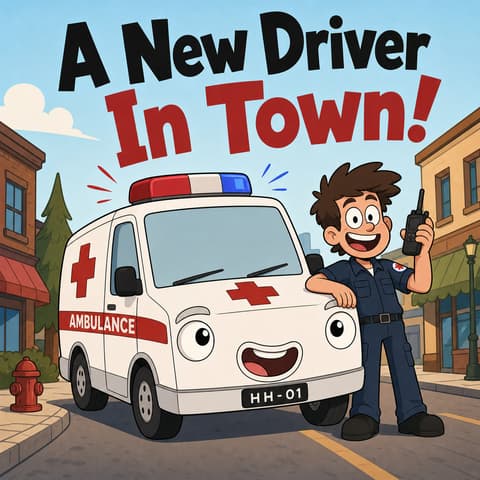
A New Driver In Town!
A new ambulance was built for speed, but its driver, Cal, moved at a slow, steady pace that drove it crazy. Washing, watching the clock, waiting, it wanted a driver who wanted to go fast, not steady. Then a new driver named Drew showed up with a grin and a wild plan. Would this be the fast ride the ambulance always wanted? Created to align with the UFLI Foundations scope and sequence (Lesson 94: ea /ĕ/, a /ŏ/), this book practices words like ‘steady’, ‘ready’, ‘ahead’, ‘instead’, and ‘already’.
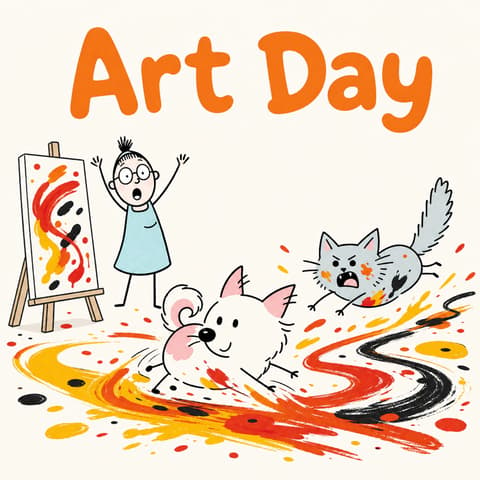
Art Day
Rex the dog knocks over a tin and gets covered in paint from head to toe, then chases Cat straight into trouble. When both pets end up dripping in color and racing toward Pam’s easel on Art Day, what will happen to her perfectly blank canvas? Created to align with the UFLI Foundations scope and sequence (Lesson 94: ea /ĕ/, a /ŏ/), this book practices words like ‘spread’, ‘head’, ‘already’, ‘breath’, ’leapt’.
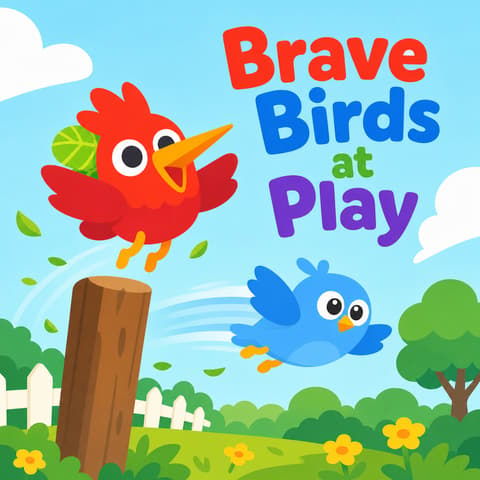
Brave Birds at Play
Red Bird thinks she’s already the best flyer in the whole yard, and struts around the fence post to prove it. But high on a meadow hill, a quiet yellow bird wonders if the best bird might be standing somewhere else entirely. As orange, green, and blue birds race, swoop, and soar, each one believes they’ve found their own kind of best. Who will win this feathered contest? Created to align with the UFLI Foundations scope and sequence (Lesson 94: ea /ĕ/, a /ŏ/), this book practices words like ‘feathers’, ‘meadow’, ‘ahead’, ’leapt’, ‘weather’.
Decodable Books Created to Align with the UFLI Foundations Scope and Sequence
Frequently Asked Questions
What words have ea as a short e sound?
Common short ea words include head, bread, thread, breath, ready, heavy, feather and weather. Many of them end in d or th, but that is a hint rather than a rule, since bead uses the long sound. The decodable books for UFLI Lesson 94 give children plenty of short ea words to read in context, so the pattern becomes familiar.
How do children know when ea says short e?
Children learn to be flexible here, because no single rule predicts it. A good routine is to try the long e sound first, as in eat, and switch to short e if the word does not make sense, as in head. The National Reading Panel (2000) found that systematic phonics instruction helps children in the early grades, and teaching a clear plan for tricky teams fits that approach.
How do you know if a word has ee or ea?
Both ee and ea can spell long e, so the sound alone will not tell a child which to write. Meaning often helps with pairs that sound the same, such as meet and meat, see and sea, or week and weak. Children remember these spellings by reading them many times, a process explained in our guide to orthographic mapping.
Why does a sound like short o in words like was and want?
When a comes after w, it often says the short o sound, as in was, want, wash, wasp, swap and watch. The same shift happens after qu in words like squash and squad. Pointing out the w before the a gives children a quick clue, which makes words like wad much easier to read in a story.
Bookbot is not endorsed by or affiliated with UFLI (the University of Florida Literacy Institute) or Jolly Learning Ltd. UFLI Foundations and Jolly Phonics are trademarks of their respective owners.