


Mystery Books for Kids
Our mission is making literacy accessible to all children, because reading opens doors to endless possibilities. This collection engages young readers ages 5 to 9 with puzzles and detective adventures. Each book features intriguing cases to solve and clues to discover that develop critical thinking skills.
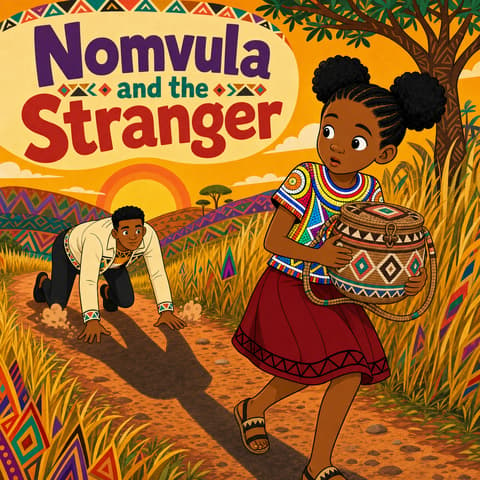
Nomvula and the Stranger
Nomvula is the cleverest tracker in her village, able to read a footprint like a face, so why does she slip a hollow reed and three marula fruits into her marriage bag before following her handsome new husband home? When bones lie at his gate and a lion’s paw print appears beside a man’s, can she outwit him before he catches her? A brave folktale of wits and courage. This Bookbot level practises the /ʃ/ sound with words like ‘attention’, ‘motion’, ‘question’, ‘situation’, and ‘caution’.
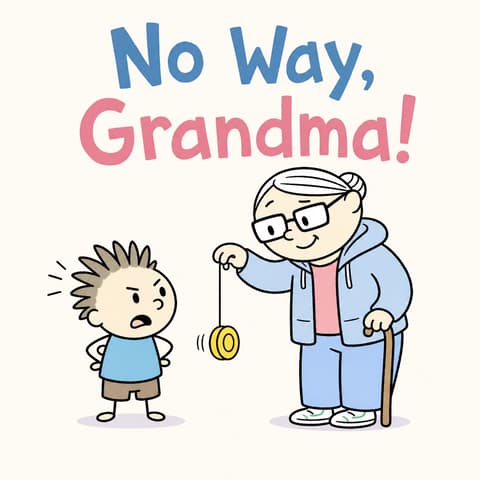
No Way, Grandma!
Have you ever lost something really special and hunted for it everywhere? When a favourite yellow yo-yo goes missing, one determined kid becomes a detective on a mission - dumping out toy boxes, crawling behind the television, and picking dust bunnies from their hair. But who could have taken it, and where on earth could it be? Get ready for a surprise you won’t see coming! This decodable reader practises 3+ syllable words such as ‘detective,’ ‘suddenly,’ ‘remember,’ and ‘ridiculous.’
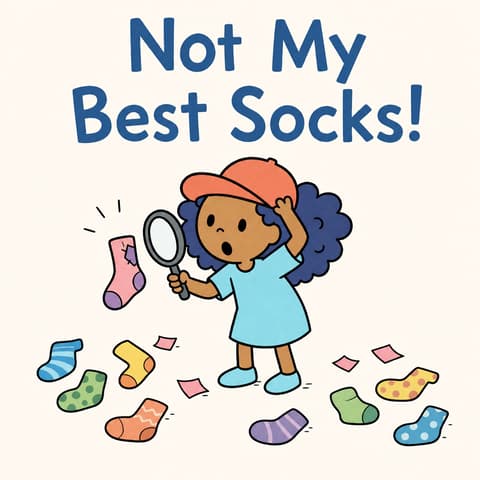
Not My Best Socks!
Kate’s best socks are GONE! Vanished from their special little box without a trace. Who would take them? And what is that trail of pink scraps leading to Mum’s sewing room? Armed with her looking glass and two mismatched socks, Kate sets off to crack the case of her missing favourites. But when she bangs on Mum’s door, the surprise waiting inside is not at all what she expected! This decodable reader practises the ‘wh’ sound in words like ‘what,’ ‘when,’ ‘where,’ ‘whew,’ and ‘which.’
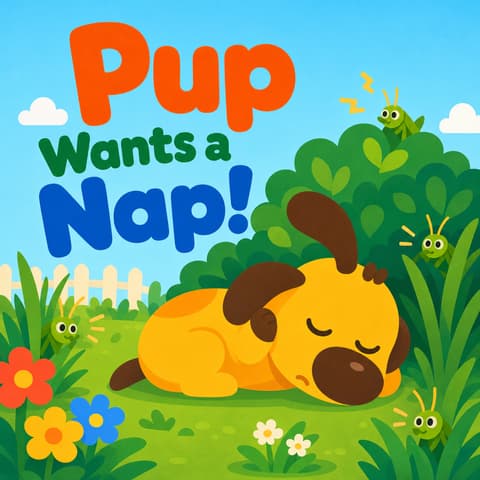
Pup Wants a Nap!
Poor Pup just wants a nap in his cosy shrub - but what is that noise? CHIRP! CHIRP! CHIRP! Is it Trunk with his big, silly mouth? Is it Spike, all puffed up and prickly? Could the birds up in the tree be the chirpy culprits? Pup hunts high and low through the mud and bushes, sniffing for clues. Will he ever find the mystery chirper and catch some sleep? This decodable reader practises short u with j, v, y in words like ‘mud,’ ‘pup,’ ‘hunts,’ and ‘yelp.’

Danger in the Water
High on the ridge where three rivers meet, Chief Mwangi believes no child could ever be cleverer than his own daughter. But when Wambũi falls gravely ill and no elder can name the cause, one quiet farm girl remembers something she saw days ago near the stream. Can she find the courage to prove it, and will the proud chief listen? This Bookbot level practises the soft ‘g’ sound with words like ‘ridge’, ‘village’, ‘courage’, ‘danger’, and ‘imagine’.
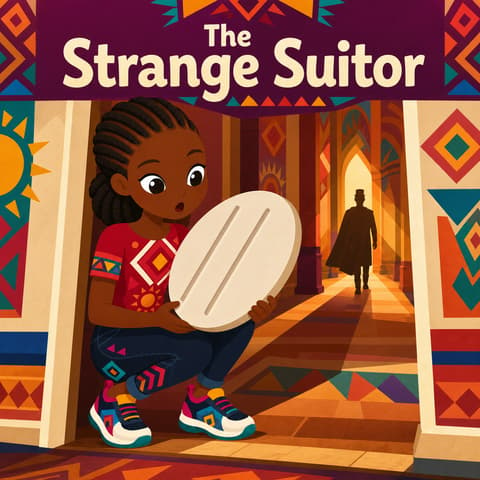
The Strange Suitor
In the lake town of Oguta lives Adaeze, a princess who reads the weather in the water and solves every riddle she meets. So when a smooth-voiced suitor glides up to the palace gate, why does she alone feel that something is wrong? What secret hides beneath his sharp dark suit, and can one clever girl and a small disc of ash unmask him before the whole court? This Bookbot Level S9 story practises the /sh/ phonograms in ’tradition’, ‘ancient’, ‘accusation’, ‘attention’, and ‘aberration’.
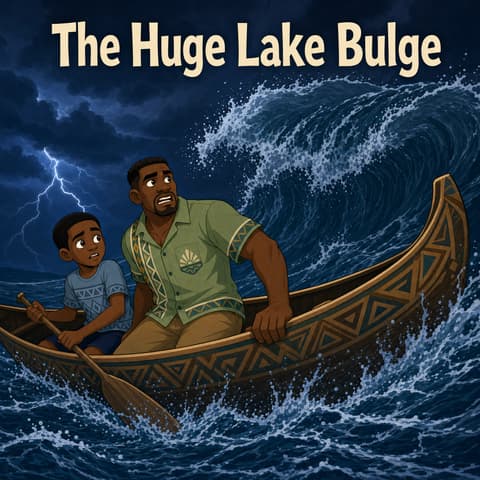
The Huge Lake Bulge
The fishermen of Kogelo village have not filled a net in twelve nights, and old Oloo whispers that something deep in the lake has frightened even the great fish away. When twelve-year-old Opiyo sees the water ‘bulge’ and ‘surge’ in the dark, he learns the creature below is not hungry but heartbreakingly alone. Can one boy’s shaky voice, and his grandmother’s old fishing song, calm a lonely ‘giant’? This Bookbot level practises the soft ‘g’ sound in ‘gently’, ‘village’, and ‘danger’.
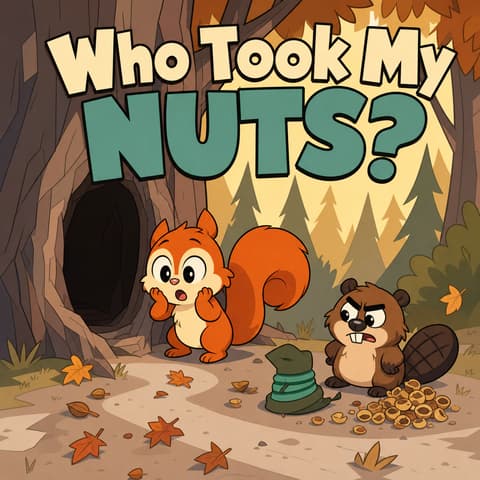
Who Took My Nuts?
Pip the squirrel has tucked away forty-nine nuts for winter - but when she checks her secret stash, every single nut has vanished! Who could have taken them? The bluebird says no. The bees say no. Even a passing fly won’t help. Can Pip’s friend Liz help her work out what really happened before the first snowfall arrives? This decodable reader practises compound words such as ‘armchair,’ ‘beehive,’ ‘snowfall,’ ‘weekday,’ and ‘woodwork.’
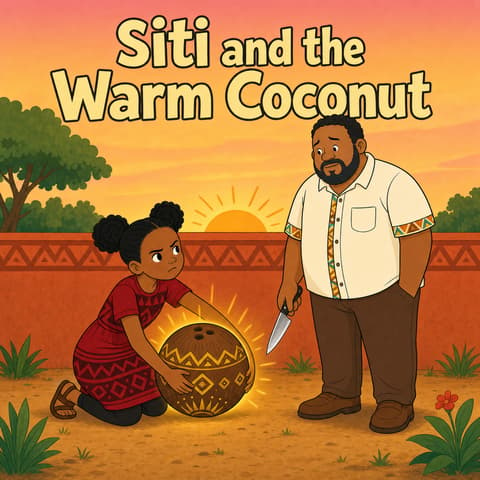
Siti and the Warm Coconut
On a small island of coconut palms, Siti finds one strange nut that hums instead of rattles, and when it cracks open at last it changes everything. Who is hidden inside, and what would you carry through the dark to bring someone home? A warm tale of courage, kindness, and open hands. This Bookbot level practises the ’ei’ sound with words like ‘weird’, ’neither’, ‘height’, ‘seize’, and ‘receive’.
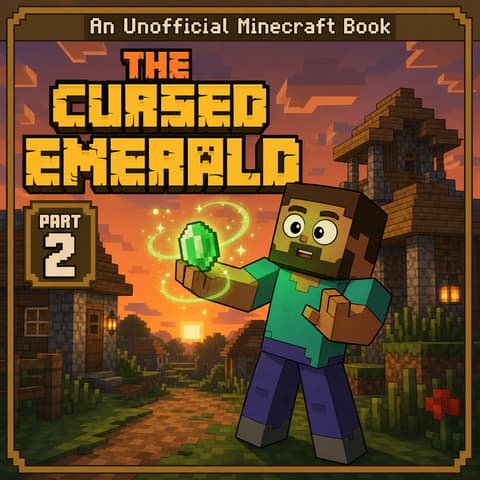
The Cursed Emerald Part 2
A growling belly, a village full of traders, and one little green gem that should buy a roasted chicken - easy, right? But why do the villagers panic the moment the gem comes out? Why does a cat freeze solid by your knee, and why has the whole morning vanished in a blink? Something is very wrong with this shiny rock… This decodable reader practises the ‘kn’ sound in words like ‘knee,’ ‘knelt,’ ‘knocked,’ ‘knew,’ and ‘knucklehead.’
Frequently Asked Questions
How do mystery books develop reading comprehension?
Mystery stories naturally train comprehension skills because children must follow clues, remember details, and make predictions to solve the case. These are exactly the ’language comprehension’ skills identified in Scarborough’s Reading Rope model (2001) — background knowledge, inference, and verbal reasoning — practised in a context children find exciting rather than tedious.
Are mystery books good for children who find reading boring?
Mystery books are excellent for children who find other genres uninteresting because the puzzle element creates a genuine need to keep reading. A study in Frontiers in Psychology (2022) found that children experience real absorption when reading engaging fiction, and the suspense in mystery stories is one of the strongest drivers of that engagement. See our guide on engaging reluctant readers.
At what age can children enjoy mystery stories?
Children can enjoy simple mystery stories from around age 5, provided the text matches their decoding ability. Ehri et al. (2001) found that systematic phonics instruction benefits children across grades K through 6, and these mystery books use decodable text so even beginning readers can follow the clues independently.
What formats are these mystery books available in?
Mystery books are available to read on the Bookbot website, with many titles free to access. Depending on the title, children may also find options such as PDF downloads, printable versions, audiobooks, or read-aloud mode with word-by-word highlighting that follows along with the text.
What reading levels do the mystery books cover?
The collection ranges from simple CVC words for beginning readers through consonant blends, digraphs, and multi-syllable patterns. You can filter by grade level to find mysteries that match your child’s current phonics skills.