


Fantasy Books for Kids
We’re passionate about ensuring literacy is accessible to every child, as it is essential for a happy, successful life. This collection opens doors to magical worlds for readers ages 5 to 9. Each book features enchanted realms, mythical creatures, and extraordinary adventures where imagination knows no bounds.
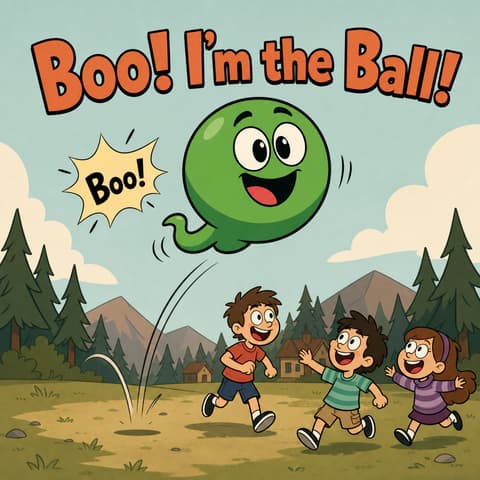
Boo! I'm the Ball!
Meet Gad, the friendliest ghost in the forest! He’s spent ages floating all alone, watching grumpy ghouls jump out and scare people just for fun. But Gad doesn’t want to scare anyone - he wants to play! So when he spots a group of kids at the park, he zooms down to say hello. Will they run away screaming, or could Gad finally find the best friends he’s been dreaming of? This decodable reader practises the gh phonogram in words like ‘ghost,’ ‘ghostly,’ ‘ghosts,’ and ‘ghouls.’
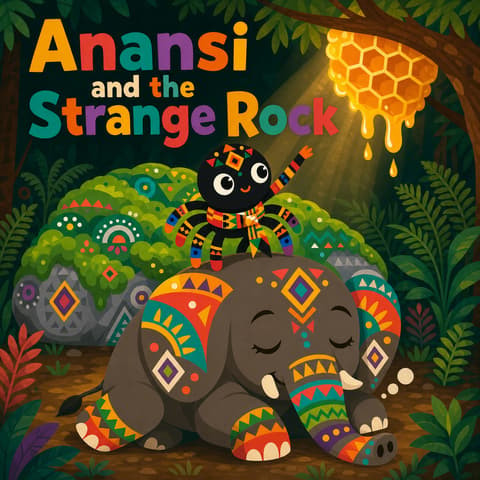
Anansi and the Strange Rock
Deep in the Ashanti forest, Kwaku Anansi finds a strange moss covered rock that puts anyone to sleep the moment he whispers seven secret words. Soon every animal is nodding off and losing their dinner. But who is that little deer watching quietly from the shadows, counting each stolen meal? When Anansi’s greed gets the better of him, will the trick he loves so much turn against him? This clever Bookbot level practises the ‘ph’ sound with words like ’elephant’, ‘atmosphere’, ‘aphids’, and ‘phew’.
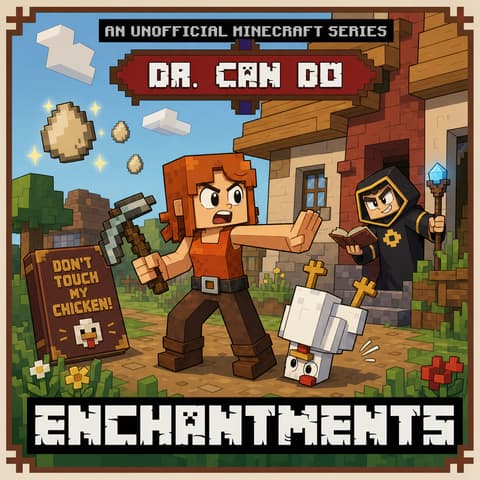
Don't Touch My Chicken!
When a mysterious new Mage moves in next door, strange things start happening all over the village. Why is Jill’s chicken walking upside down? Why are her sheep flashing rainbow colours, and what has the Mage done to her diamond pickaxe? Jill tries to keep her composure, but this unusually cheeky neighbour is going to be a real handful! This decodable reader practises si making /zh/ in words such as ‘casual,’ ’treasure,’ ‘unusual,’ and ‘composure.’
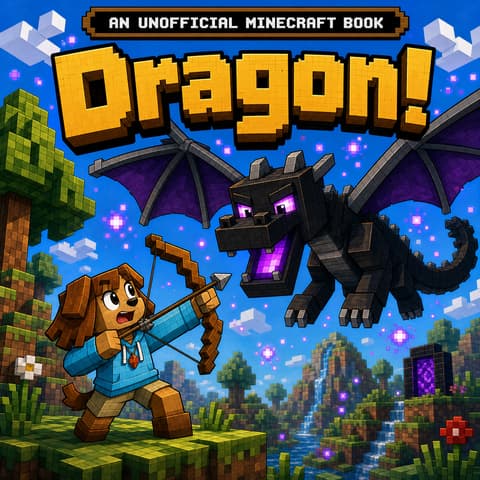
Dragon!
What happens when a gentle evening walk turns into something far scarier? Tip the Dog and Fig Pig are heading home from a hunting trip when a huge shadow blocks the sun - and a giant beast appears above them that should never leave The End. Can three small friends stand their ground against a dragon in a rage? This decodable reader practises soft g words such as ‘gentle,’ ‘giant,’ ‘gigantic,’ ‘ridge,’ and ‘village.’
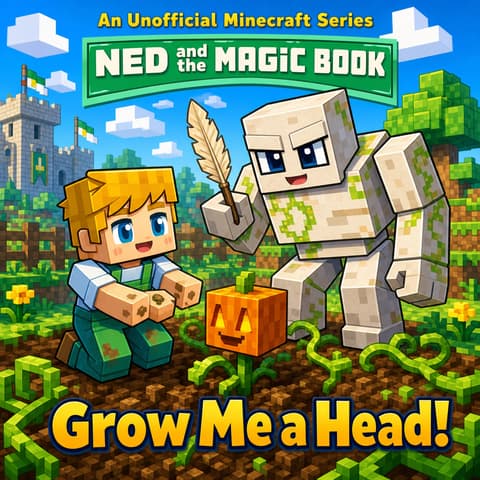
Grow Me a Head!
Ned has built a wall, a gate, and even a moat - but what if something still sneaks past? The Book says he needs a guard: a giant iron golem with a pumpkin for a head. But how do you GROW a head? And what happens when Ned finally plants the seeds and waits? Join Ned on a very strange, very silly building adventure. This decodable reader practises the ‘gn’ sound in words like ‘design,’ ‘sign,’ ‘gnaw,’ and ’lasagna.’
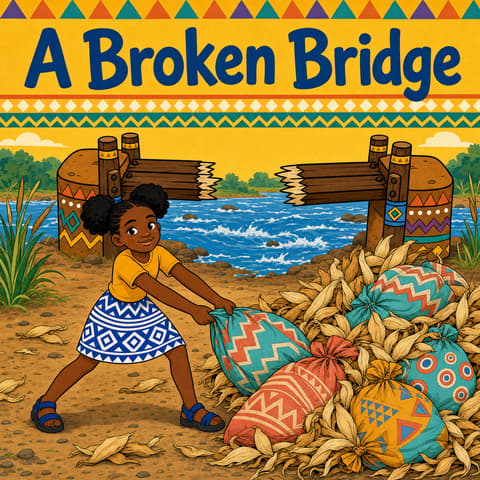
A Broken Bridge
When Amahle’s family hits a run of bad luck and the flood washes away the bridge to market, she sets out to fix it herself. But the river is watching. What happens when two shining figures rise from the water at sunset, and can one determined girl accept the strange task they point her toward? This Bookbot level practises soft ‘c’ words like ‘once’, ‘since’, ’notice’, ‘peace’, and ‘silence’.
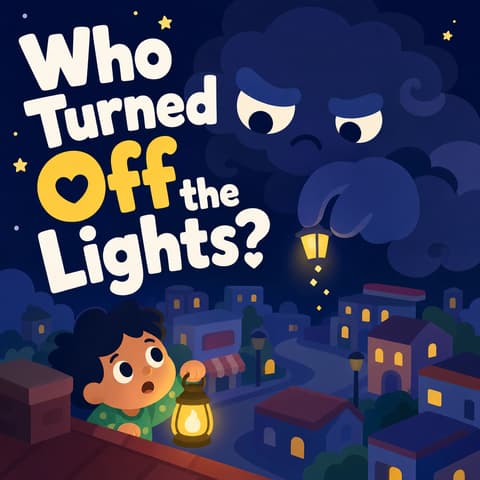
Who Turned Off the Lights?
The festival sparkles, the carnival twinkles, and the whole town glows like a bundle of candles - until someone starts flicking the lights off, one by one. Who is grumbling in the shadows, and why does The Dark hate the glow so much? When even the lighthouse goes silent, can anyone set things right before disaster strikes on the waves? This decodable reader practises the le/al/el/il phonogram in words like ‘candle,’ ‘single,’ ‘sparkle,’ ‘signal,’ and ’twinkle.’
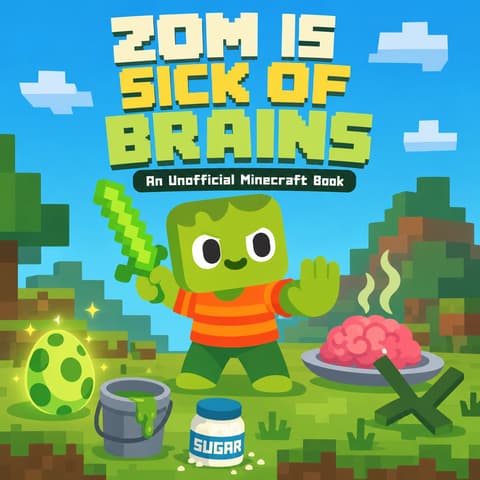
Zom is Sick of Brains
Zom the zombie has eaten brains for breakfast, lunch, and dinner his whole life - and he is SICK of it! Today he’s taking action and becoming a CHEF. But what on earth will he find to cook with in a muddy old field? A green egg? Mouldy wheat? Bug-covered sugar? Can Zom really turn this gross pile into something worth eating? This decodable reader practises ci/si/ti making /sh/ in words like ‘action,’ ‘precious,’ ‘suspicion,’ and ‘satisfaction.’
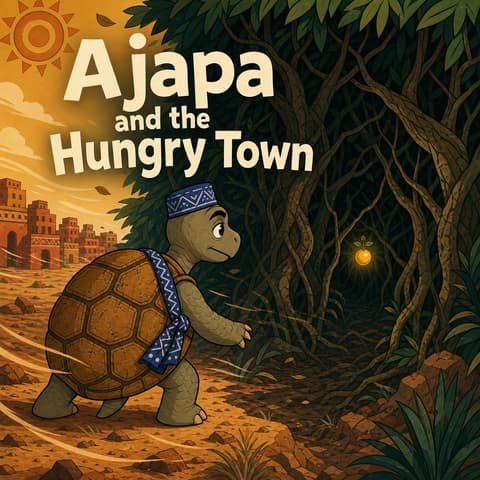
Ajapa and the Hungry Town
Ajapa the Tortoise is not the strongest animal, or the fastest, but he is the cleverest. When a dry season empties the market stalls and hunger creeps through his town, this trickster tortoise discovers a magical golden tree deep in the forest, guarded by one simple rule. Can Ajapa keep his promise once his own belly is full, or will temptation make him forget the very words that matter most? This Bookbot level practises the /sh/ sound with words like ‘solution’, ’temptation’, ‘suspicion’, and ’tradition’.
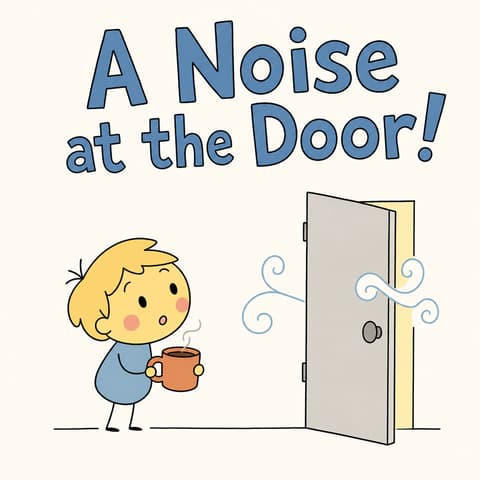
A Noise at the Door!
Pa tells the best bedtime tales in the world - but is tonight’s story just a tall tale, or something more? Meet a girl made of air who nobody can see, until one brave boy picks up a paintbrush and changes everything. Will she finally be noticed? And when the lamp clicks off and the door creaks open on its own… who’s really there? This decodable reader practises the oi/oy phonogram in words like ‘boy,’ ‘joy,’ ’noise,’ and ‘voice.’
Frequently Asked Questions
How does reading fantasy help children develop as readers?
Fantasy stories immerse children in worlds that demand imagination, which keeps them reading for longer stretches. A study in Frontiers in Psychology (2022) found that children become genuinely absorbed when reading fiction — and that this absorption is linked to stronger comprehension and recall. The more vivid the world, the more engaged the reader.
Do fantasy books build vocabulary in young readers?
Fantasy stories introduce language children rarely encounter in everyday speech — words like enchanted, quest, ancient, and creature. Scarborough’s Reading Rope model (2001) identifies vocabulary and background knowledge as essential strands of skilled reading, and genre-rich content like fantasy strengthens both. Each new word a child decodes in context becomes part of their growing language bank.
Are these fantasy books suitable for reluctant readers?
Fantasy is one of the strongest genres for drawing in reluctant readers because magical worlds and unexpected twists create an urgency to keep turning pages. Research on how children learn from narrative fiction (Springer, 2022) shows that engagement with story drives both comprehension and social learning — and fantasy stories produce high levels of engagement.
What formats are these fantasy books available in?
Fantasy books are available on the Bookbot website, with many titles free to read online. Select books also offer PDF downloads or read-aloud features, which highlight each word as the story is narrated.
What reading levels are the fantasy books written at?
The collection covers levels from simple CVC words for beginning readers through advanced phonics patterns including blends, digraphs, and multi-syllable words. You can filter by grade level to find fantasy stories that match your child’s current reading stage.