


SEL Books for Kids
We believe every child deserves access to quality reading materials that nurture a lifelong love of learning. This collection helps children ages 5 to 9 understand feelings, build relationships, and develop self-awareness. Each book addresses emotions, empathy, and social skills through relatable stories.
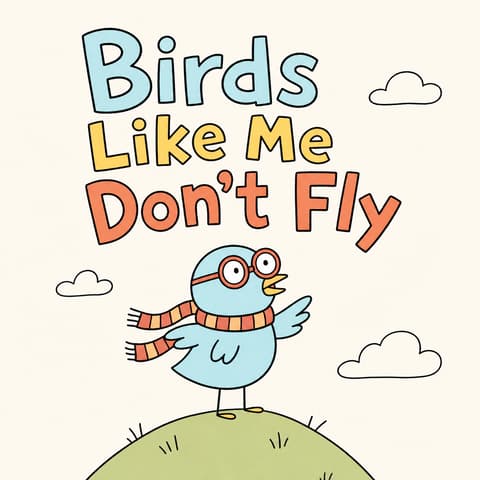
Birds Like Me Don't Fly
What happens when a big bird with tiny wings dreams of soaring through the sky? Every day, our hero daydreams of aeroplanes, spotlights, and cheering fans - but one tumble on the hilltop leaves feathers ruffled and hopes crushed. Can a backpack full of courage, a homemade blueprint, and a whole lot of cardboard prove the doubters wrong? A heartwarming tale about chasing your own path. This decodable reader practises compound words such as ‘backpack,’ ‘daydream,’ ‘hilltop,’ ‘sunshine,’ and ‘blueprint.’

I'm Going Back to Bed!
Have you ever had a day so bad you just wanted to hide under the blanket? After an onslaught of zombies and a flooded farm, poor Tip has decided her bed is the only safe place left in the world. But when Brat Cat and Fig Pig come knocking with a red tulip and glowing vines, can they cheer her up? This decodable reader practises the ‘augh’ phonogram with words like ‘caught,’ ’taught,’ ’naughty,’ and ‘distraught.’
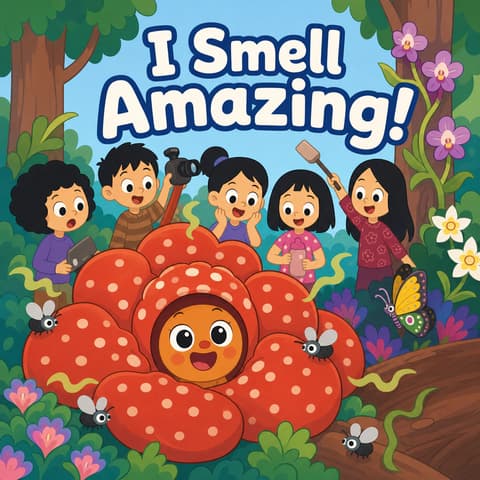
I Smell Amazing!
Deep in the jungle lives Rafa, a huge red flower with bumpy, spotted petals and a smell so strong it can curl your toes! The orchids gnash their teeth, the roses turn up their noses, and the butterflies fly right past. But why do clouds of gnats adore her? And could Rafa’s stinky cologne actually be her greatest gift of all? This decodable reader practises the gn phonogram in words like ‘sign,’ ‘design,’ ‘reigns,’ and ‘gnaw.’
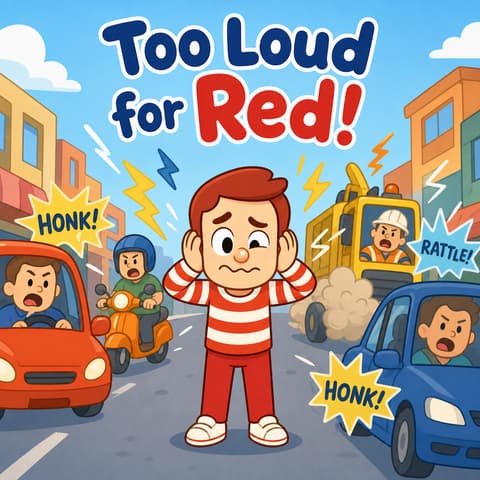
Too Loud for Red!
Red made himself a big promise: walk through the whole noisy town without covering his ears, not even once. But with honking cars, zooming scooters, and drills rattling the road, can one small guy really keep his cool? And will he ever spot his friend’s bright red cap bobbing through the crowd? Join Red on a brave, bumpy, ear-splitting adventure! This decodable reader practises the augh phonogram in words such as ‘caught,’ ’taught,’ ’laughter,’ and ‘onslaught.’
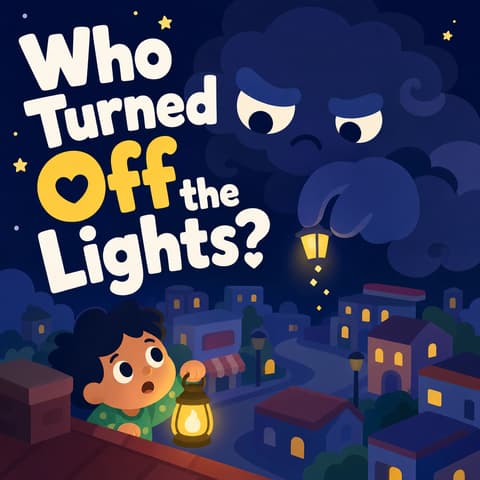
Who Turned Off the Lights?
The festival sparkles, the carnival twinkles, and the whole town glows like a bundle of candles - until someone starts flicking the lights off, one by one. Who is grumbling in the shadows, and why does The Dark hate the glow so much? When even the lighthouse goes silent, can anyone set things right before disaster strikes on the waves? This decodable reader practises the le/al/el/il phonogram in words like ‘candle,’ ‘single,’ ‘sparkle,’ ‘signal,’ and ’twinkle.’
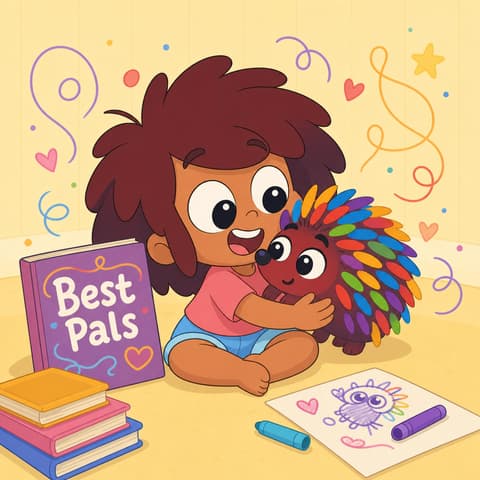
Best Pals
What makes a best pal truly special? The Girl thinks being best pals with Hedgehog is the simplest thing in the world - they scribble rainbows, share ice cream right down the middle, and giggle at nothing at all. But what happens when school feels jumbled up, or when a splashy afternoon turns into a silly squabble? Can a pancake really say sorry better than words? This decodable reader practises le/al/el/il words such as ‘gentle,’ ‘giggle,’ ‘sparkle,’ ‘purple,’ and ‘marvel.’
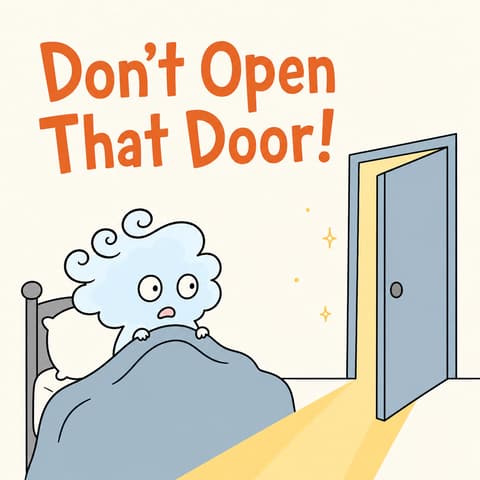
Don't Open That Door!
Pa tells the best bedtime stories in the world, and tonight’s tale is about a girl made of air - faceless, nameless, and almost impossible to spot. Could someone really sit quietly beside you without being seen? When a brave boy offers to paint her so the world can finally notice her, something wonderful begins. But when Pa turns off the lamp and the door creaks open… who is there? This decodable reader practises suffixes in words like ’truly,’ ‘brightness,’ ‘carefully,’ and ‘happiness.’
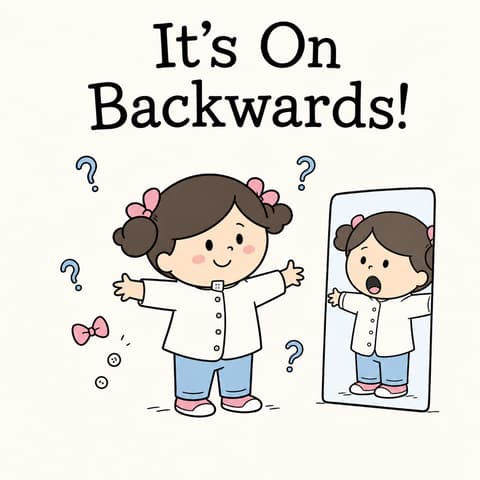
It's On Backwards!
It’s the biggest morning of Min’s life - her very first day of school! But there’s just one tiny problem: nobody has ever taught her how to do up the buttons on her brand-new uniform. Mummy is busy, Daddy is busy, and even Grandpa walks right past. Can Min figure it out all by herself before the bell rings? And what happens when she finally tries? This decodable reader practises the augh phonogram in words like ‘caught,’ ‘daughter,’ ’taught,’ and ’laughter.’
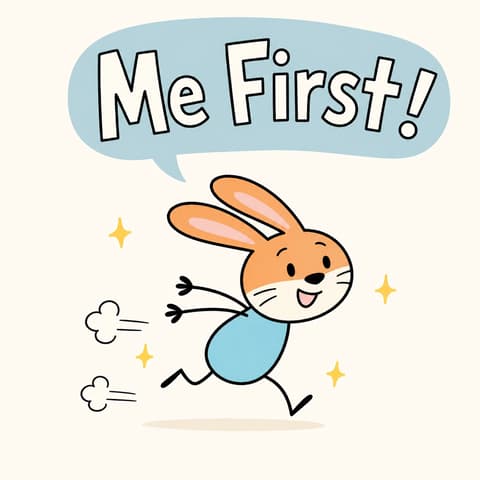
Me First!
Rabbit has a big plan: he’s going to be FIRST at everything in his new class! First to settle in, first in the race, first to finish his painting, first at sums - easy, right? But somehow Bee, Turtle, Dog, and Owl keep beating him to it. Poor Rabbit starts to tremble. Could there be something special he’s first at after all? This decodable reader practises the le/al/el/il sound in words such as ‘gentle,’ ’turtle,’ ‘sparkle,’ ‘pencil,’ and ‘people.’
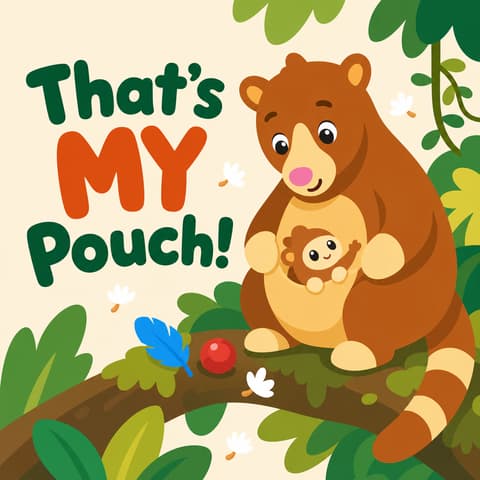
That's MY Pouch!
Mum’s pouch is the cosiest, warmest spot in the whole rainforest - and it belongs to ME. So why, after a day of collecting feathers, berries, and kapok flowers for my special collection, won’t Mum let me climb in for my nap? What could possibly be more important than me? A joyful rainforest tale about family, change, and a very big surprise. This decodable reader practises ci/si/ti making /sh/ in words like ‘special,’ ‘ancient,’ ‘precious,’ and ‘collection.’
Frequently Asked Questions
What is social-emotional learning (SEL)?
Social-emotional learning is the process through which children develop skills in self-awareness, self-management, social awareness, relationship building, and responsible decision-making. Stories are one of the most natural ways to introduce these concepts — research shows that social-themed picture books significantly improve prosocial behaviour in young children (Li et al., 2025).
How do picture books help children develop empathy?
When children follow characters through emotional situations — a disagreement with a friend, feeling left out, or showing courage — they practise perspective-taking in a safe context. Research shows that narrative fiction helps children simulate social worlds and understand other people’s intentions and feelings (Tabullo et al., 2022). Discussing the story afterwards deepens this effect.
What SEL topics do these books cover?
The books explore themes including identifying and managing emotions, kindness, friendship, dealing with frustration, self-confidence, sharing, and inclusion. Each story is written in decodable text, so children build reading skills alongside social-emotional understanding.
Can reading together improve my child's social skills?
Yes. Shared reading naturally prompts conversations about feelings and behaviour — research by Bus, van IJzendoorn, and Pellegrini (1995) found that joint book reading has a significant positive effect on children’s language and emotional development. Reading an SEL story together gives you a starting point to talk about real situations your child might face. See our guide on the benefits of reading aloud.
Are SEL books available at different reading levels?
Yes. The SEL books here are organised by phonics level, from simple CVC words through advanced patterns, so children from first through third grade can find stories about feelings and relationships that match their reading ability.