


Science Books for Kids
We’re passionate about ensuring literacy is accessible to every child, as it is essential for a happy, successful life. This collection sparks curiosity about how the world works for readers ages 5 to 9. Each book introduces scientific concepts in accessible ways that encourage questions and wonder.
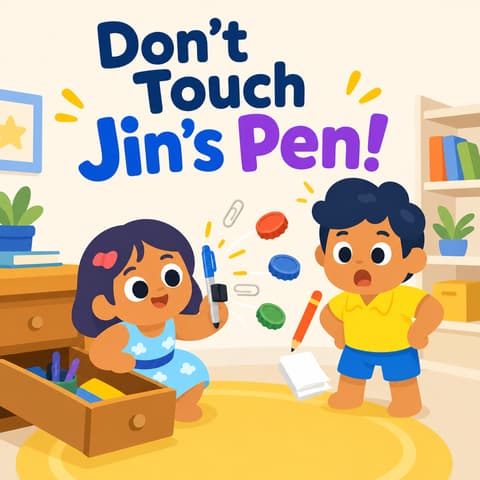
Don't Touch Jin's Pen!
Jin’s shiny ink pen is strictly off-limits - the sign on his desk says so! But when Rin sneaks into his drawer one quiet afternoon, she finds a mysterious little black block that makes paper clips leap through the air. What could it possibly be? And when Jin’s precious pen rolls somewhere it absolutely shouldn’t, can Rin’s clever discovery save the day? This decodable reader practises 3+ syllable words such as ‘afternoon,’ ‘mysterious,’ ‘caterpillar,’ and ‘discovery.’
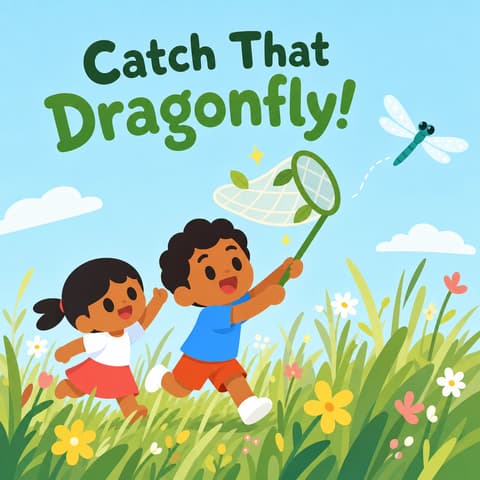
Catch That Dragonfly!
The homework assignment of a lifetime: catch a real insect and study it up close! But when Kim picks the fastest bug in the playground, can two kids really outsmart a dragonfly that darts at lightning pace? Every time they get close, it zips away like it notices their every move. What clever trick might finally work? This decodable reader practises the soft c sound in words like ‘centre,’ ‘circle,’ ’notice,’ and ‘silence.’
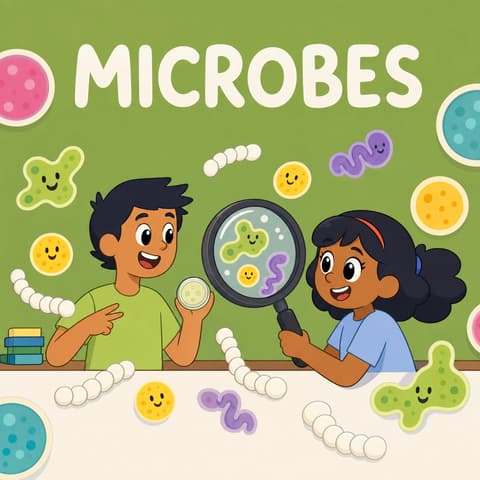
Microbes
Zara has one wild dream - to discover a brand new microbe that nobody has ever found before. When a stinky green cloud rolls out of the lab fridge, most people pinch their noses and run. But Zara? She leans in and sniffs. Could a rotten piece of fruit really be hiding a secret creature waiting to be named? This decodable reader practises 2-syllable open words such as ’tiny,’ ‘over,’ ‘data,’ and ‘going.’
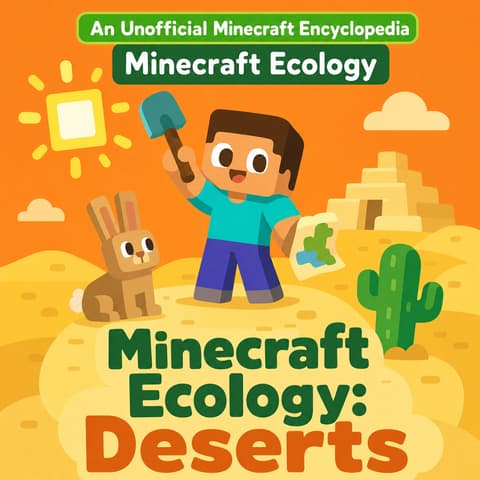
Minecraft Ecology: Deserts
Could you survive a day in the blazing Minecraft desert? Sand stretches in every direction, the sun climbs to a dizzying height, and the air feels weirdly still. Where do husks hide when the heat gets too strong? How do rabbits stay cool, and what hidden treasures wait beneath the dunes? Grab a shovel, pack a map, and seize the chance to explore this foreign land! This decodable reader practises the ’ei’ phonogram in words such as ‘weird,’ ‘height,’ ’neither,’ and ‘seize.’
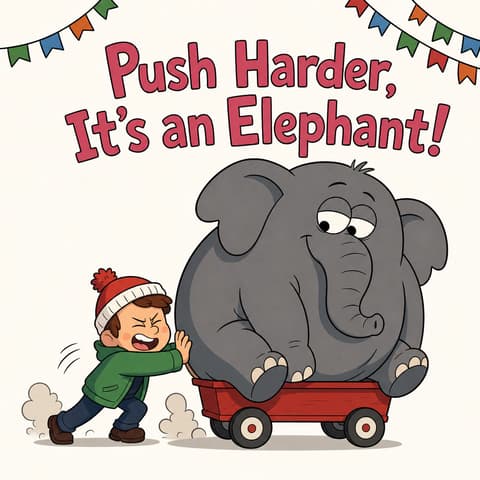
Push Harder, It's an Elephant!
How heavy is an elephant, really? When one stubborn elephant refuses to budge from a little red cart, Child sets off counting everything in sight - two warm eggs at the neighbour’s, four wheels that won’t neigh, a spider with eight wiggling legs, and a pheasant dressed in dazzling colours. Can counting all the way to ten give Child the strength for one more giant push? This decodable reader practises the eigh phonogram in words like ’eight,’ ‘weigh,’ ’neigh,’ and ‘sleigh.’
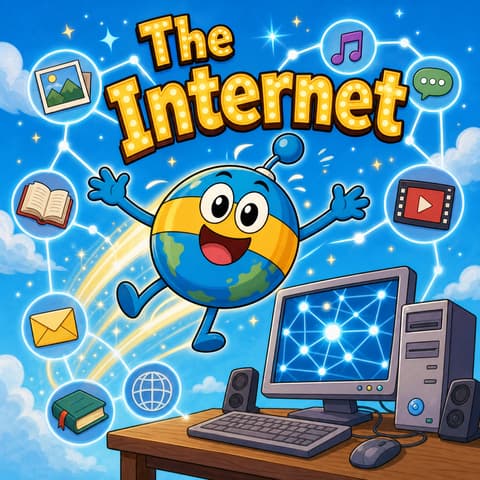
The Internet
Meet Internet Mascot, a googly-eyed globe who zips around a glowing web that wraps the whole planet! Want to know how a silly cat video can travel across the world in one second, or how a mountain-top photograph can reach every continent in minutes? From amazing animals to musical dance parties, this cheeky guide shows how to explore the web wisely - and kindly. This decodable reader practises 3+ syllable words such as ‘computer,’ ‘congratulations,’ ‘afternoon,’ and ‘incredible.’
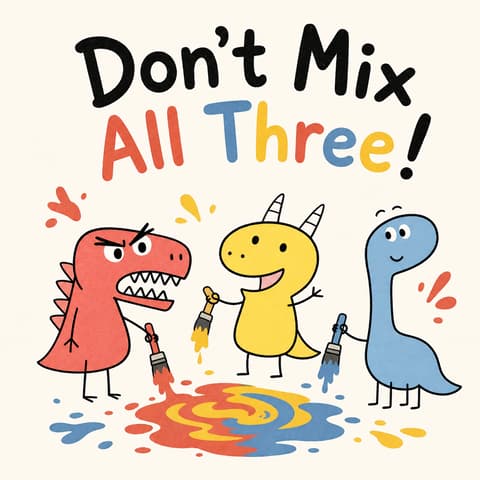
Don't Mix All Three!
Red, Yellow, and Blue Dinosaur have one colourful job: paint the whole grey neighbourhood! Red is bold and fiery, Yellow is sunny and giggly, and Blue has actually read the rulebook. Mix two colours and something magical happens - but what about that one big rule nobody is supposed to break? What could possibly happen if three silly dinosaurs mixed all three colours at once? This decodable reader practises 3+ syllable words such as ‘beautiful,’ ‘dangerous,’ ‘incredible,’ and ‘wonderful.’
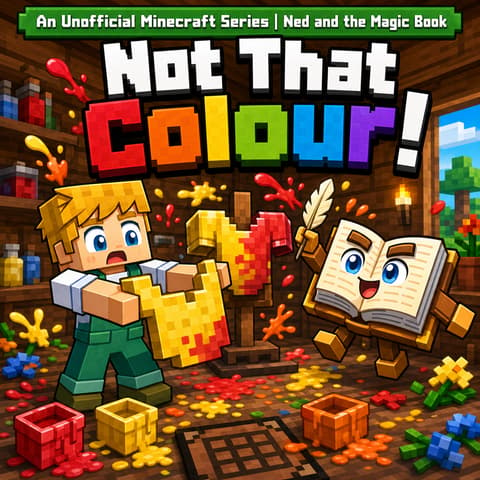
Not That Colour!
Ned the farmer has a problem - his new leather armour is plain, boring brown, and he wants to look AMAZING! Can a handful of red and yellow flowers from the fields really turn into something better? With his magic Book guiding him, Ned squeezes, mixes, and dyes his way through one silly colour after another. Will he ever find the perfect shade? This decodable reader practises the ‘ough’ phonogram in words like ‘although,’ ‘brought,’ ’enough,’ ’though,’ and ’tough.’
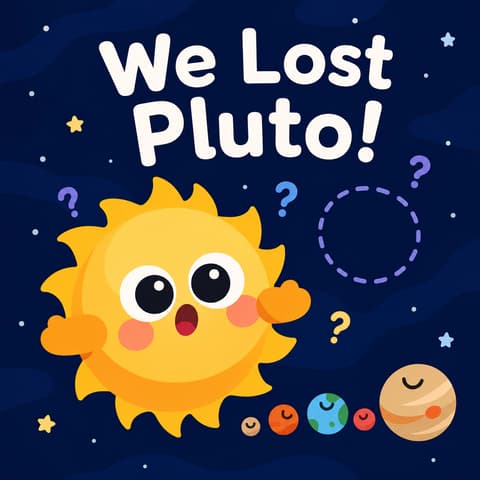
We Lost Pluto!
One morning, the Sun counts her planets and gets a terrible shock - Pluto is missing! Where could a whole planet hide? Mercury is too hot, Venus is too cloudy, and Earth is too busy watching her humans. Together, the planets set off on a long, chilly trek past the asteroid belt and beyond, searching every corner of space for their smallest friend. Will they find him way out in the frozen dark? This decodable reader practises 2-syllable open words such as ‘begin,’ ‘focus,’ ‘open,’ and ‘moment.’
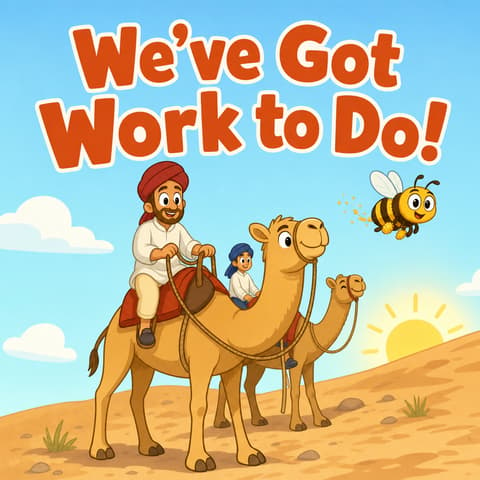
We've Got Work to Do!
Who wakes up the farm before the sun is even awake? Who guards the gate at midnight, carries tiny scrolls across the sky, or weaves a nest fit for a palace? From busy bees and humble earthworms to patient camels crossing the desert, every creature has a job to do - and some jobs are quieter than others. Can you guess which worker has the hardest job of all? This decodable reader practises 3+ syllable words such as ‘magnificent,’ ‘dependable,’ ‘remarkable,’ and ‘diligently.’
Frequently Asked Questions
How do science books help children build vocabulary?
Science books introduce specialised words — habitat, metamorphosis, evaporation — in context, which is one of the most effective ways for children to expand their vocabulary. The National Council of Teachers of English notes that nonfiction literature increases students’ ability to make inferences and strengthens literal comprehension. Because these books use decodable text, children practise phonics skills at the same time.
Why should children read nonfiction alongside fiction?
Children who read a variety of text types develop stronger overall reading skills. Background knowledge — the kind built by reading about science, nature, and the world — is a core strand of Scarborough’s Reading Rope (2001), which describes how comprehension depends on both decoding ability and content knowledge working together. Mixing science books with story books gives children practice with both narrative and informational text structures.
Are science picture books suitable for beginning readers?
Yes. The science books here pair simple, decodable text with illustrations that help explain concepts visually. Research in npj Science of Learning (Takacs & Bus, 2020) found that clear, well-designed illustrations improve both attention and comprehension in beginning readers — an especially valuable support when the subject matter is new.
What science topics are covered for children ages 5 to 9?
Topics include animals, plants, weather, the human body, the solar system, and basic biology. Each book is designed to answer the kinds of questions young children naturally ask — why leaves change colour, how fish breathe, what makes a volcano erupt — while keeping the reading level manageable.
Can I download these science books as PDFs?
Yes. Science books are available to read on the Bookbot website, with many titles free to access. Depending on the title, you may also find options such as PDF downloads, printable versions for classroom or home use, audiobooks, or read-aloud mode with word-by-word highlighting.