


Life Books for Kids
Every child deserves stories that help them navigate the world around them. This collection features stories about everyday life experiences for readers ages 5 to 9. Each book explores real-world situations, daily routines, and relatable moments through engaging narratives that children can connect with.
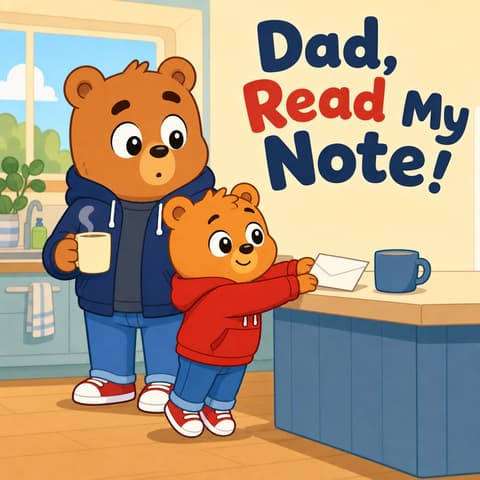
Dad, Read My Note!
What do you do when your dad is the best dad in the whole neighbourhood, but he’s also too tired to go fishing? One clever kid has tried tugging, begging, and waving a fishing rod in the air - nothing works! So he writes a secret note and slips it next to Dad’s morning mug. Will the note finally get Dad off the couch, and what woodland surprises wait on the path? This decodable reader practises the eigh phonogram in words like “eight,” “neighbour,” “weighed,” and “sighed.”
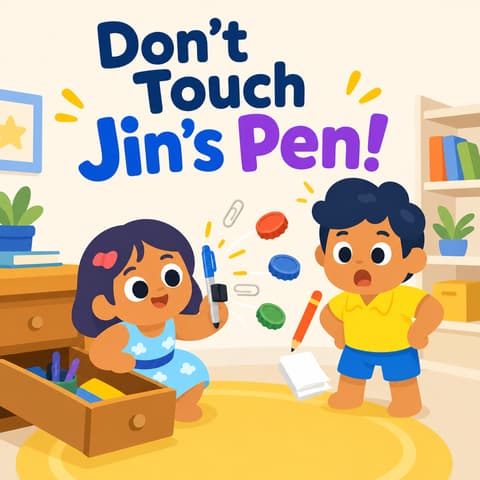
Don't Touch Jin's Pen!
Jin’s shiny ink pen is strictly off-limits - the sign on his desk says so! But when Rin sneaks into his drawer one quiet afternoon, she finds a mysterious little black block that makes paper clips leap through the air. What could it possibly be? And when Jin’s precious pen rolls somewhere it absolutely shouldn’t, can Rin’s clever discovery save the day? This decodable reader practises 3+ syllable words such as ‘afternoon,’ ‘mysterious,’ ‘caterpillar,’ and ‘discovery.’
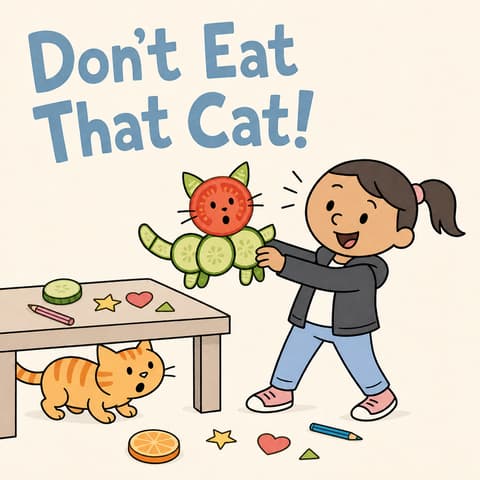
Don't Eat That Cat!
When Dad comes home with bags bursting with colourful fruit and veg, Girl grabs her sketchpad quick - can she draw it all before dinner? Tomatoes and cucumbers sit still so nicely, but what happens when she tries to sketch Cat, who won’t stop slinking across the floor? Will her pencil ever catch such a wiggly subject? This decodable reader practises words with prefixes such as ‘unpack,’ ‘redo,’ ‘inspect,’ ‘dislikes,’ and ‘remake.’
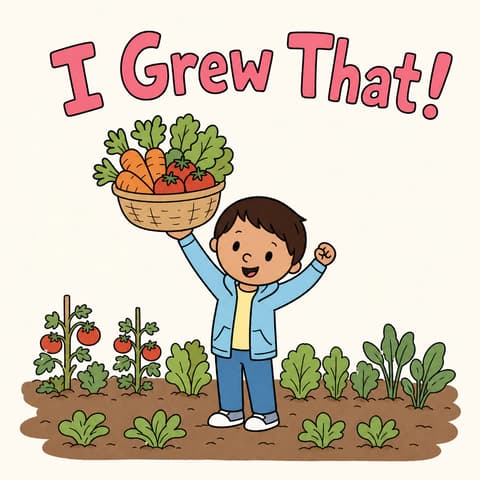
I Grew That!
Meet a young farmer with big dreams and even bigger baskets! He digs straight lines, scatters seeds, and shoos away hungry birds, all so his family can share a special meal. But can one boy really grow an entire dinner by himself? And what happens when surprise visitors sneak into his garden? This decodable reader practises suffix words such as ‘proudly,’ ‘kindly,’ ‘hopeful,’ ’thankful,’ and ’lovely.’
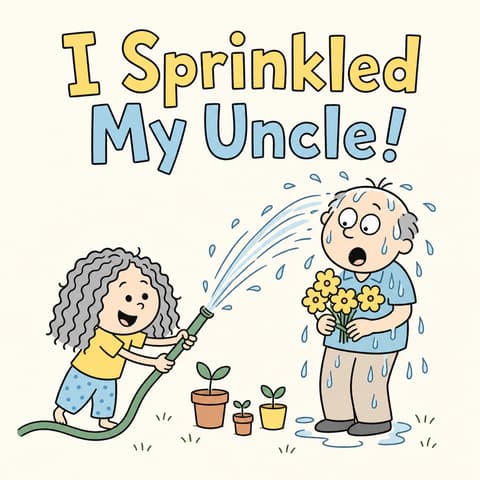
I Sprinkled My Uncle!
From a sheet-castle with Jen to bike rides with Grandad, bedtime stories with Nan, and a backyard full of seedlings, this little narrator has a LOT of people to love. But what happens when a helpful watering job goes hilariously sideways? Who ends up dripping wet, still clutching a bundle of yellow flowers? This decodable reader practises the le/al/el/il pattern in words like ‘castle,’ ‘sprinkle,’ ‘uncle,’ and ‘gentle.’
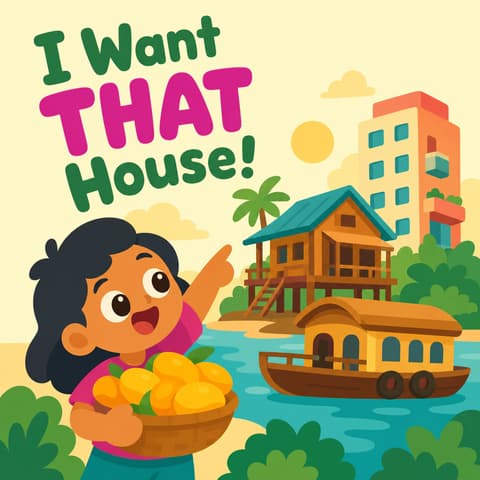
I Want THAT House!
What would YOU do with a house on tall wooden stilts, or one that floats peacefully on the waves? Follow a child with a basket of mangoes as they wander past shops, gardens, and garages, meeting families who live in the most surprising homes. Could there really be a perfect house - and which one would you pick? This decodable reader practises suffixes in words like ‘proudly,’ ‘brightens,’ ‘cheerful,’ and ‘worker.’
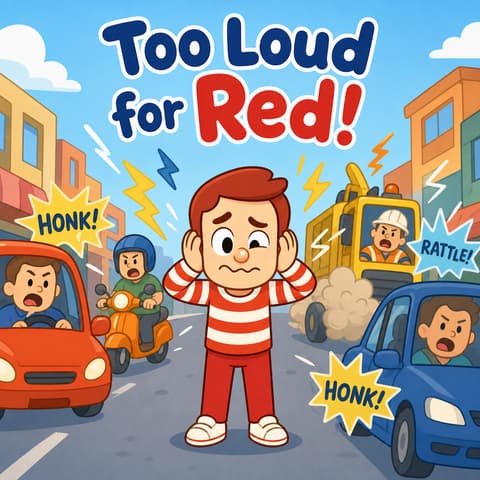
Too Loud for Red!
Red made himself a big promise: walk through the whole noisy town without covering his ears, not even once. But with honking cars, zooming scooters, and drills rattling the road, can one small guy really keep his cool? And will he ever spot his friend’s bright red cap bobbing through the crowd? Join Red on a brave, bumpy, ear-splitting adventure! This decodable reader practises the augh phonogram in words such as ‘caught,’ ’taught,’ ’laughter,’ and ‘onslaught.’
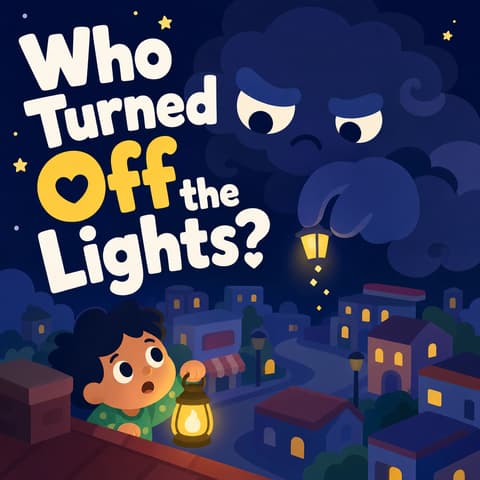
Who Turned Off the Lights?
The festival sparkles, the carnival twinkles, and the whole town glows like a bundle of candles - until someone starts flicking the lights off, one by one. Who is grumbling in the shadows, and why does The Dark hate the glow so much? When even the lighthouse goes silent, can anyone set things right before disaster strikes on the waves? This decodable reader practises the le/al/el/il phonogram in words like ‘candle,’ ‘single,’ ‘sparkle,’ ‘signal,’ and ’twinkle.’
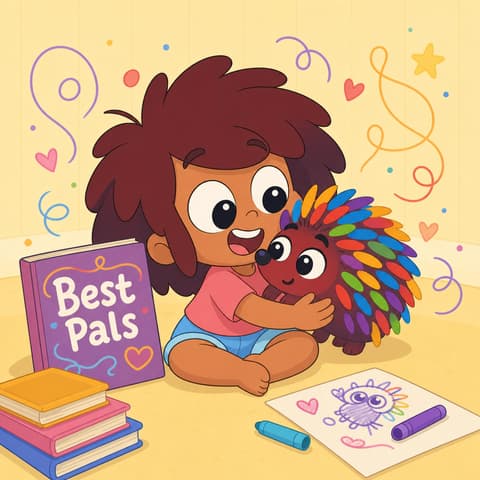
Best Pals
What makes a best pal truly special? The Girl thinks being best pals with Hedgehog is the simplest thing in the world - they scribble rainbows, share ice cream right down the middle, and giggle at nothing at all. But what happens when school feels jumbled up, or when a splashy afternoon turns into a silly squabble? Can a pancake really say sorry better than words? This decodable reader practises le/al/el/il words such as ‘gentle,’ ‘giggle,’ ‘sparkle,’ ‘purple,’ and ‘marvel.’
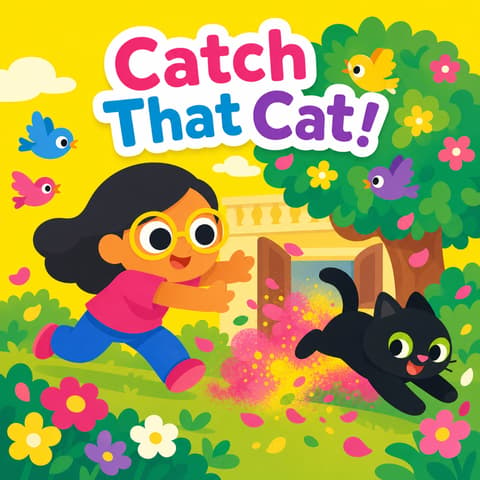
Catch That Cat!
Spring has arrived, the garden is bursting with birdsong, and Girl just wants to enjoy the sunshine - but did anyone remember to shut the back door? With a mischievous black cat plotting something sneaky, a squirrel in big trouble, and a Holi festival about to explode in colour, can Girl keep everyone safe before chaos breaks loose? This decodable reader practises the ’ew’ sound in words like ‘brew,’ ‘crew,’ ‘flew,’ ’new,’ and ‘phew.’
Frequently Asked Questions
How do life skills books help children navigate everyday situations?
Life skills books present familiar scenarios — sharing, managing disappointment, trying new things — through characters children can identify with. Research on how children learn from narrative fiction (Springer, 2022) found that children naturally absorb social and practical lessons from stories because they imagine themselves in the characters’ situations.
What topics do these life books cover?
The collection includes stories about growing up, daily routines, responsibility, kindness, problem-solving, and navigating emotions like frustration and courage. Each book uses decodable text so children practise phonics while engaging with themes that are relevant to their own lives.
Are life skills picture books good for building empathy?
Yes. Stories that show characters dealing with real-life challenges help children practise perspective-taking in a safe context. A study by Li et al. (2025) found that social-themed picture books significantly improve prosocial behaviour in young children, suggesting that reading about life situations genuinely influences how children treat others.
What formats are these life books available in?
Books are available to read on the Bookbot website, with many titles free to access. Depending on the title, children may also find options such as PDF downloads, printable versions, audiobooks, or read-aloud mode with word-by-word highlighting that follows along with the text.
What reading levels are available?
The collection covers levels from simple CVC words for beginning readers through consonant blends, digraphs, and multi-syllable patterns. Scarborough’s Reading Rope model (2001) shows that reading comprehension develops alongside decoding skill, and life-themed books build both strands simultaneously. Filter by grade level or check the scope and sequence to find the right starting point.