


Funny Books for 2nd Graders
We’re committed to helping every child discover the joy of reading through stories they love. Explore funny children’s books perfect for 2nd graders ages 6-7. These hilarious picture books feature silly characters, wacky situations, and laugh-out-loud moments that make reading pure entertainment while building skills.
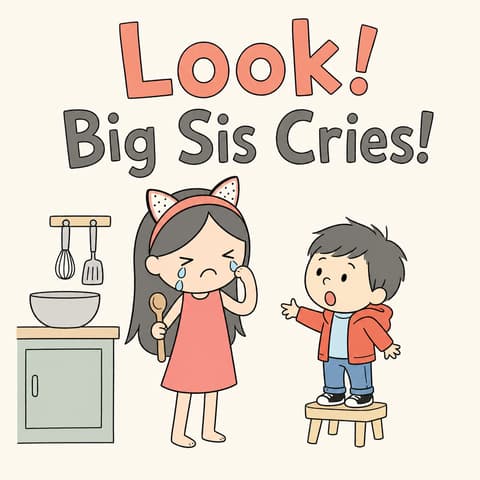
Look! Big Sis Cries!
Big Sis is the coolest person in the whole world - she climbs the tallest trees, fixes crashed toy planes, and isn’t scared of anything, not even the barking pooch in the yard. But when her little brother peeks over the kitchen stool and spots real, wet tears on her cheeks, he can’t believe his eyes. What could POSSIBLY make Big Sis cry? This decodable reader practises the ‘oo’ sound in words like ‘cool,’ ‘stood,’ ‘shook,’ and ‘spoon.’
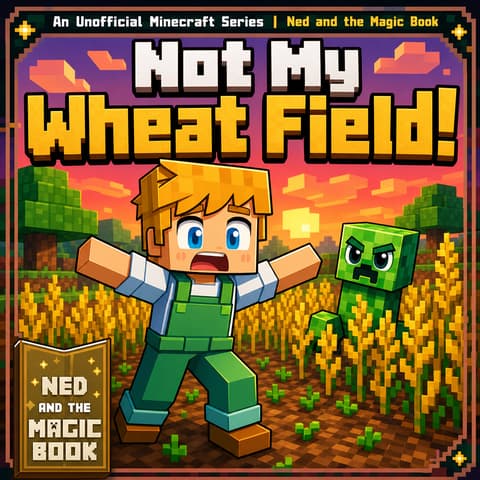
Not My Wheat Field!
Ned has finally grown his very first patches of wheat, and he can’t wait to fill boxes and boxes with golden stalks. But what happens when a hissing creeper sneaks onto the farm in the dead of night? Can Ned save his harvest before it all goes BOOM? With bunches of wheat on the line and a clever Book by his side, this little farmer isn’t giving up! A decodable reader practising es plurals in words like ‘boxes,’ ‘patches,’ ‘crashes,’ and ‘wishes.’
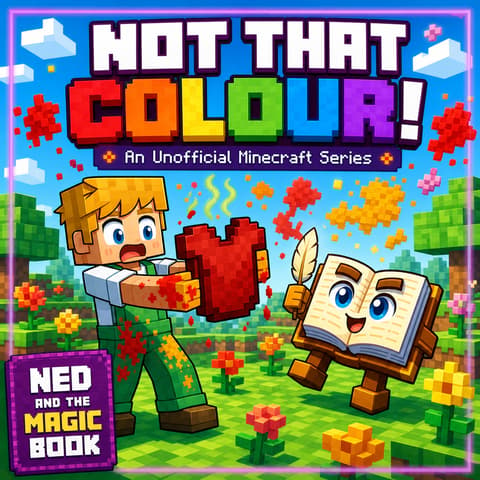
Not That Colour!
Ned the farmer has a problem - his new leather armour is plain, boring brown, and he wants to look AMAZING. Can red flowers help? What about yellow ones? When Ned crushes petals into dye, something surprising happens on his workbench, and soon The Book is helping him cook up a whole rainbow of colours for his fashion show. This decodable reader practises suffixes in words like ‘farmer,’ ‘handful,’ ’lovely,’ and ‘brightly.’
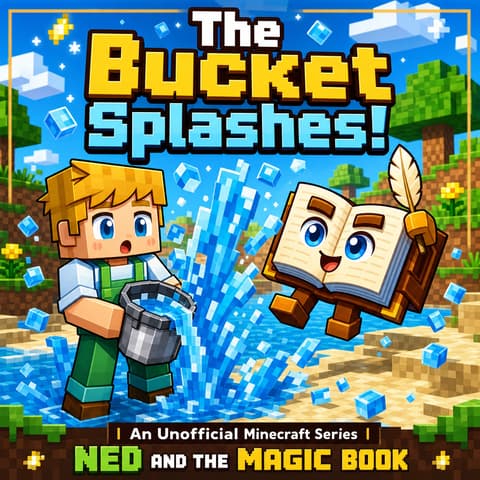
The Bucket Splashes!
Ned has a brand new house, a very bossy magic book, and a belly full of nothing but apples. Can he really grow his own food from tiny seeds hidden in the grass? And when The Book sends him lugging a bucket of seawater across the whole field, will Ned’s arms survive the journey? A funny tale of hard work, wobbly green shoots, and one very unhelpful book. This decodable reader practises es plurals in words such as ‘bunches,’ ‘patches,’ ‘searches,’ and ‘splashes.’
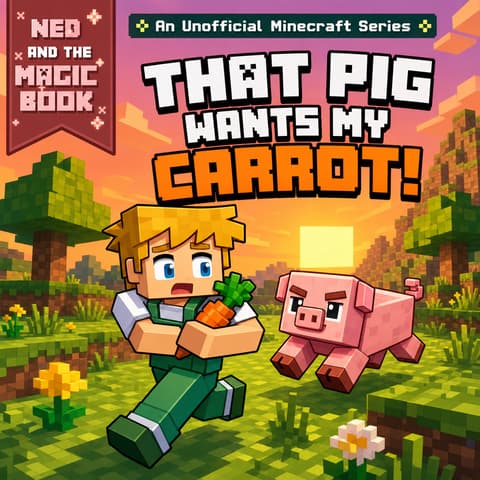
That Pig Wants My Carrot!
Ned the farmer wants to grow something new on his farm, and what he finds are funny little orange things called carrots! But carrots smell amazing to pigs - and one sneaky pink pig is following him home. Can Ned keep his carrot safe? Can he build a pen strong enough to protect his new piggy friends when the monsters come out at night? This decodable reader practises suffixes in words like ‘farmer,’ ‘kindly,’ ’loudly,’ and ‘stronger.’
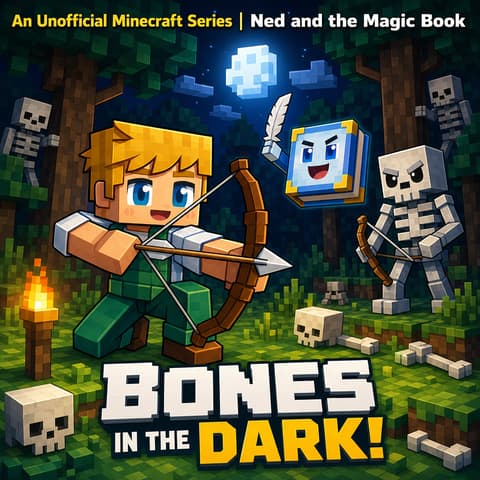
Bones in the Dark!
Ned is lost in the dark woods, and something just shot an arrow at him! Can one brave boy and his talking Book outwit a skeleton hiding behind the trees? With only a bow, a flickering torch, and a whole lot of nerve, Ned must find the perfect angle for one good shot - but what happens when more bony figures start creeping out of the shadows? This decodable reader practises le/al/el/il words such as ’little,’ ’needle,’ ‘castle,’ ‘signal,’ and ‘scramble.’
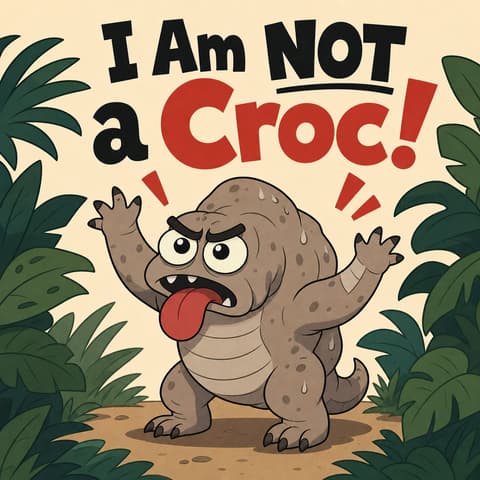
I Am NOT a Croc!
Goya is a proud Komodo dragon having the worst day ever. A storm has swept him far from his warm jungle rock, through a smelly drain, and straight into a schoolyard full of kids with brooms. Why are they screaming “CROCODILE!” at him? And how will a tired, grumpy lizard ever find his way back home? Join Goya on a muddy, mixed-up adventure! This decodable reader practises the ’ew’ phonogram in words like ‘blew,’ ‘flew,’ ‘knew,’ ’new,’ and ‘view.’
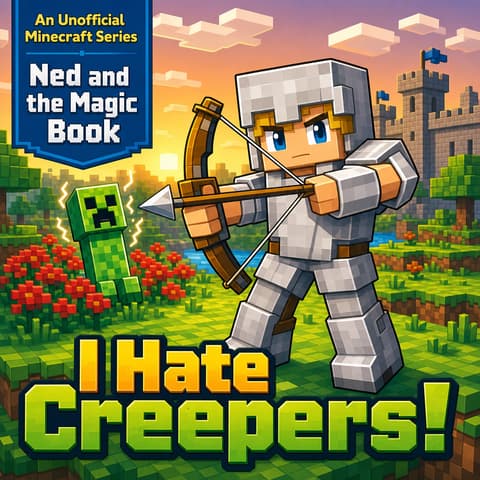
I Hate Creepers!
Ned is having a gentle day picking flowers outside the castle walls, humming a little song and ignoring every warning The Book tries to give him. But what happens when a sneaky green creeper hisses right behind him? Can Ned find a clever way to tackle this explosive problem, or will he end up in trouble all over again? Grab your bow and find out! This decodable reader practises the le/al/el/il endings in words like ‘castle,’ ‘bundle,’ ‘gravel,’ ‘metal,’ and ‘settle.’
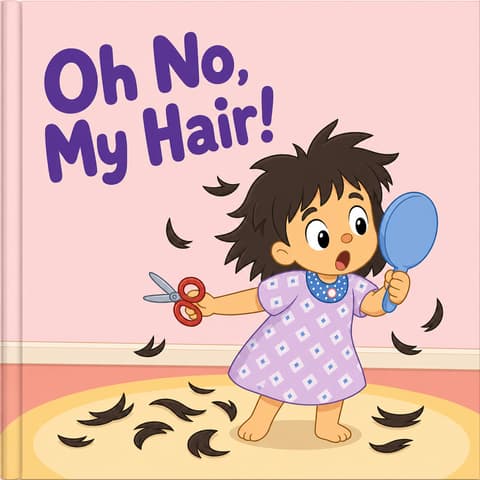
Oh No, My Hair!
When Allie spots an old photo of Mum with a short, pretty haircut, she decides she simply must have one too - so she grabs the craft scissors and gets snipping! But what happens when Allie sees herself in the mirror? Can noodles, green beans, or a blanket of spinach leaves really fix a haircut gone wrong? This decodable reader practises VC/CV syllables in words like ‘haircut,’ ‘mirror,’ ‘scissors,’ ‘blanket,’ and ‘picture.’
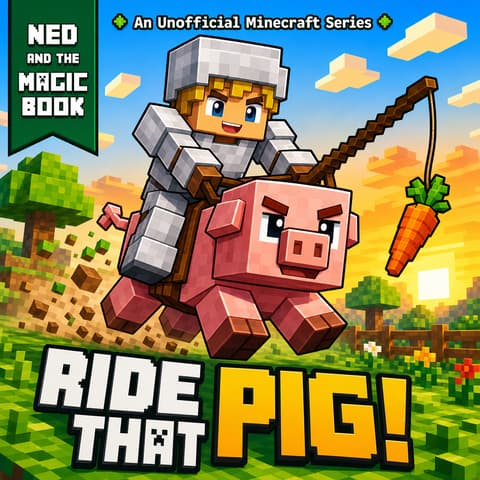
Ride That Pig!
Ned is lost in a dismal swamp, his metal armour clanking and slimes bouncing everywhere - but what happens when a strange little pig starts following him home? Could Ned really saddle up a pig and ride it around the yard? With the Book grumbling and Milky watching in horror, Ned is about to try something truly ridiculous. This decodable reader practises le/al/el/il words such as ‘saddle,’ ‘final,’ ‘bubbles,’ ‘metal,’ and ‘dangle.’
Frequently Asked Questions
Why are funny books so effective for reluctant 2nd grade readers?
Funny books for 2nd graders work for reluctant readers because humour creates an immediate, positive emotional response that overrides resistance. Murphy Odo (2024) highlights that when children associate reading with enjoyment rather than effort, they are far more likely to pick up another book. Bookbot’s humorous books for 2nd grade readers are levelled by phonics skills and available on the website, with many titles free to read, so every reluctant reader can find a story that clicks.
How does laughing while reading support fluency in 2nd graders?
When children laugh at funny stories for 6 year olds, they naturally re-read favourite lines, share jokes aloud, and request the same book again, all of which build the repeated practice that Stanovich (1986) links to accelerated reading growth. This stage, described by Chall (1983) as ‘confirmation and fluency,’ is precisely when children need high-volume, enjoyable reading to develop speed and expression. Bookbot’s funny picture books for second grade follow a structured scope and sequence so that every re-read reinforces digraphs, vowel teams, and multi-syllable word patterns.
Can funny books for 2nd graders also build vocabulary?
Funny books for 2nd graders often use wordplay, puns, and exaggerated descriptions that expose children to creative language they would not encounter in everyday speech. Wang (2025) found that rich contextual exposure supports vocabulary acquisition in young readers, and humour provides a memorable context that helps new words stick. Bookbot’s funny stories for 6 year olds are available on the website, with many titles free to read, combining entertainment with systematic phonics progression.
What makes Bookbot's funny picture books different from other 2nd grade humour books?
Bookbot’s humorous books for 2nd grade readers are levelled by a structured phonics scope and sequence rather than generic grade bands, which the NRP (2000) identifies as the most effective approach to reading instruction. Each funny picture book for second grade targets specific decoding patterns, including digraphs, vowel teams, and r-controlled vowels, within genuinely entertaining stories. Browse books on the Bookbot website by grade and skill level, with many titles free to read, making daily reading practice easy and fun.