


Funny Books for 1st Graders
We’re committed to helping every child discover the joy of reading through stories they love. Discover hilarious funny books for 1st graders ages 5-6. Our children’s books feature silly characters and laugh-out-loud moments perfect for beginning readers. These picture books and storybooks build reading confidence through humor kids love.
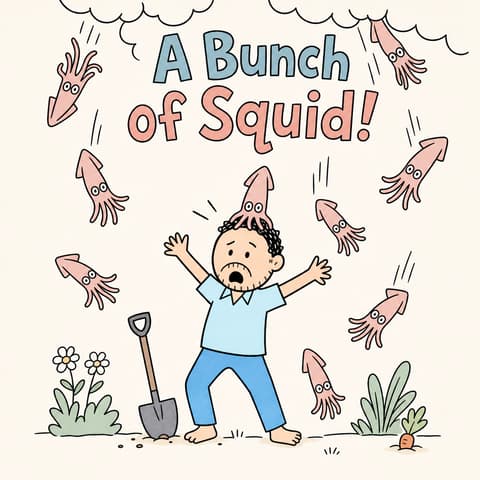
A Bunch of Squid!
Chad has big plans for the best garden on the street - until the sky starts doing something very strange. Swirls twist overhead, his shovel slips, and then… fish! Squid! Splattering down all around him! But what happens when the sky clears and there’s not a single drop of proof left behind? Will anyone believe Chad’s wild story? This decodable reader practices the ‘ch’ sound in words such as ‘bunch,’ ‘catch,’ ‘chunk,’ and ’twitch.’
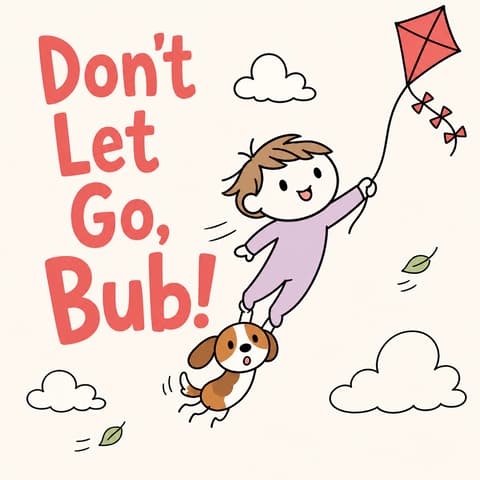
Don't Let Go, Bub!
Bub’s family loves the park bench, but Bub has her eye on something far more exciting - a bright kite dancing in the sky! What happens when Bub grabs the string and a big gust of wind lifts her feet right off the ground? Can Pup hold on tight enough to save her, or will the whole family end up dangling in the clouds? This decodable reader practices the ‘ch’ sound in words like ‘chomps,’ ‘fetch,’ ‘watch,’ and ‘chain.’
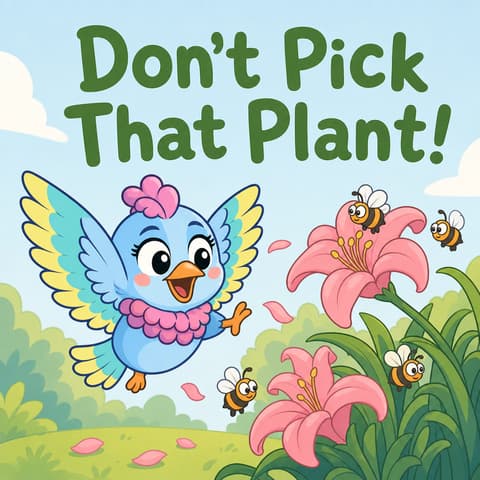
Don't Pick That Plant!
Beth has one blank spot in her cozy nest, and it needs the perfect flower to fill it. But every time she spots a bloom she likes, somebody shouts, “Don’t pick that flower!” A fussy butterfly, grumpy bees, a spider guarding its web - will Beth ever find a flower nobody tells her to leave alone? Can she trust her own wink of an idea? This decodable reader practices the nk phonogram in words like ‘blink,’ ‘honk,’ ‘plank,’ and ’think.’
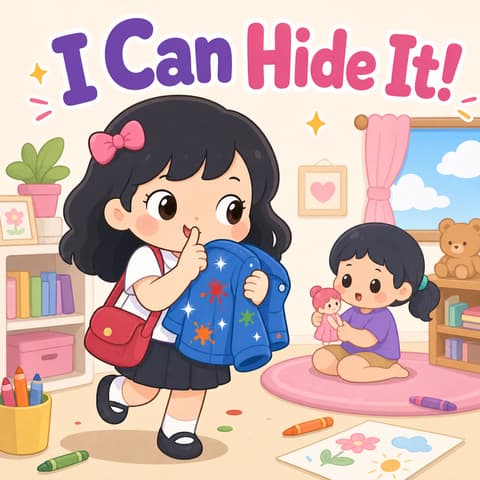
I Can Hide It!
Mia spots Lily’s brand new jacket just hanging there - and it looks SO cool. What could go wrong with trying it on for one tiny second? But when art class ends in a splatter of red, green, and orange paint, Mia panics and hides the jacket in the strangest spot ever. Can she fix the mess before Lily finds out? This decodable reader practices silent e words such as ‘hide,’ ‘make,’ ’nice,’ ‘shape,’ and ‘smiles.’
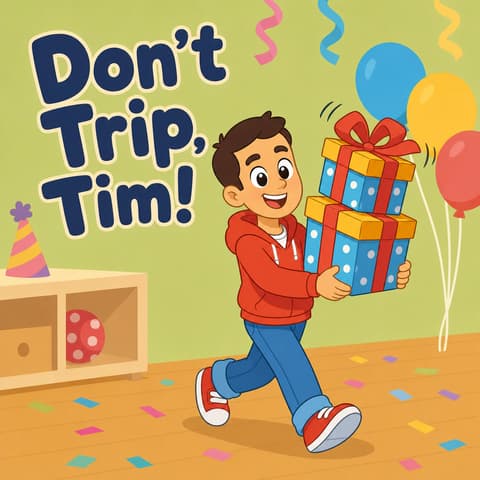
Don't Trip, Tim!
Tim has a SECRET mission, and it’s all for Jan’s big birthday surprise! There’s a cake to taste, balloons to puff up, a shiny new bike, and a pretty red dress - but someone has to carry the whole wobbly pile into the party room without tripping. Can Tim balance every single gift? Will the boxes topple before Jan walks through the door? This decodable reader practises silent e words such as ‘bike,’ ‘cake,’ ‘ride,’ ‘smile,’ and ‘prize.’
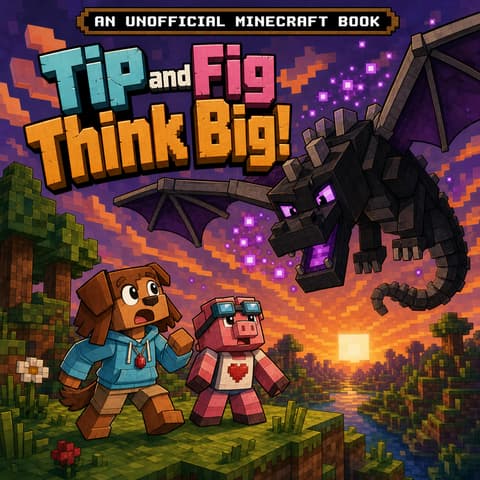
Tip and Fig Think Big!
Tip the Dog and Fig Pig are both walking home along the path when the sky goes dark. What could be big enough to blot out the sun? When a real live dragon swoops down, Fig Pig waves his tiny sword and Tip tries to think of a plan - but can two small friends really outwit a giant beast, or will they need some unexpected help? This decodable reader practises the ’th’ sound in words such as ‘both,’ ‘path,’ ’that,’ and ’think.’
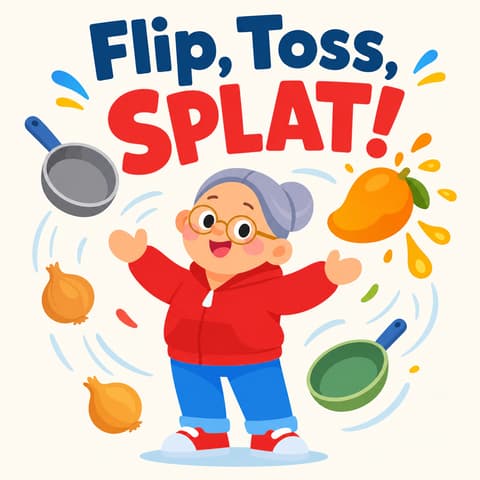
Flip, Toss, SPLAT!
Gran can juggle ANYTHING - pans, spoons, even an eggplant! But when she runs out of things to toss, what naughty trick will she try next? Will her spinning, flipping fun end in a big, messy splat? Grab a seat and watch Gran grin, grip, and zip her way through a wobbly, juggling adventure you won’t want to miss! This decodable reader practises CCVC/CCVCC blends in fun words like ‘flip,’ ‘splat,’ ‘grins,’ ‘drops,’ and ‘blast.’
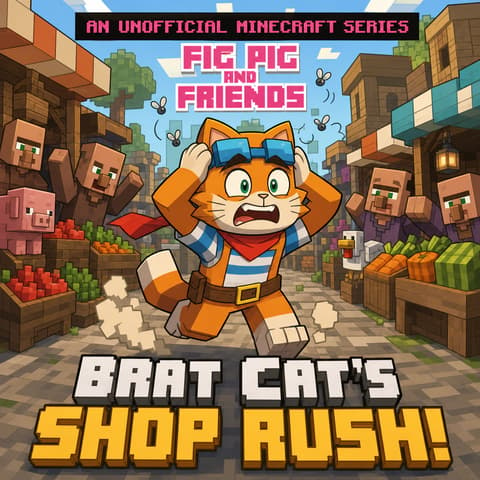
Brat Cat's Shop Rush!
Have you ever had a day so noisy, so busy, so sneezy that you just had to escape? Brat Cat has - and she’s had ENOUGH of the shop rush! With her pals Fig Pig and Tip, she tromps off to the cool birch shade to build something small, quiet, and all her own. But will her perfect hideaway stay as peaceful as she hopes? This decodable reader practises the sh phonogram in words like ‘crush,’ ‘rush,’ ‘shade,’ and ‘wish.’

Get Off, Hen!
Dr. Can Do’s stove gobbles logs faster than he can chop them, and his pile is nearly gone! Can a clever twig of bamboo save the day? He builds a huge, shiny machine with polished stone and gleaming parts - but why does one curious hen keep pecking at his invention? Will Doc ever figure out how she sneaks in? Join the chase in this funny farmyard flap. This decodable reader practises silent e words such as ‘made,’ ‘fine,’ ‘hide,’ ‘place,’ and ’time.’

Hole in My Home!
BANG! Jill wakes up covered in dust - again! Poor Dr. Can Do means well, but his workshop explosions have blown yet another hole in the ceiling. Can Jill build a quiet little home of her own, far from all the noise and smoke? And when a strange groaning sound rumbles down from above her new bed, what on earth could be stuck up there? This decodable reader practises silent e words such as ‘woke,’ ‘broke,’ ‘made,’ ‘froze,’ and ‘smile.’
Frequently Asked Questions
Why are funny books for 1st graders one of the best tools for reluctant readers?
Funny books for 1st graders work exceptionally well for reluctant readers because humor provides an immediate reward that outweighs the effort of decoding. Murphy Odo (2024) found that interest-driven reading materials are a key factor in engaging children who resist reading practice. When a 1st grader laughs at a silly character or unexpected twist, they associate reading with pleasure rather than struggle. Bookbot’s humorous books for beginning readers use decodable text so the comedy is accessible at every phonics level. For more strategies, see our article on reluctant readers.
How do funny stories for 5 year olds support the development of reading fluency?
Funny stories for 5 year olds naturally encourage rereading, as children want to revisit the parts that made them laugh, and this repetition builds automatic word recognition. Stanovich (1986) demonstrated that reading volume creates a compounding advantage, where more practice leads to faster skill growth. On Bookbot, funny picture books for first grade use decodable text aligned to 1st grade phonics patterns including CVC words, blends, and digraphs, so every rereading reinforces real phonics skills. Learn more about what is phonics.
Can humorous books for beginning readers also build comprehension skills?
Humorous books for beginning readers build comprehension because understanding humor requires children to process meaning, recognize incongruity, and make inferences, which are all higher-order thinking skills. Springer (2022) found that narratives that engage readers emotionally lead to stronger comprehension and retention. Bookbot’s funny books for 1st graders combine these comprehension-building benefits with structured phonics, and books are available to browse on the Bookbot website by grade and skill level.
How can parents use funny picture books for first grade to build a daily reading habit?
Parents can use funny picture books for first grade as an anchor for daily reading practice because children eagerly anticipate the laughter that comes with each session. Wang (2025) found that positive early reading experiences shape long-term attitudes toward literacy. Even 10 to 15 minutes of daily reading with a humorous book can make a meaningful difference in a 1st grader’s fluency and confidence. Bookbot organizes funny stories for 5 year olds by phonics level using a clear scope and sequence, making it easy to find the right book each day.