


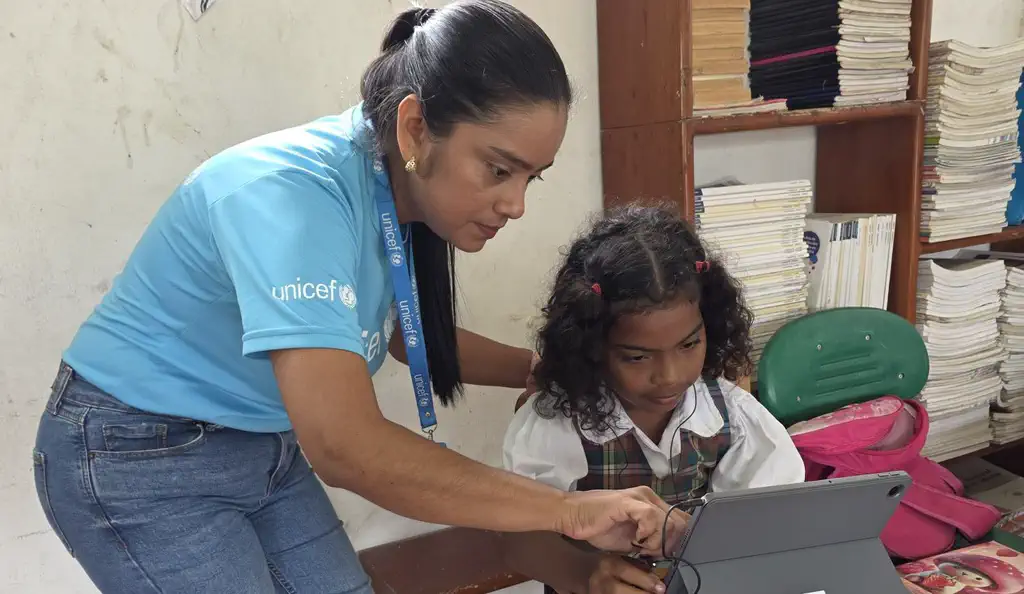

In March, I wrote that our work with UNICEF Colombia had finally stopped being dots on a screen. Back then it was planning sessions and a promise: Bookbot was coming to Colombia, and to South America for the first time.
Now children in Colombia are reading with it. We have started our first pre-pilot, a small early trial that runs before a full pilot. UNICEF and Fundación Luker are partnering to run it. Children read aloud to Bookbot in Spanish, and we record that reading so Bookbot can learn to listen better.
Over a Thousand Books in Spanish
To get here, we created over a thousand children’s books in Spanish. They are also audiobooks.
The voice came through UNICEF. They found an incredible voice artist, and that voice now reads the books aloud in the Bookbot app. A child can hear a story before reading it, or listen to books that are still too hard to read alone.
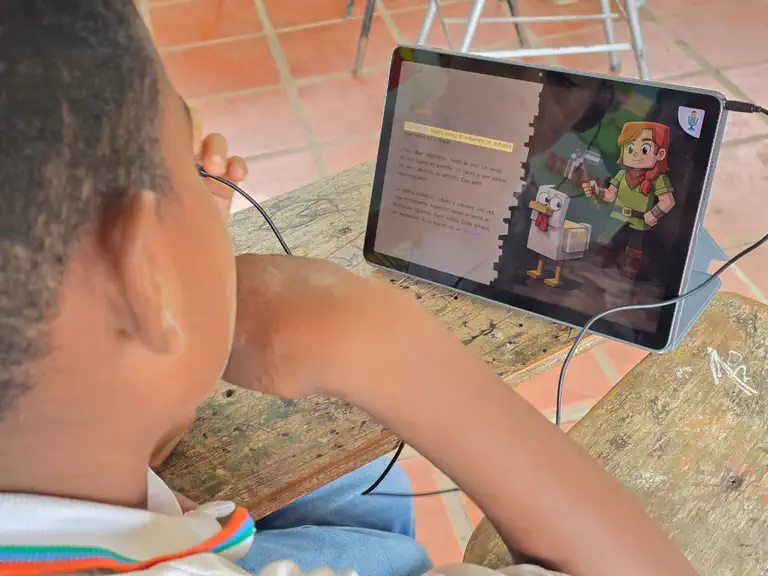
Bookbot also works the other way around. The child reads aloud, and Bookbot listens with speech recognition (software that turns spoken words into text), following along word by word.
Why We Need Children Reading Aloud
Most speech recognition learns from adult voices. Children sound different. Their voices are higher, some sounds are still forming, and a beginning reader sounds out a word, stops, and starts again. A system that learned from adults often struggles to follow them.
So the children in the pre-pilot read with an early version of our Spanish speech recognition, a prototype built for this stage. We record how they read, and those recordings help us refine how Bookbot hears Spanish-speaking children. Recordings are made with permission from the school and families, and used only to improve Bookbot’s speech recognition.
In English, recordings like these have let us study how 4,446 children read aloud, word by word.
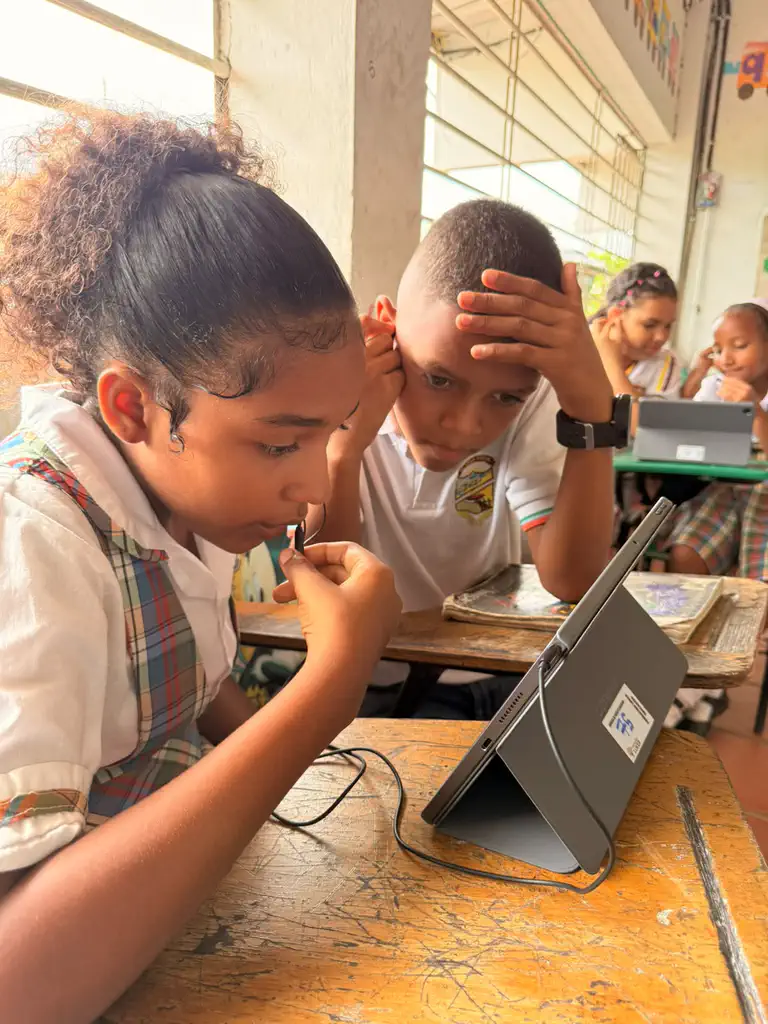
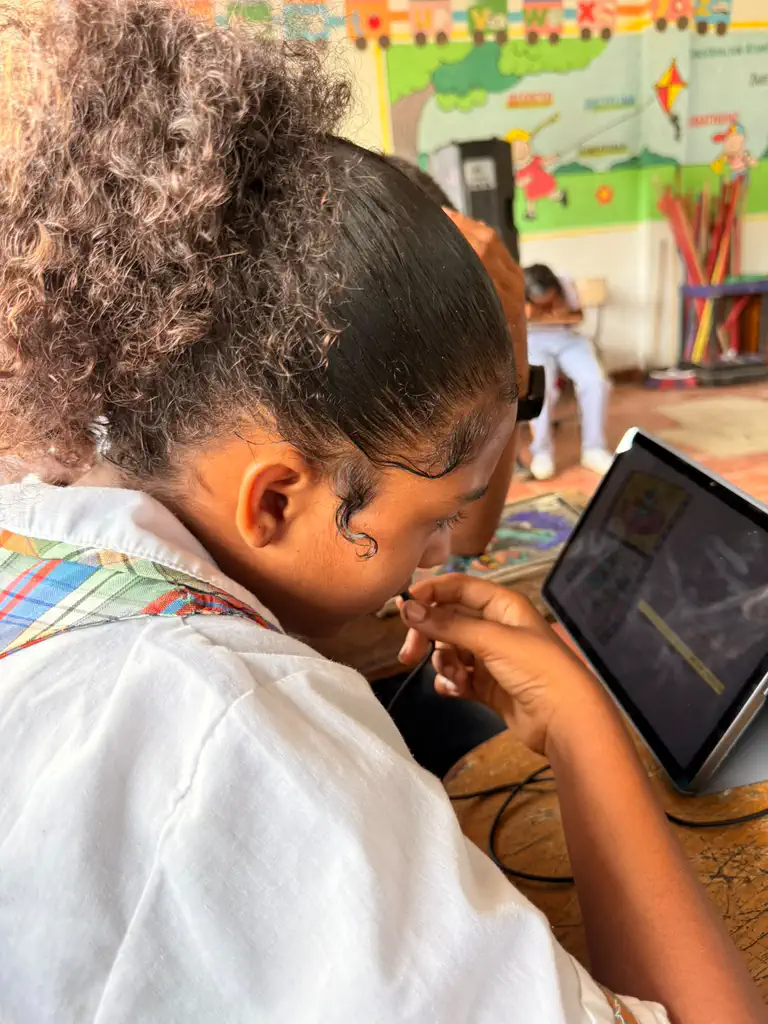
The tablets have headsets with a small microphone on the cable. Children hold it close to their mouth as they read, so Bookbot hears the reader rather than the whole classroom.
Why It Matters
Bookbot only helps a child if it hears them properly. If it marks a correct word as wrong, a child who is doing well feels like they are failing. If it misses a real mistake, the child loses the feedback that helps them improve.
That is why we test with real children before we grow. A pre-pilot lets us find problems while the group is small and the fixes are quick.
Getting this right in Colombia matters beyond Colombia too. Spanish is one of the most widely spoken languages in the world, and every child learning to read it deserves a reading tutor that understands them.
What’s Next
The first version of the Spanish Bookbot app is already out, on Google Play and the App Store. What we learn in this pre-pilot goes straight back into it, so Bookbot listens a little better with each update.
Thank you to UNICEF Colombia and Fundación Luker for running the pre-pilot together, and to the UNICEF team in the classrooms helping children get started. Thank you to the voice artist whose reading brings the books to life. And thank you to the school and the children who read for us.
More soon, once we hear what the first recordings tell us.