


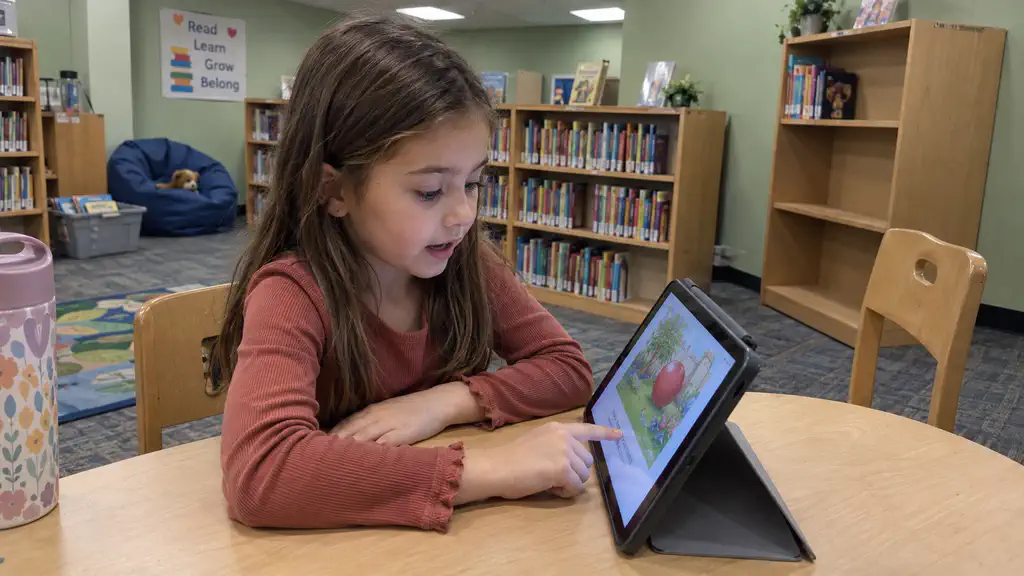

Listen to a child read aloud and the page tells only half the story. Across 4,446 children reading Bookbot’s English books, we counted about 36 departures from the text for every 100 words. Half were reading errors that left a word wrong. The other half (repeats, re-reads, fillers, half-started words) left the word right, and a standard fluency test does not score them as errors.
Key Findings
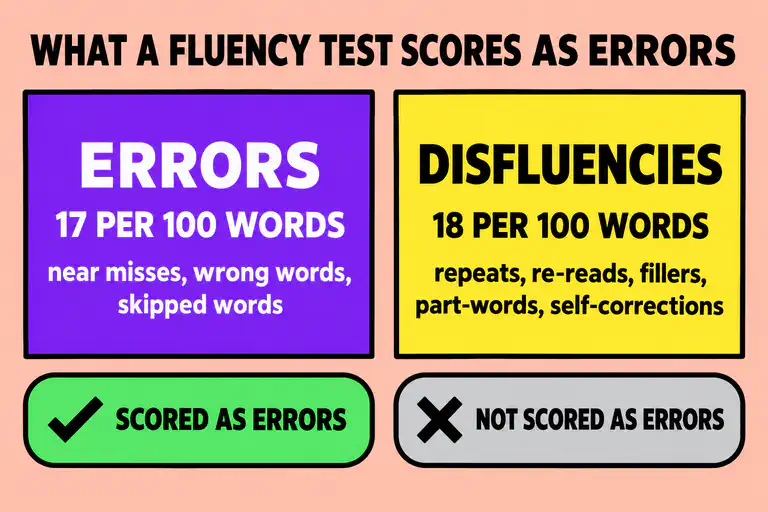
- Stumbles are as common as mistakes. An error leaves a word wrong (“shop” for “ship”). A disfluency is a stumble on the way to the right word: repeating it, re-reading, an “um” or a half-started “b- ball”. Children made about as many of each, 17 to 18 per 100 words.
- Children stumble where words get hard. Part-word starts (“b- ball”) were five times as common on long words as on short ones.
- Pauses flag trouble. A word read after a half-second pause was misread 21% of the time, against 14% after a shorter gap.
- Sound slips gather at word ends and in vowels.
- It can be measured at scale. A speech recognition system that keeps partial words agreed with a human listener on about 9 in 10 of the commonest events.
The recordings lean toward harder reading, so these rates describe; they are not norms.
Why We Counted
Reading miscue analysis is usually done by hand, and hand-coded studies are small. Nguyen, Del Tufo and Cutting (2020) coded the miscues of 82 children; Miller and Schwanenflugel (2008) followed the pauses of 92. Standard scoring narrows the view further: DIBELS ignores repetitions and inserted words and scores a quick self-correction as correct (University of Oregon, 2026), so most reading disfluency is never scored as an error.
How We Measured Reading Errors
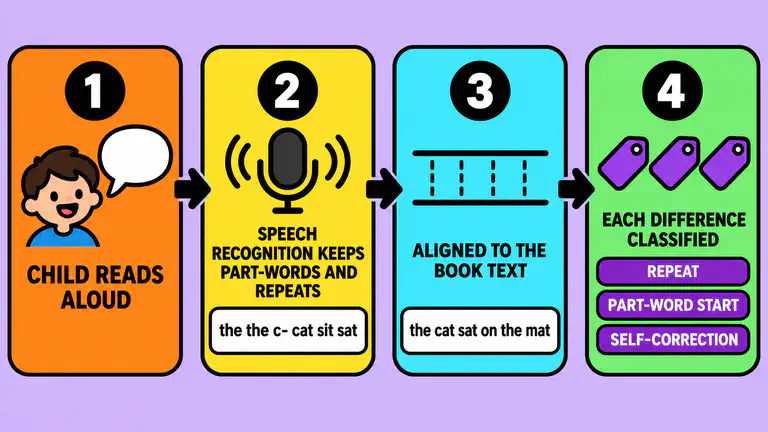
Standard speech recognition tidies speech into clean words and drops partial words and fillers. We developed a speech recognition system for children’s oral reading that also keeps partial words (“c-”), repetitions and fillers, aiming for a verbatim transcript.
Each transcript was then aligned word by word against the book’s text. The alignment allows for partial pages, re-reading, skipping, contractions and split words. Homophones count as correct, since the spelling is the transcriber’s. Each book word’s last reading is its outcome; an earlier wrong reading of the same word is a self-correction.
Every remaining difference was classified. Substitutions are sorted by how alike the two words are in spelling and sound, using a children’s pronunciation dictionary. Repetitions and self-corrections are identified from what the child said around them, and each partial word is tied to the word it starts. Pause lengths come from forced alignment, which times each word in the audio.
Rates are per 100 book words attempted, from the first to the last book word a recording reached, omissions included. Words cut off at a recording’s end are not counted against the child.
We checked 147 recordings by ear; for the commonest kinds, about 9 in 10 transcribed events were confirmed. The recordings analyzed are those selected for full verbatim transcription because they were hardest to transcribe. They lean toward harder reading: children read 82% of book words correctly in them, against 94% in the remaining recordings.
Types of Reading Errors and Disfluencies, Kind by Kind
Pick a kind in the menu below the bars, or click a bar, to see every form counted for it.
The word ends up wrong
Disfluencies
Pauses
Counted as correct
Near miss ship → shop
A word close to the book word in spelling or sound, or a non-word.
| # | Example | Children | Times | |
|---|---|---|---|---|
| 1 | is → it's | 136 | 172 | |
| 2 | it → it's | 120 | 157 | |
| 3 | pup → pop | 62 | 87 | |
| 4 | it → eat | 62 | 74 | |
| 5 | can → can't | 57 | 63 | |
| 6 | cod → cold | 52 | 69 | |
| 7 | she → see | 50 | 65 | |
| 8 | will → well | 49 | 55 | |
| 9 | they → day | 39 | 43 | |
| 10 | his → he's | 38 | 45 | |
| 11 | spots → sports | 37 | 41 | |
| 12 | wants → one | 36 | 37 | |
| 13 | can → cat | 34 | 39 | |
| 14 | ran → run | 33 | 43 | |
| 15 | he → hey | 33 | 38 | |
| 16 | cod → code | 33 | 36 | |
| 17 | says → said | 32 | 40 | |
| 18 | spot → sport | 31 | 36 | |
| 19 | dad → that | 30 | 35 | |
| 20 | her → hair | 30 | 35 |
Different word cat → dog
| # | Example | Children | Times | |
|---|---|---|---|---|
| 1 | a → all | 33 | 42 | |
| 2 | hat → head | 19 | 22 | |
| 3 | a → yeah | 18 | 26 | |
| 4 | to → go | 18 | 18 | |
| 5 | all → a | 17 | 17 | |
| 6 | a → say | 16 | 16 | |
| 7 | zom → some | 15 | 22 | |
| 8 | the → that's | 15 | 15 | |
| 9 | a → cat | 13 | 13 | |
| 10 | does → don't | 13 | 13 | |
| 11 | fish → face | 12 | 14 | |
| 12 | got → good | 12 | 13 | |
| 13 | help → have | 12 | 13 | |
| 14 | a → day | 12 | 12 | |
| 15 | little → the | 11 | 12 | |
| 16 | a → air | 10 | 13 | |
| 17 | a → eat | 10 | 11 | |
| 18 | is → see | 10 | 10 | |
| 19 | is → eats | 10 | 10 | |
| 20 | is → he's | 10 | 10 |
Small-word swap the → a
| # | Example | Children | Times | |
|---|---|---|---|---|
| 1 | a → the | 267 | 394 | |
| 2 | the → a | 178 | 233 | |
| 3 | the → that | 166 | 214 | |
| 4 | in → and | 135 | 174 | |
| 5 | a → and | 132 | 149 | |
| 6 | not → no | 98 | 110 | |
| 7 | is → I | 95 | 104 | |
| 8 | she → he | 87 | 105 | |
| 9 | he → she | 79 | 106 | |
| 10 | off → of | 79 | 89 | |
| 11 | it → I | 79 | 81 | |
| 12 | the → they | 78 | 99 | |
| 13 | of → off | 78 | 92 | |
| 14 | it → is | 73 | 88 | |
| 15 | the → this | 73 | 87 | |
| 16 | can → and | 71 | 83 | |
| 17 | they → the | 70 | 77 | |
| 18 | a → at | 65 | 77 | |
| 19 | is → it | 65 | 70 | |
| 20 | this → the | 62 | 70 |
Ending changed jumped → jump
| # | Example | Children | Times | |
|---|---|---|---|---|
| 1 | gets → get | 81 | 104 | |
| 2 | has → had | 51 | 56 | |
| 3 | wants → want | 44 | 51 | |
| 4 | lot → lots | 42 | 52 | |
| 5 | says → say | 41 | 50 | |
| 6 | puts → put | 37 | 41 | |
| 7 | get → gets | 35 | 40 | |
| 8 | likes → like | 34 | 37 | |
| 9 | that → that's | 33 | 37 | |
| 10 | birds → bird | 33 | 34 | |
| 11 | cat → cats | 30 | 33 | |
| 12 | spots → spot | 30 | 30 | |
| 13 | starts → start | 29 | 32 | |
| 14 | finds → find | 29 | 30 | |
| 15 | sings → sing | 28 | 32 | |
| 16 | had → has | 27 | 30 | |
| 17 | makes → make | 26 | 29 | |
| 18 | bird → birds | 21 | 24 | |
| 19 | stands → stand | 21 | 22 | |
| 20 | lights → light | 20 | 30 |
Small word left out
These forms vary too much to repeat across children, so the list shows the book words they fell on.
| # | Book word | Children | Times | |
|---|---|---|---|---|
| 1 | a | 176 | 226 | |
| 2 | the | 120 | 183 | |
| 3 | it | 75 | 97 | |
| 4 | and | 68 | 92 | |
| 5 | to | 59 | 66 | |
| 6 | is | 56 | 61 | |
| 7 | in | 55 | 63 | |
| 8 | that | 44 | 51 | |
| 9 | of | 38 | 46 | |
| 10 | up | 33 | 39 | |
| 11 | I | 32 | 36 | |
| 12 | he | 31 | 34 | |
| 13 | she | 24 | 25 | |
| 14 | are | 22 | 27 | |
| 15 | at | 21 | 23 | |
| 16 | not | 21 | 22 | |
| 17 | with | 20 | 23 | |
| 18 | so | 19 | 21 | |
| 19 | on | 19 | 20 | |
| 20 | will | 17 | 20 |
Content word left out
These forms vary too much to repeat across children, so the list shows the book words they fell on.
| # | Book word | Children | Times | |
|---|---|---|---|---|
| 1 | all | 23 | 25 | |
| 2 | still | 10 | 12 | |
| 3 | like | 10 | 10 | |
| 4 | just | 9 | 10 | |
| 5 | big | 7 | 8 | |
| 6 | hmm | 7 | 8 | |
| 7 | says | 7 | 8 | |
| 8 | fish | 7 | 7 | |
| 9 | fun | 6 | 6 | |
| 10 | one | 6 | 6 | |
| 11 | back | 6 | 6 | |
| 12 | bee | 5 | 6 | |
| 13 | get | 5 | 6 | |
| 14 | little | 5 | 5 | |
| 15 | pee | 4 | 5 | |
| 16 | gets | 4 | 5 | |
| 17 | time | 4 | 5 | |
| 18 | ah | 4 | 4 | |
| 19 | oh | 4 | 4 | |
| 20 | lot | 4 | 4 |
Voicing swap pig → big
| # | Example | Children | Times | |
|---|---|---|---|---|
| 1 | pig → big | 38 | 44 | |
| 2 | ned → net | 27 | 38 | |
| 3 | rot → rod | 16 | 23 | |
| 4 | lamp → lamb | 15 | 18 | |
| 5 | cod → cot | 14 | 16 | |
| 6 | thinks → things | 11 | 12 | |
| 7 | put → but | 11 | 11 | |
| 8 | got → god | 10 | 12 | |
| 9 | hat → had | 10 | 10 | |
| 10 | live → life | 9 | 11 | |
| 11 | sings → sinks | 9 | 10 | |
| 12 | dibs → dips | 8 | 12 | |
| 13 | bop → bob | 8 | 10 | |
| 14 | rod → rot | 8 | 9 | |
| 15 | pat → bat | 7 | 10 | |
| 16 | life → live | 7 | 9 | |
| 17 | sat → sad | 7 | 8 | |
| 18 | big → pig | 7 | 7 | |
| 19 | things → thinks | 7 | 7 | |
| 20 | zing → sing | 6 | 8 |
Reversal saw → was
| # | Example | Children | Times | |
|---|---|---|---|---|
| 1 | dig → big | 29 | 31 | |
| 2 | spot → stop | 15 | 19 | |
| 3 | lost → lots | 10 | 11 | |
| 4 | Dan → and | 9 | 9 | |
| 5 | being → begin | 8 | 9 | |
| 6 | from → form | 7 | 7 | |
| 7 | quite → quiet | 6 | 7 | |
| 8 | snug → sung | 6 | 6 | |
| 9 | spots → stops | 6 | 6 | |
| 10 | bad → dad | 5 | 6 | |
| 11 | lots → lost | 5 | 5 |
3+ words skipped
These forms vary too much to repeat across children, so the list shows the book words they fell on.
| # | Book text skipped | Children | Times | |
|---|---|---|---|---|
| 1 | j o j | 2 | 2 | |
| 2 | a beak a | 1 | 1 | |
| 3 | a bit of | 1 | 1 | |
| 4 | no it is | 1 | 1 | |
| 5 | down on a | 1 | 1 | |
| 6 | a stag the | 1 | 1 | |
| 7 | a toy bike | 1 | 1 | |
| 8 | he picks a | 1 | 1 | |
| 9 | he took it | 1 | 1 | |
| 10 | she is mad | 1 | 1 | |
| 11 | so good at | 1 | 1 | |
| 12 | and held on | 1 | 1 | |
| 13 | can pant if | 1 | 1 | |
| 14 | first it is | 1 | 1 | |
| 15 | he wants to | 1 | 1 | |
| 16 | I dont know | 1 | 1 | |
| 17 | I would not | 1 | 1 | |
| 18 | likely as a | 1 | 1 | |
| 19 | off the bus | 1 | 1 | |
| 20 | they go for | 1 | 1 |
Word repeated the the
| # | Example | Children | Times | |
|---|---|---|---|---|
| 1 | the the | 333 | 628 | |
| 2 | it it | 280 | 579 | |
| 3 | a a | 258 | 444 | |
| 4 | I I | 183 | 331 | |
| 5 | and and | 179 | 303 | |
| 6 | no no | 175 | 375 | |
| 7 | is is | 155 | 232 | |
| 8 | he he | 154 | 230 | |
| 9 | to to | 147 | 225 | |
| 10 | in in | 114 | 188 | |
| 11 | up up | 101 | 257 | |
| 12 | she she | 95 | 171 | |
| 13 | that that | 95 | 152 | |
| 14 | what what | 94 | 170 | |
| 15 | they they | 94 | 125 | |
| 16 | but but | 91 | 167 | |
| 17 | can can | 90 | 138 | |
| 18 | not not | 90 | 136 | |
| 19 | this this | 86 | 151 | |
| 20 | big big | 84 | 135 |
Extra word or remark
| # | Example | Children | Times | |
|---|---|---|---|---|
| 1 | it's | 104 | 119 | |
| 2 | one | 71 | 76 | |
| 3 | yeah | 66 | 76 | |
| 4 | don't | 66 | 73 | |
| 5 | like | 62 | 65 | |
| 6 | go | 61 | 68 | |
| 7 | know | 61 | 67 | |
| 8 | all | 60 | 65 | |
| 9 | just | 59 | 70 | |
| 10 | say | 51 | 55 | |
| 11 | okay | 46 | 52 | |
| 12 | I'm | 45 | 53 | |
| 13 | that's | 41 | 45 | |
| 14 | read | 41 | 42 | |
| 15 | said | 38 | 42 | |
| 16 | good | 37 | 47 | |
| 17 | get | 36 | 40 | |
| 18 | got | 36 | 37 | |
| 19 | big | 34 | 35 | |
| 20 | see | 33 | 37 |
Phrase re-read the cat the cat
| # | Example | Children | Times | |
|---|---|---|---|---|
| 1 | it is it is | 34 | 43 | |
| 2 | a lot a lot | 17 | 21 | |
| 3 | in the in the | 16 | 18 | |
| 4 | I am I am | 16 | 17 | |
| 5 | this is this is | 16 | 17 | |
| 6 | a dog a dog | 14 | 14 | |
| 7 | do not do not | 12 | 15 | |
| 8 | oh no oh no | 10 | 14 | |
| 9 | there is there is | 10 | 10 | |
| 10 | at the at the | 9 | 12 | |
| 11 | in a in a | 9 | 11 | |
| 12 | a cat a cat | 9 | 10 | |
| 13 | on the on the | 9 | 10 | |
| 14 | the dog the dog | 9 | 9 | |
| 15 | it has it has | 8 | 9 | |
| 16 | of the of the | 8 | 8 | |
| 17 | I have I have | 7 | 9 | |
| 18 | a big a big | 7 | 7 | |
| 19 | has a has a | 7 | 7 | |
| 20 | it is not it is not | 7 | 7 |
Extra small word
| # | Example | Children | Times | |
|---|---|---|---|---|
| 1 | a | 262 | 362 | |
| 2 | the | 253 | 339 | |
| 3 | I | 195 | 269 | |
| 4 | it | 195 | 250 | |
| 5 | and | 178 | 228 | |
| 6 | is | 171 | 208 | |
| 7 | you | 149 | 168 | |
| 8 | that | 135 | 155 | |
| 9 | to | 127 | 150 | |
| 10 | no | 123 | 150 | |
| 11 | what | 122 | 145 | |
| 12 | in | 113 | 128 | |
| 13 | this | 103 | 114 | |
| 14 | not | 101 | 114 | |
| 15 | at | 98 | 113 | |
| 16 | me | 89 | 100 | |
| 17 | on | 86 | 98 | |
| 18 | but | 86 | 98 | |
| 19 | of | 82 | 93 | |
| 20 | he | 80 | 92 |
Filler um, uh, er
| # | Example | Children | Times | |
|---|---|---|---|---|
| 1 | uh | 740 | 1,415 | |
| 2 | oh | 666 | 1,099 | |
| 3 | um | 392 | 591 | |
| 4 | ah | 285 | 491 | |
| 5 | mm | 198 | 290 | |
| 6 | hmm | 147 | 226 | |
| 7 | huh | 123 | 172 | |
| 8 | eh | 101 | 143 | |
| 9 | er | 54 | 80 | |
| 10 | hm | 38 | 46 | |
| 11 | ooh | 32 | 39 | |
| 12 | mhm | 10 | 11 |
Word from elsewhere on the page
| # | Example | Children | Times | |
|---|---|---|---|---|
| 1 | the | 324 | 527 | |
| 2 | a | 255 | 373 | |
| 3 | it | 155 | 186 | |
| 4 | is | 139 | 165 | |
| 5 | to | 128 | 177 | |
| 6 | and | 119 | 167 | |
| 7 | I | 90 | 115 | |
| 8 | in | 68 | 79 | |
| 9 | he | 66 | 80 | |
| 10 | of | 58 | 79 | |
| 11 | not | 42 | 48 | |
| 12 | on | 40 | 42 | |
| 13 | can | 36 | 38 | |
| 14 | that | 35 | 43 | |
| 15 | they | 34 | 38 | |
| 16 | but | 31 | 35 | |
| 17 | you | 30 | 39 | |
| 18 | up | 30 | 31 | |
| 19 | all | 28 | 33 | |
| 20 | are | 27 | 28 |
Part-word start b- ball
Ear check: 8 of 11 transcribed starts confirmed, none missed.
| # | Example | Children | Times | |
|---|---|---|---|---|
| 1 | t- to | 22 | 23 | |
| 2 | c- can | 20 | 20 | |
| 3 | n- not | 19 | 19 | |
| 4 | sh- she | 15 | 15 | |
| 5 | ha- has | 13 | 14 | |
| 6 | b- big | 13 | 13 | |
| 7 | s- see | 13 | 13 | |
| 8 | s- some | 13 | 13 | |
| 9 | th- the | 13 | 13 | |
| 10 | ca- can | 12 | 12 | |
| 11 | fi- fish | 12 | 12 | |
| 12 | I- is | 11 | 11 | |
| 13 | g- get | 11 | 11 | |
| 14 | l- lot | 11 | 11 | |
| 15 | s- she | 11 | 11 | |
| 16 | t- the | 11 | 11 | |
| 17 | s- spot | 11 | 11 | |
| 18 | w- will | 11 | 11 | |
| 19 | a- and | 10 | 10 | |
| 20 | bi- big | 10 | 10 |
Self-correction sit → sat
First try → the word it was fixed to.
| # | Example | Children | Times | |
|---|---|---|---|---|
| 1 | it → is | 40 | 41 | |
| 2 | the → a | 24 | 29 | |
| 3 | is → it | 24 | 24 | |
| 4 | to → the | 23 | 25 | |
| 5 | the → to | 19 | 19 | |
| 6 | it → in | 15 | 15 | |
| 7 | a → the | 14 | 16 | |
| 8 | this → is | 14 | 14 | |
| 9 | and → a | 13 | 13 | |
| 10 | he → his | 13 | 13 | |
| 11 | the → that | 12 | 13 | |
| 12 | that → the | 10 | 12 | |
| 13 | in → it | 10 | 10 | |
| 14 | is → in | 10 | 10 | |
| 15 | the → she | 10 | 10 | |
| 16 | the → they | 10 | 10 | |
| 17 | don't → do | 9 | 9 | |
| 18 | it → I | 8 | 9 | |
| 19 | the → top | 8 | 9 | |
| 20 | to → a | 8 | 8 |
Stray part-word sound
| # | Example | Children | Times | |
|---|---|---|---|---|
| 1 | s- | 95 | 106 | |
| 2 | b | 69 | 80 | |
| 3 | e | 68 | 81 | |
| 4 | s | 63 | 75 | |
| 5 | o | 35 | 41 | |
| 6 | x | 35 | 38 | |
| 7 | m | 34 | 36 | |
| 8 | b- | 32 | 33 | |
| 9 | ha- | 27 | 30 | |
| 10 | f- | 27 | 27 | |
| 11 | l | 26 | 29 | |
| 12 | t | 26 | 27 | |
| 13 | p | 25 | 28 | |
| 14 | t- | 25 | 27 | |
| 15 | d | 24 | 28 | |
| 16 | f | 23 | 25 | |
| 17 | k | 23 | 24 | |
| 18 | g- | 23 | 24 | |
| 19 | d- | 23 | 23 | |
| 20 | n | 19 | 19 |
Fixed on re-reading
First try → the word it was fixed to.
| # | Example | Children | Times | |
|---|---|---|---|---|
| 1 | the → a | 22 | 23 | |
| 2 | a → the | 10 | 10 | |
| 3 | I → it | 5 | 5 |
Sounding out c- a- t
These forms vary too much to repeat across children, so the list shows the book words they fell on.
| # | Book word | Children | Times | |
|---|---|---|---|---|
| 1 | and | 8 | 8 | |
| 2 | a | 7 | 7 | |
| 3 | is | 7 | 7 | |
| 4 | can | 7 | 7 | |
| 5 | the | 5 | 6 | |
| 6 | not | 5 | 5 | |
| 7 | it | 4 | 4 | |
| 8 | she | 4 | 4 | |
| 9 | gets | 4 | 4 | |
| 10 | help | 4 | 4 | |
| 11 | this | 4 | 4 | |
| 12 | big | 3 | 3 | |
| 13 | cat | 3 | 3 | |
| 14 | dog | 3 | 3 | |
| 15 | get | 3 | 3 | |
| 16 | got | 3 | 3 | |
| 17 | sad | 3 | 3 | |
| 18 | sit | 3 | 3 | |
| 19 | find | 3 | 3 | |
| 20 | rest | 3 | 3 |
Started, then another word
These forms vary too much to repeat across children, so the list shows the book words they fell on.
| # | Book word | Children | Times | |
|---|---|---|---|---|
| 1 | get | 5 | 5 | |
| 2 | spot | 3 | 4 | |
| 3 | be | 3 | 3 | |
| 4 | dig | 3 | 3 | |
| 5 | cave | 3 | 3 | |
| 6 | birds | 3 | 3 | |
| 7 | big | 2 | 3 | |
| 8 | and | 2 | 2 | |
| 9 | can | 2 | 2 | |
| 10 | elf | 2 | 2 | |
| 11 | his | 2 | 2 | |
| 12 | pal | 2 | 2 | |
| 13 | bees | 2 | 2 | |
| 14 | each | 2 | 2 | |
| 15 | fine | 2 | 2 | |
| 16 | from | 2 | 2 | |
| 17 | have | 2 | 2 | |
| 18 | hide | 2 | 2 | |
| 19 | next | 2 | 2 | |
| 20 | seen | 2 | 2 |
Start after the word dog do-
These forms vary too much to repeat across children, so the list shows the book words they fell on.
| # | Book word | Children | Times | |
|---|---|---|---|---|
| 1 | and | 6 | 6 | |
| 2 | the | 5 | 5 | |
| 3 | a | 4 | 4 | |
| 4 | to | 3 | 3 | |
| 5 | are | 3 | 3 | |
| 6 | but | 3 | 3 | |
| 7 | his | 3 | 3 | |
| 8 | she | 3 | 3 | |
| 9 | with | 3 | 3 | |
| 10 | in | 2 | 2 | |
| 11 | is | 2 | 2 | |
| 12 | it | 2 | 2 | |
| 13 | did | 2 | 2 | |
| 14 | lot | 2 | 2 | |
| 15 | not | 2 | 2 | |
| 16 | set | 2 | 2 | |
| 17 | back | 2 | 2 | |
| 18 | from | 2 | 2 | |
| 19 | gets | 2 | 2 | |
| 20 | have | 2 | 2 |
Pause 0.5–1 s
Each example is the word read after the pause.
| # | Example | Children | Times | |
|---|---|---|---|---|
| 1 | … the | 979 | 2,386 | |
| 2 | … a | 912 | 1,921 | |
| 3 | … to | 705 | 1,375 | |
| 4 | … and | 703 | 1,507 | |
| 5 | … it | 666 | 1,214 | |
| 6 | … is | 639 | 1,129 | |
| 7 | … in | 564 | 920 | |
| 8 | … I | 478 | 863 | |
| 9 | … he | 444 | 757 | |
| 10 | … on | 418 | 594 | |
| 11 | … of | 378 | 587 | |
| 12 | … they | 331 | 533 | |
| 13 | … that | 308 | 457 | |
| 14 | … she | 307 | 502 | |
| 15 | … but | 297 | 435 | |
| 16 | … can | 258 | 357 | |
| 17 | … not | 249 | 373 | |
| 18 | … with | 241 | 334 | |
| 19 | … up | 235 | 327 | |
| 20 | … no | 228 | 281 |
Pause 1 s or more
Each example is the word read after the pause.
| # | Example | Children | Times | |
|---|---|---|---|---|
| 1 | … the | 928 | 2,198 | |
| 2 | … a | 791 | 1,528 | |
| 3 | … and | 644 | 1,300 | |
| 4 | … it | 616 | 1,137 | |
| 5 | … is | 577 | 955 | |
| 6 | … to | 561 | 996 | |
| 7 | … I | 521 | 937 | |
| 8 | … in | 492 | 798 | |
| 9 | … he | 464 | 807 | |
| 10 | … on | 342 | 478 | |
| 11 | … they | 339 | 618 | |
| 12 | … of | 334 | 503 | |
| 13 | … but | 301 | 471 | |
| 14 | … she | 300 | 515 | |
| 15 | … no | 276 | 364 | |
| 16 | … that | 265 | 388 | |
| 17 | … can | 257 | 373 | |
| 18 | … not | 251 | 359 | |
| 19 | … this | 244 | 319 | |
| 20 | … up | 232 | 335 |
Homophone or spacing to → two
Counted as correct: the spelling is the transcriber’s, not the child’s.
| # | Example | Children | Times | |
|---|---|---|---|---|
| 1 | to → two | 315 | 404 | |
| 2 | an → and | 101 | 112 | |
| 3 | can not → cannot | 93 | 124 | |
| 4 | his → is | 81 | 92 | |
| 5 | to → too | 78 | 86 | |
| 6 | wants → once | 75 | 82 | |
| 7 | a → are | 64 | 70 | |
| 8 | for → four | 53 | 61 | |
| 9 | are → a | 41 | 47 | |
| 10 | want → one | 41 | 46 | |
| 11 | asks → ask | 40 | 43 | |
| 12 | asks → asked | 34 | 41 | |
| 13 | and → an | 34 | 34 | |
| 14 | too → to | 33 | 34 | |
| 15 | is → his | 32 | 33 | |
| 16 | allie → ali | 29 | 86 | |
| 17 | by → bye | 29 | 30 | |
| 18 | indo nesia → indonesia | 28 | 32 | |
| 19 | their → there | 28 | 31 | |
| 20 | sara → sarah | 27 | 63 |
Contraction do not → don't
| # | Example | Children | Times | |
|---|---|---|---|---|
| 1 | it is → it's | 149 | 210 | |
| 2 | I am → I'm | 46 | 57 | |
| 3 | do not → don't | 33 | 37 | |
| 4 | he is → he's | 27 | 31 | |
| 5 | I'm → I am | 13 | 14 | |
| 6 | there is → there's | 12 | 13 | |
| 7 | they are → they're | 10 | 13 | |
| 8 | she is → she's | 10 | 11 | |
| 9 | did not → didn't | 9 | 10 | |
| 10 | they're → they are | 8 | 13 | |
| 11 | that is → that's | 8 | 9 | |
| 12 | does not → doesn't | 7 | 7 | |
| 13 | it's → it is | 6 | 7 | |
| 14 | it has → it's | 6 | 6 | |
| 15 | you are → you're | 5 | 10 | |
| 16 | I have → I've | 5 | 5 | |
| 17 | can not → can't | 5 | 5 | |
| 18 | what is → what's | 5 | 5 | |
| 19 | what's → what is | 5 | 5 |
4,446 children reading passages aloud. Rates count events per 100 book words attempted, from the first to the last book word each recording reached, omissions included. In substitutions the book’s word comes first: ship → shop means the book said ship and the child said shop. A form is listed only if 5 or more children made it, except where the list shows book words. The recordings lean toward harder reading, so rates run higher than in typical reading. Data as of October 9, 2026.
Near misses were the commonest reading errors, at 7.5 per 100 book words: a word close to the target in spelling or sound, or a non-word. Castles, Rastle and Nation (2018) describe the phase this fits: a decoding attempt comes out slightly wrong (“breek” for “break”), and the child can draw on spoken vocabulary to correct it. Different words followed at 4.4, small-word swaps (a for the, he for she) at 3.2 and changed endings at 1.4.
Among disfluencies, word repetition led at 6.5 per 100 words, ahead of extra words or remarks (2.4), phrase re-reads (1.8), extra small words (1.7) and fillers (1.5). Omissions, reversals and voicing swaps were rare, each under 0.5 per 100.
Self-corrections ran at 0.8 per 100, plus 0.2 fixed on re-reading: about one for every 18 errors left standing. That definition is narrow, because a partial attempt that ends on the right word counts here as a part-word start or sounding out.
A words correct per minute score counts disfluencies only as lost time, so it scores about half of these reading miscues as errors.
Part-Word Starts Follow Word Difficulty
Part-word starts (“b- ball”) ran at 1.2 per 100 words. The ear check confirmed 8 of the 11 transcribed starts and missed none, too few to say whether that rate runs high or low. Where they land is the clearer finding.
Word length
How common the word is
Word type
Position
Part-word starts (one onset, then the word) by the book word they lead to. Frequency ranks count how many book pages hold the word. Data as of October 9, 2026.
Part-word starts were about five times as common on words of eight letters or more as on words of one to three, and nearly five times as common on rare words as on the 100 commonest, with names about as high. Content words drew more than four times as many as function words; the first word of a recording, slightly fewer than later words.
That pattern fits a reader working out a hard word from its parts. Part of the length gradient may be detectability, though: a partial start of a one-to-three-letter word is hard to tell apart from the word itself.
Words After Pauses Are Misread More Often
29% of gaps between words lasted half a second or more, and 15% lasted a second or more. A word read after a pause of at least half a second was misread 21% of the time, against 14% after a shorter gap.
This matches Miller and Schwanenflugel (2008), who found that pauses inside sentences were tied closely to word reading skill (r = −.77 in first grade, meaning weaker word readers paused far more) and suggested that long pauses may signal decoding difficulties.
Sound Changes Cluster at Word Ends and in Vowels
Among substitutions within two sounds of the book word, 41% of the sound changes fell at the end of the word, 31% in the middle and 29% at the start. The largest single kind was a vowel swapped in the middle of a word, about a fifth of all changes, spread across many vowel pairs.
The commonest individual changes were consonants dropped or added: /s/ dropped 2,037 times, /z/ dropped 1,857 times, /s/ added 1,606 times and /t/ added 1,182 times. Many /s/ and /z/ changes are probably inflections, a plural or third-person ending read without it, and some may be the transcription missing a quiet final sound. Others may be accent. DIBELS does not penalize consistent dialect or accent (University of Oregon, 2026), and a transcript alone cannot separate the two.
Limits of This Data
These numbers are descriptive and not peer reviewed. They come from children using one reading app with its own books, not a representative sample. Recordings with unclear audio were excluded, which may hide the weakest readers.
Single-word pages were excluded too: children often repeated the word there, which looks like retrying rather than reading. No child’s sentence appears on this page; every example is a word-level form counted across children.
If you work on oral reading errors, every category and example is in the charts above, and we would welcome comparisons with hand-coded samples.
References
Castles, A., Rastle, K., & Nation, K. (2018). Ending the reading wars: Reading acquisition from novice to expert. Psychological Science in the Public Interest, 19(1), 5–51. https://doi.org/10.1177/1529100618772271
Miller, J., & Schwanenflugel, P. J. (2008). A longitudinal study of the development of reading prosody as a dimension of oral reading fluency in early elementary school children. Reading Research Quarterly, 43(4), 336–354. https://doi.org/10.1598/RRQ.43.4.2
Nguyen, T. Q., Del Tufo, S. N., & Cutting, L. E. (2020). Readers recruit executive functions to self-correct miscues during oral reading fluency. Scientific Studies of Reading, 24(6), 462–483. https://doi.org/10.1080/10888438.2020.1720025
University of Oregon. (2026). 8th edition of Dynamic Indicators of Basic Early Literacy Skills (DIBELS): Administration and scoring guide (2026 ed.). https://dibels.uoregon.edu