



Bookbot is not endorsed by or affiliated with UFLI (the University of Florida Literacy Institute).
A child who has just learned that ai and ay both spell the long a sound needs to meet that pattern again and again, in real sentences, before it sticks. UFLI Foundations gives teachers a free decodable passage for each lesson from Lesson 8. For many children, one passage is not enough.
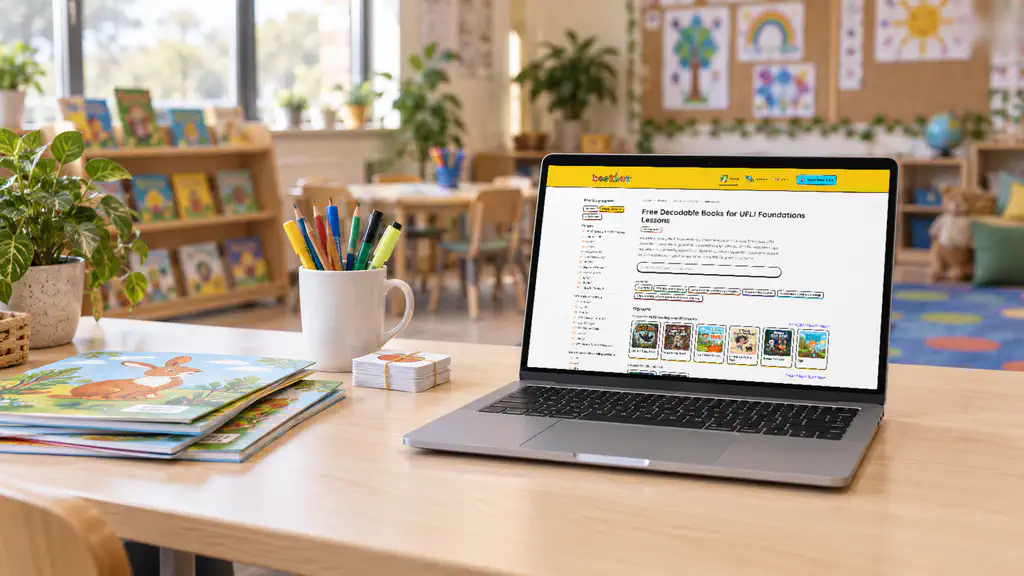
So we wrote more. Bookbot now has over a thousand decodable books for UFLI Foundations lessons. They run from digraphs (two letters, one sound, like sh) through to affixes (beginnings and endings like un- and -ful). They are original Bookbot stories, created to align with the UFLI Foundations scope and sequence, and many are free to read.
Here is what that looks like for a child, for a teacher, and for anyone who works on early reading.
Where UFLI Comes From
UFLI is the University of Florida Literacy Institute, pronounced “you fly”. UFLI says it began in 1998 as a method for tutoring struggling beginning readers, and grew into small-group and one-on-one programs for children with dyslexia.
Its whole-class model is UFLI Foundations, an explicit and systematic phonics program for kindergarten to second grade. Explicit and systematic means every letter-sound pattern is taught directly, in a planned order, with each lesson building on the last. UFLI’s founding director, Holly Lane, and Valentina Contesse wrote the manual, released in August 2022. According to Lane’s biography for a February 2026 US House hearing, more than 630,000 educators have obtained it since then, in every US state and 110 other countries. UFLI also shares much of its material for free, including a decodable passage for each lesson from Lesson 8 in its online Toolbox.
How It Works in the App
In the Bookbot app, the books sit in their own library, grouped into lesson bands. A child opens the band, picks the lesson their class is on, and chooses a story.
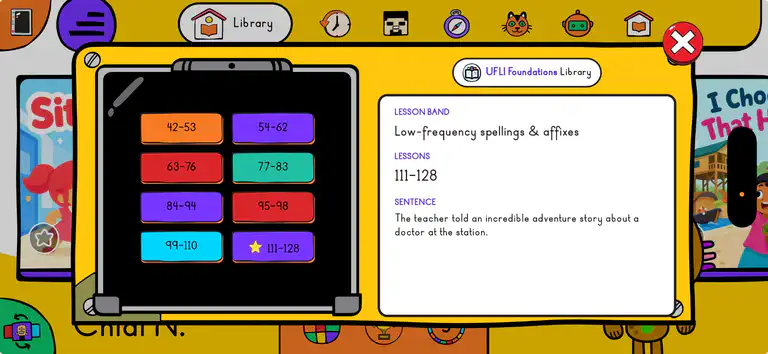
Then the child reads aloud. Bookbot listens with speech recognition and gives feedback on words as the child reads them. It can also read the book aloud first, so a child can hear the story before tackling it.
What Teachers See
Every time a child reads, Bookbot updates a class report. Each child has a row and each lesson has a column. Each square shows whether the child has mastered that lesson, is still learning it, needs help, or hasn’t started.
Tap a square and you see every word the child read in that lesson, right and wrong. A teacher can spot the exact spelling pattern a child is stuck on, and knows where to start the next day.
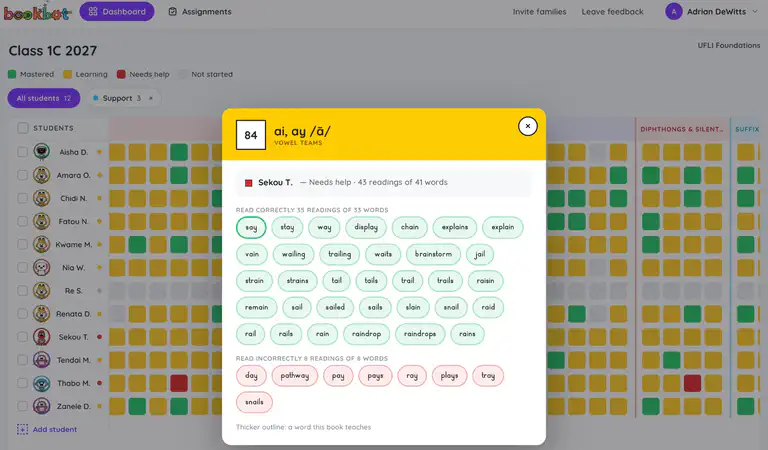
For a researcher, this is word-level data on each child’s practice reading, logged as they read. It complements point-in-time assessment rather than replacing it. We have already used this kind of data to look at how 4,446 children read aloud, word by word.
Why Children Love the Minecraft Books
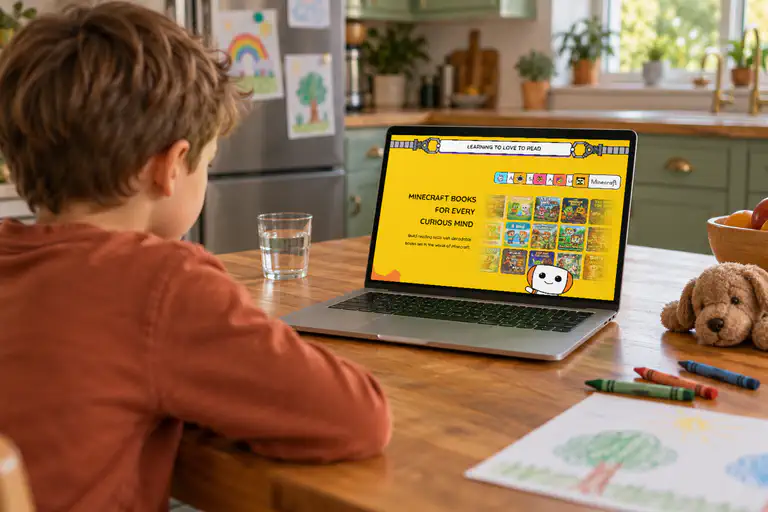
Children gravitate to Minecraft. They already know its world, its creatures and its characters, so they want to find out what happens to them next in a book.
That curiosity is what keeps a child reading through a page of new spelling patterns. Many of our books for UFLI lessons are unofficial Minecraft books, from the Dr. Can Do series to the Minecraft Ecology books.
Stories Where Every Child Belongs
We also write with GEDSI in mind: gender equality, disability and social inclusion. A child should be able to see themselves in the books they practice with, and see children unlike them as capable too.
So girls are heroes, and they solve the problem themselves. They lead adventures, crack mysteries and build things that work, using their own wits, skill and persistence. Nobody has to rescue them.
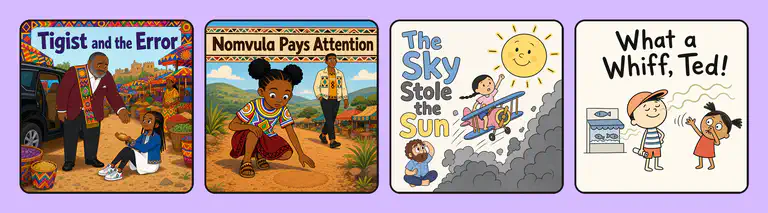
Disability is written the same way. In What a Whiff, Ted!, Ted walks to a birthday party with his white cane, finding the way by smell, sound and touch, while his friend Kim slowly works out that he doesn’t need rescuing. You can browse the books with girls as heroes and the books about inclusion.
Why Accents Matter
Phonics links letters to sounds, and the sounds a child hears depend on the accent they grow up with. Take ar, or and er, the r-controlled vowels UFLI Foundations teaches. In American English, car ends in an r sound. In most British, Australian and South African accents, it rhymes with spa.
So when a child sounds out a word, the voice modeling it should make the same sounds the child makes at home and hears in class. Otherwise the child hears one set of sounds and says another, which muddles the phonemic awareness they are building (hearing the separate sounds in a word). Parents notice this, and many feel strongly about it.
That is why the free books have read-along audio with a choice of four narrators: American, British, Australian and South African. A child can listen in the accent closest to their own, then read the story aloud themselves. The books come in American and British spelling, and can be read online or downloaded as a PDF to print at home. For help choosing the right one, see our guide to free decodable books.
What Comes Next: Non-Fiction
Next, we are building a large library of non-fiction books for the same lessons.
Decodable books are often simple stories. But children learning to decode are also learning about the world, and their practice books can do both jobs. The Minecraft Ecology books are a first step: unofficial encyclopedias of the game’s plains, forests, oceans and deserts that also teach real ecology, such as what happens to grassland when too many animals graze in one place. The non-fiction library will take that idea well beyond Minecraft.
Until then, the whole library is open to browse by lesson.
Bookbot is not endorsed by or affiliated with UFLI (the University of Florida Literacy Institute). UFLI and UFLI Foundations are trademarks of their respective owners. Bookbot’s Minecraft books are unofficial: they are not an official Minecraft product, and are not approved by or associated with Mojang or Microsoft. Minecraft is a trademark of Mojang Synergies AB.