


Anansi and the Big Pot <es>

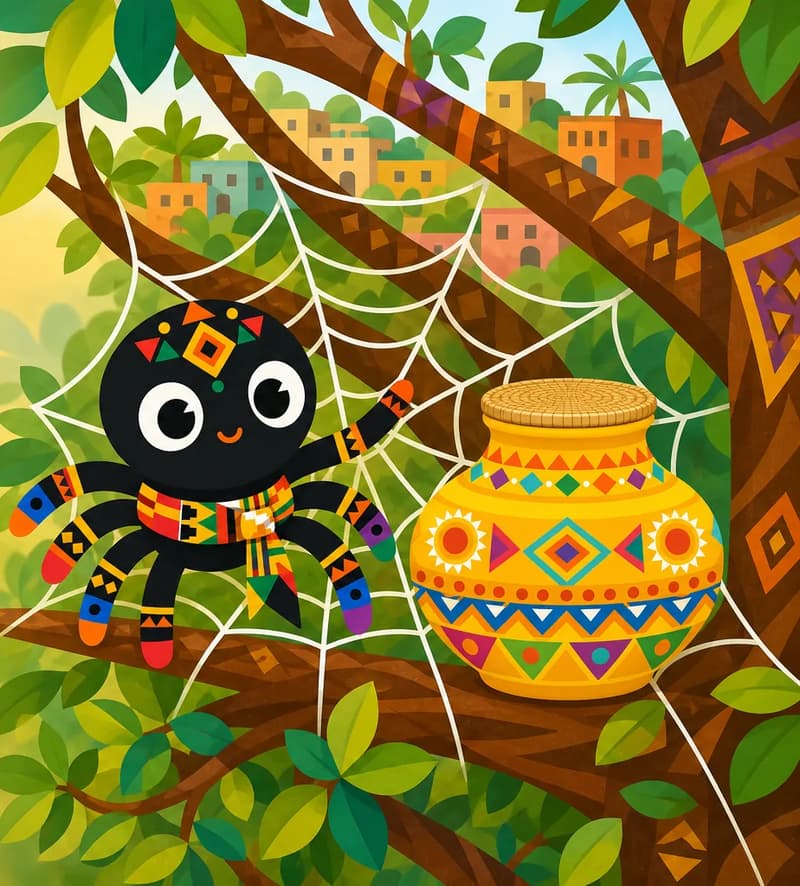
Anansi has a big plan. He wishes to get all the wisdom in the world and keep it in one pot. Then Anansi will be the most wise of all! The pot has a grass lid. Anansi grins at it the way a cat grins at a shut dish.
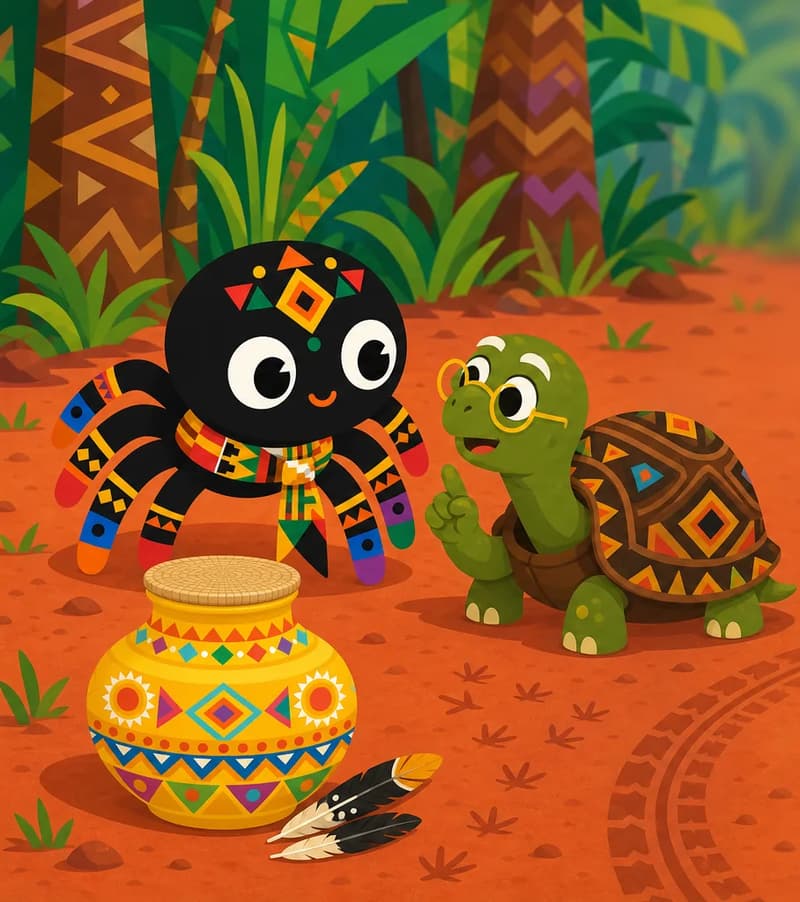
Anansi sets off. At each path he stops each one and asks for the best thing they know. Hornbill teaches him to wait. Crab teaches him to move sideways to get ahead. Anansi tips each bit into the jug and claps the lid on tight. By the time he reaches the tall tree, the jug feels full and very heavy.
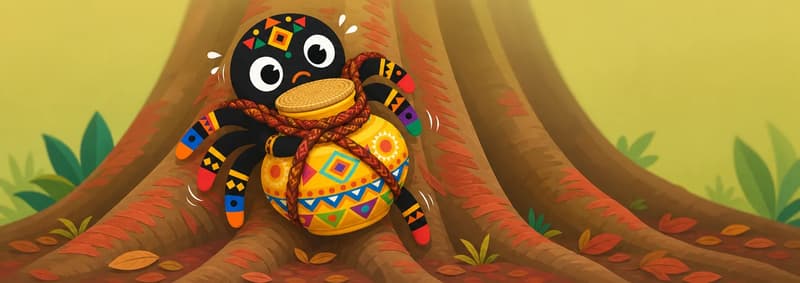
'I will hide the pot up in the branches,' Anansi says, 'where no one can reach it.' He ties the pot to his front with a rope and starts to climb. But the pot swings and bangs the trunk and sends him back down. He tries again. Slide. Again. Slide. The smooth trunk is no help at all.
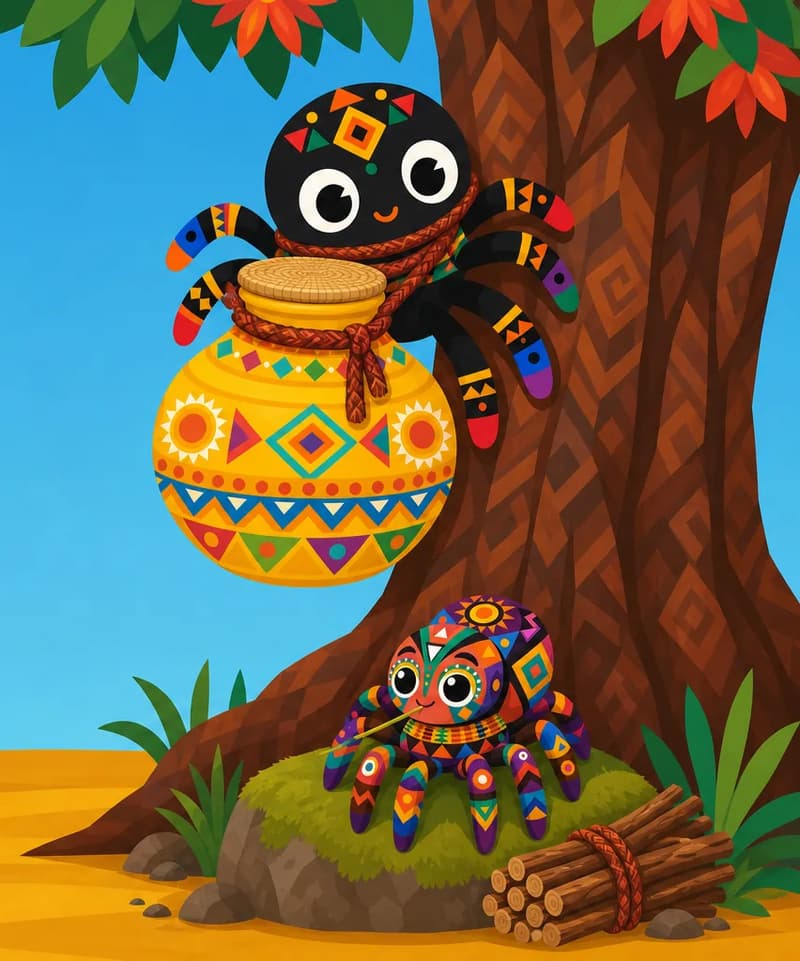
Down on a low rock sits Anansi's small son, Ntikuma. The boy watches the whole sliding mess and thinks. 'Father,' he calls up, 'why not tie the pot to the back? Then the legs can be free to climb!' It is such a simple thought that Anansi freezes on the bark.
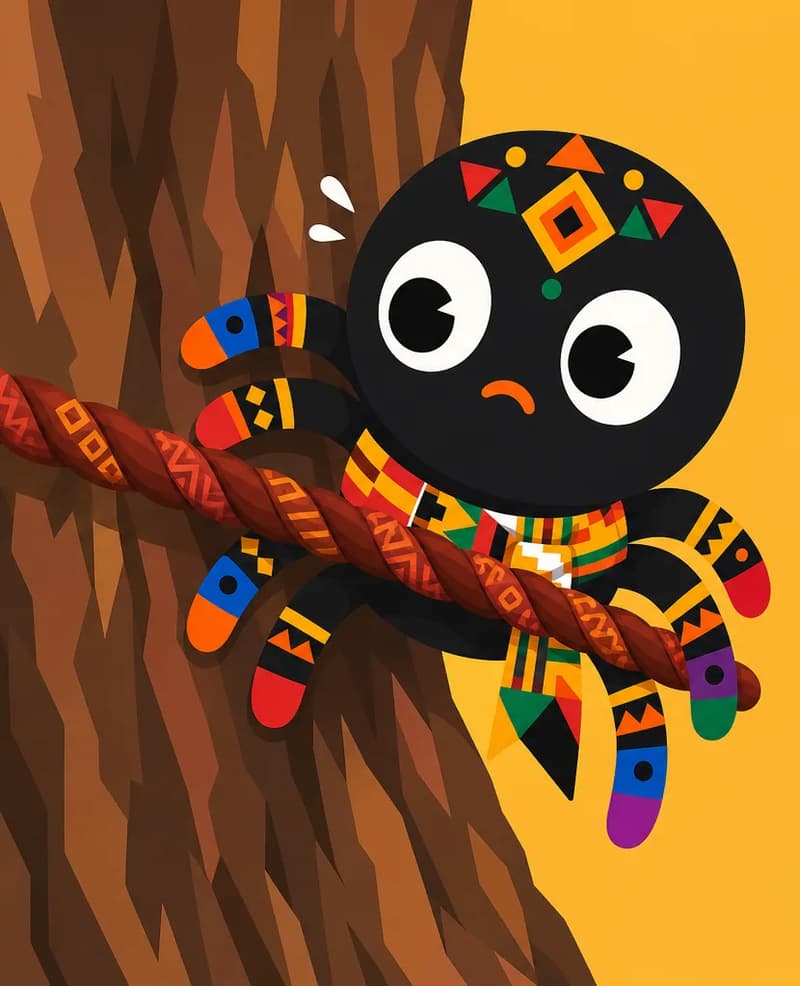
A hot blush rushes up Anansi from his first leg to his last. All day he gets wisdom from the world, and now his own small son gives him the best bit for free. The pot was to hold it all. But this thought came from outside the pot, and Ntikuma did not even go looking.

'If my small son has wisdom I do not,' Anansi says, 'then wisdom must be all over. With the man who fishes on the lake. With the old women who read the clouds.' He looks at the jug. He looks at the tree. Still, he can not give up. He ties the jug to his back and climbs. His legs grip well. Up and up he goes.
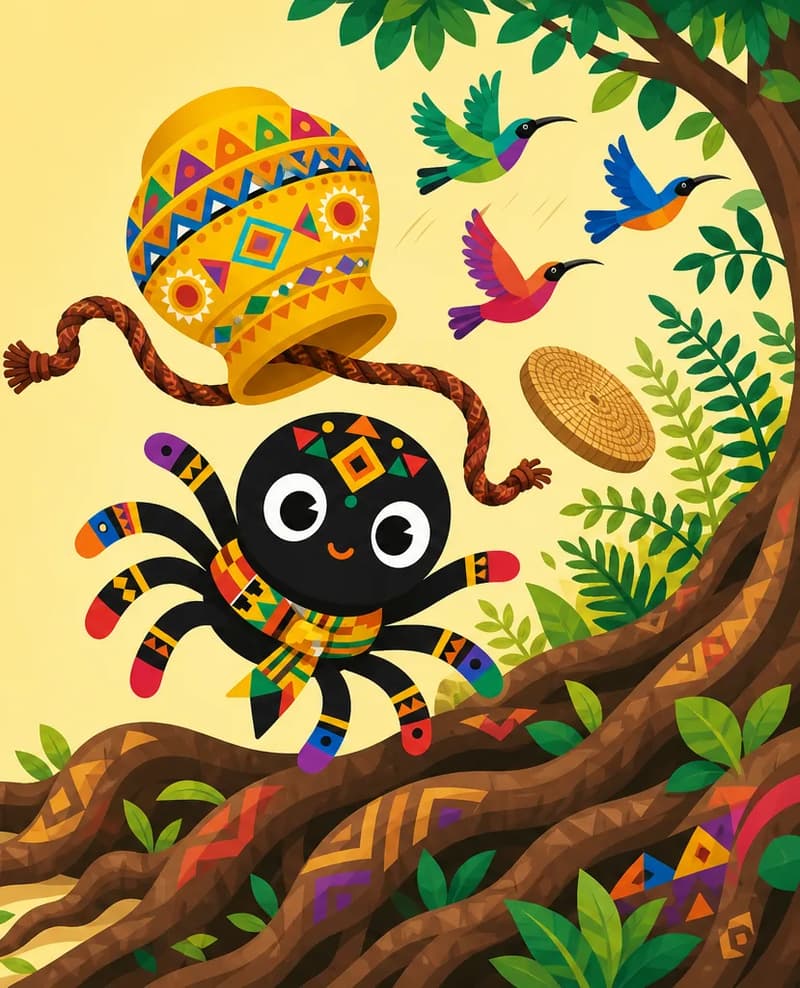
He is almost at the first high branch when the rope slips. The jug tilts. Anansi grabs for it and lets go of the trunk, and for one long moment he feels himself falling. The jug falls faster. It hits a root with a crack that scares the birds from the branches, and the lid spins off into the ferns below.
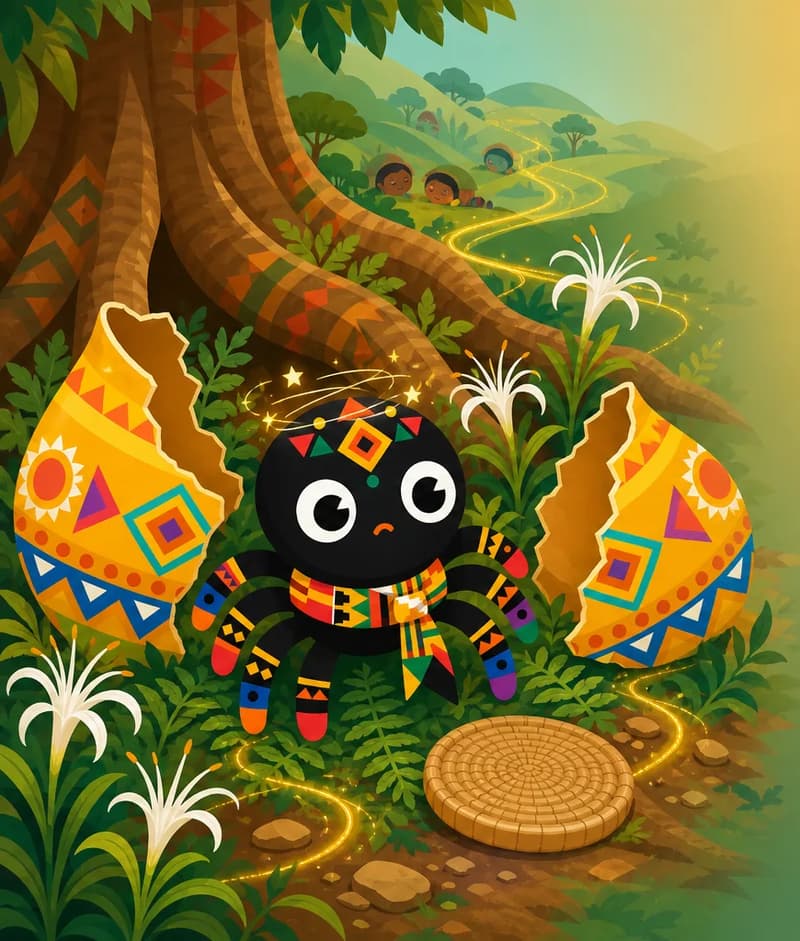
The wisdom bursts out of the pot and flies off on the wind. Some lands in the flowers by the stream. Some splashes into the stream. Some drifts into the ears of sleeping kids. Anansi lands in the ferns with a soft thud, not hurt, but the pot sits in two bits and the wisdom is gone.

Anansi sits in the ferns for a long time. Ntikuma sits by him and says nothing, for that is the most wise thing to do. The forest is quiet but for the river and the birds. Then a small bird perches on the broken pot and sings three bright notes. Anansi looks at his empty legs and feels strangely light.
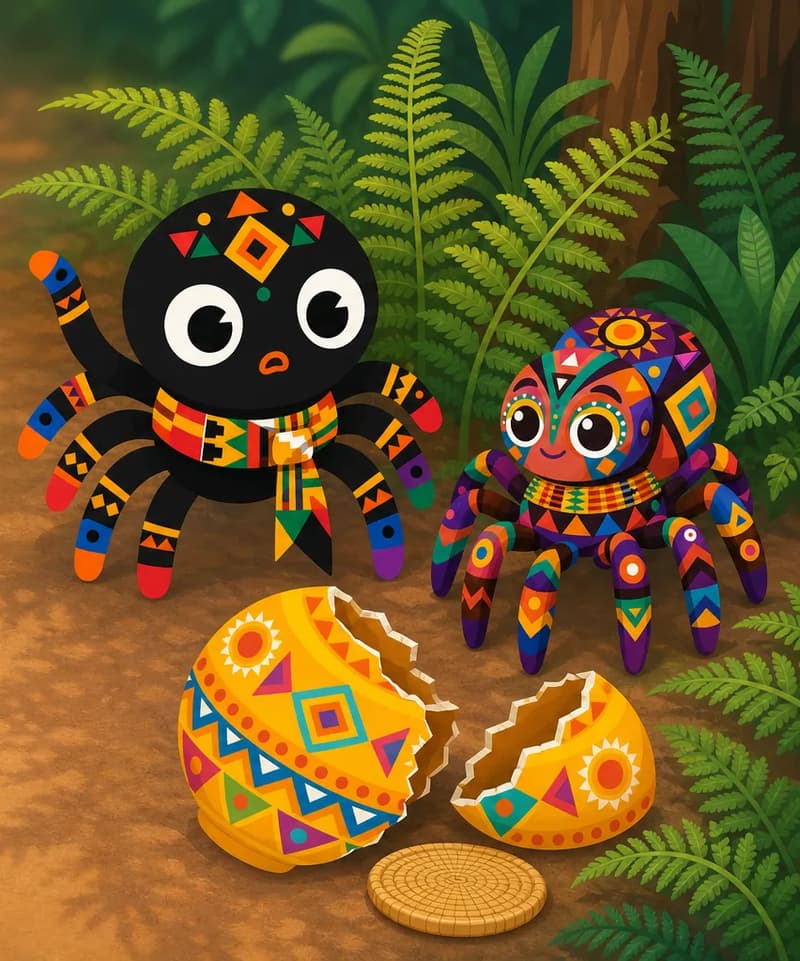
'I got the hornbill's wisdom to wait,' Anansi says slowly, 'but I did not use it. I got the crab's wisdom to move sideways, but I climbed straight up past all the branches.' He counts on his legs and runs out of legs first. 'The wisdom was never in the pot,' Ntikuma says softly. 'It was in the using of it.' Anansi opens his mouth to argue, then shuts it again.
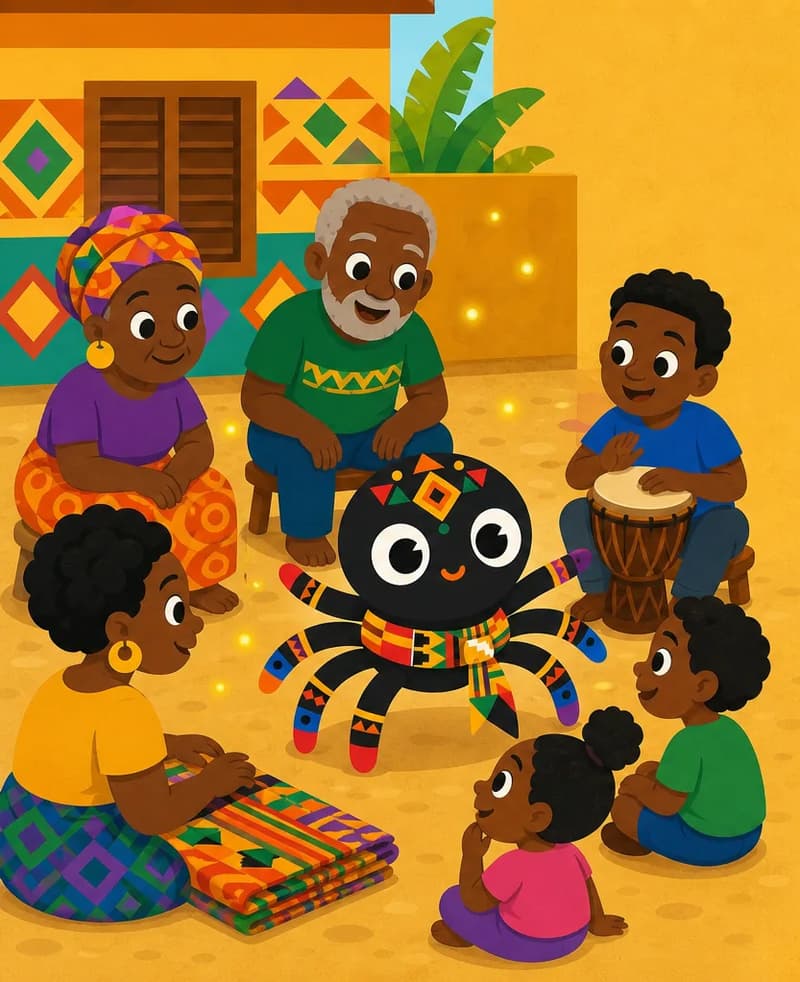
From that day on, wisdom lives in the wind and the water, in old songs and new tales, in old women and in small boys who watch from rocks. When someone gets too sure they have all the answers, a breeze tosses their plans, and a smile spreads. Anansi tells the tale on himself, for a spider who can grin at his own plans is hard to beat.

The old Sky-God looks down from the sky and is glad. Not for the fall, the Sky-God is too kind for that, but because the wisdom spread to each part of the forest, not stuck in one pot. Now and then, late in the day, a child fixes a problem that stumps every grown up, and the wise voice sounds like Ntikuma. No one holds all the wisdom, not even Anansi. And that is a very wise thing indeed.