The Vines Will Not Stop! UFLI Foundations Lesson 105
3.5 Books are rated by kids in the Bookbot app
The Vines Will Not Stop!

Practice Words

display distant disagree disarray discuss dislodge dismay displace disrupt distinct distress
Page 1
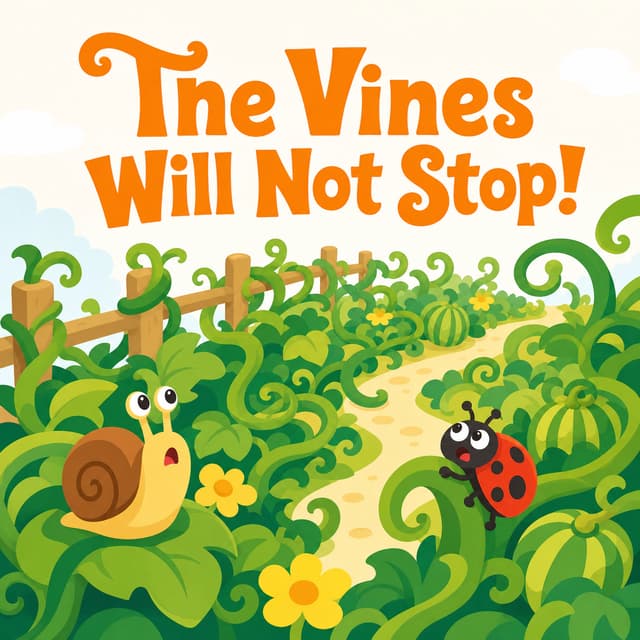
In the lower half of the image, a large leafy vine stretches across the ground from left to right, with broad green leaves and curling tendrils. A small snail sits atop one of the leaves on the left, and a ladybug rests on another leaf near the center. On the right side, a separate vine climbs upward along a twisted branch with smaller green leaves. The scene is set outdoors on a bright day, with a soft watercolor background showing a fenced yard and distant hills in the upper left. The top half of the image is mostly open sky and light background.

Vines like to stretch and grow this way and that. Some creep along the ground and display wide green leaves and curly tips. Other vines climb high up branches and reach for the sky. With their twisting stems, vines grip and hold on tight. A snail rests on one big leaf. A ladybug sits on the next leaf along.
Page 2
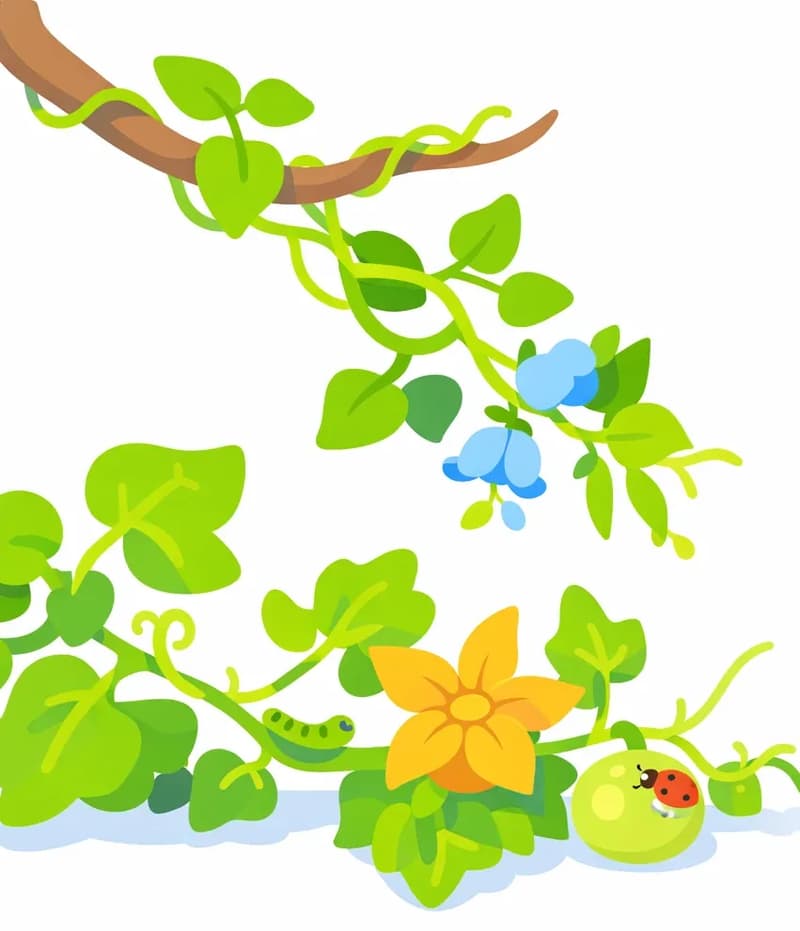
On the left side of the image, lush green vines wind along a tree branch at the top and sprawl across the bottom, featuring delicate blue flowers hanging from the upper vine and a large golden-yellow squash blossom on the lower vine alongside a small green fruit. A green caterpillar crawls along the lower vine's stem, and a tiny red ladybug perches on the small fruit. The right side of the image is plain white background, open for text.

Vines can climb high up a tree trunk. They can also stretch far down a branch to a distant spot. As vines grow, they make room for leaves, blue flowers, and green fruit along the way. A green insect crawls along one stem, and a ladybug sits on a small fruit. Did you ever see a tree clad in vines?
Page 3
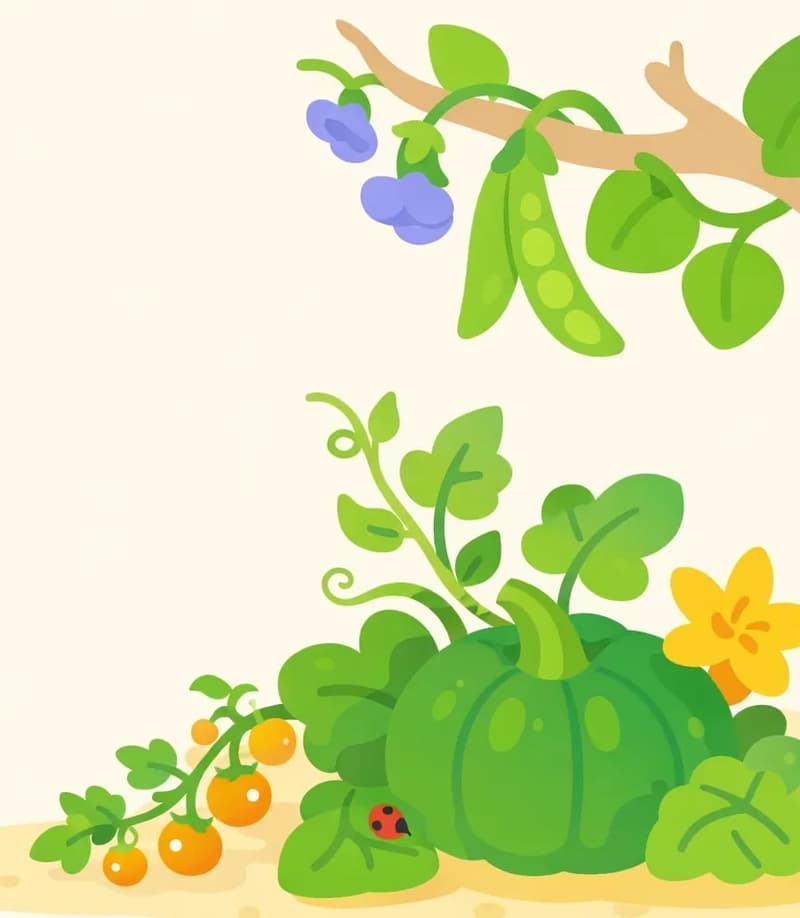
On the right side of the image, a large green squash or pumpkin sits on the ground surrounded by broad leaves and curling vines, with a bright yellow flower blooming nearby and a small ladybug resting on a leaf. Above it, a vine with green bean pods and delicate blue-purple flowers wraps along a branch. In the lower left, a vine bearing small golden-orange fruit (resembling cherry tomatoes or ground cherries) trails along the sandy ground, with leafy green bamboo-like foliage framing the upper left corner. The scene is a bright, sunlit outdoor garden setting with a soft pale sky.

Lots of vines grow flowers and fruit, like squash, beans, and tiny gold berries. The flowers bloom first, bright and bold to bring in bees. Bees love this bright display! Once the blooms drop, fruit starts to swell in the same spot. A ladybug rests on a leaf to watch it all.
Page 4
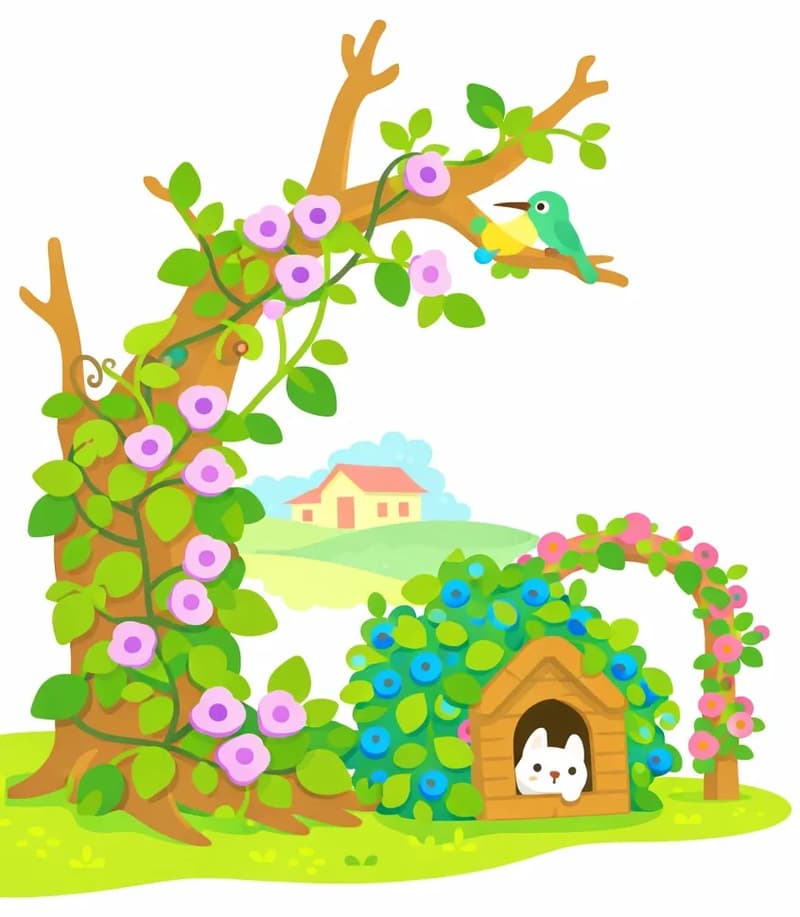
On the left side of the image, a large tree trunk is heavily wrapped in flowering vines with pink-purple blossoms and broad green leaves, with a small house visible in the background on a grassy hill. A small hummingbird is perched on a branch near the top of the vine-covered tree. In the lower-center area, a wooden garden arch and small structure (resembling a doghouse or garden shed) are almost completely overtaken by dense green vines bearing blue berries, with a flowering pink vine climbing over the arch beside it. A small animal (possibly a cat or rabbit) peeks out from inside the vine-covered structure. The scene is set outdoors on a bright, sunny day with a plain white background occupying the right portion of the image.

People plant vines to cover homes, arches, and fences because the bright flowers and berries look so pretty. A small bird zips in to sip from the blooms. But vines grow fast! If we do not trim them back, they take over sheds, arches, and trees, and leave the yard in disarray. Vines can harm the things we love. We must keep them in check or they will wreck it all.
Page 5
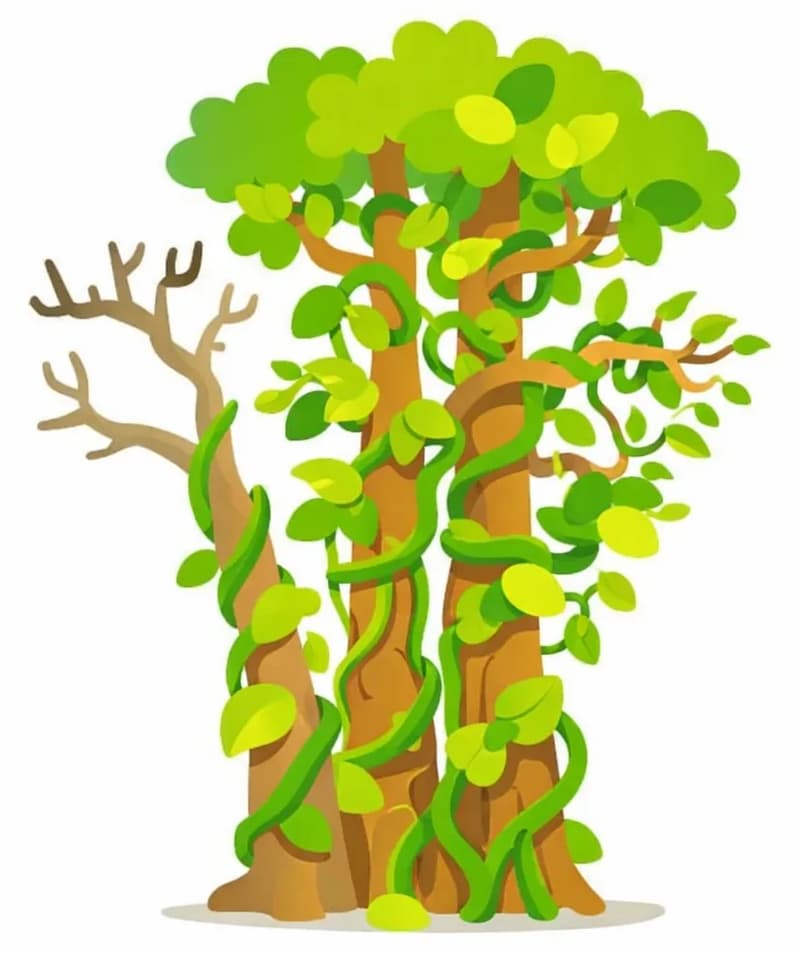
On the right side of the image, a cluster of tall trees stands heavily overtaken by thick, winding vines that coil up the trunks and spread across the branches. One tree on the left of the group appears stressed and bare, with gray, leafless branches poking out, while the vines' large green leaves dominate the canopy. The left side of the image is open white background. The scene is set outdoors in bright daylight with a watercolor style.

Vines can sometimes cover a tall tree from top to base. The thick vines block the sunlight from the leaves up above. They steal water from the soil down below too. The poor tree is in deep distress! With less food and light, the tree grows weak and thin. Its leaves drop, and in time, it may even fall and die.
Page 6
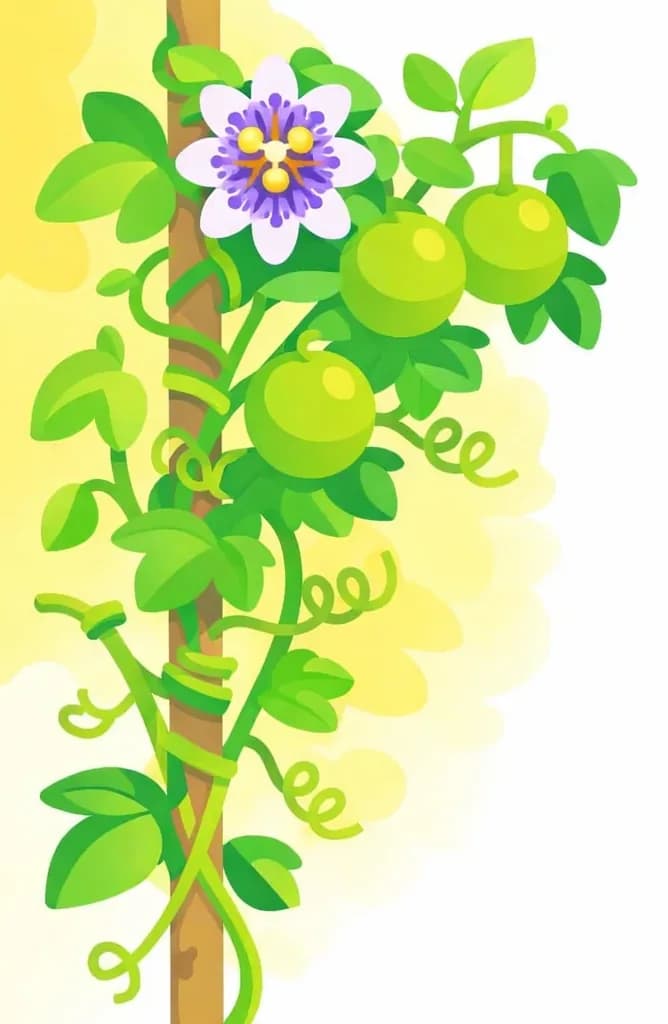
On the left side of the image, a lush passionflower vine climbs upward in a watercolor botanical illustration style. The vine features bright green stems with distinctive spiral tendrils (curls) that coil tightly around supporting stems and stakes, clearly showing how they grip and cling. Round green fruits and broad green leaves fill the upper-left corner, while a single purple-and-white passionflower blooms near the top left. The right side of the image is plain white background, open for text. The scene is set outdoors in bright, natural daylight with a warm yellowish wash behind the plant.

Some vines cling on with tiny curls. These little curls are called tendrils. The tendrils reach out and twist around stems, stakes, or any frame they can find. Once a tendril grips on tight, you can not dislodge it from its spot! That vine will hold on for life. What a strong, twisty grip it has!
Page 7
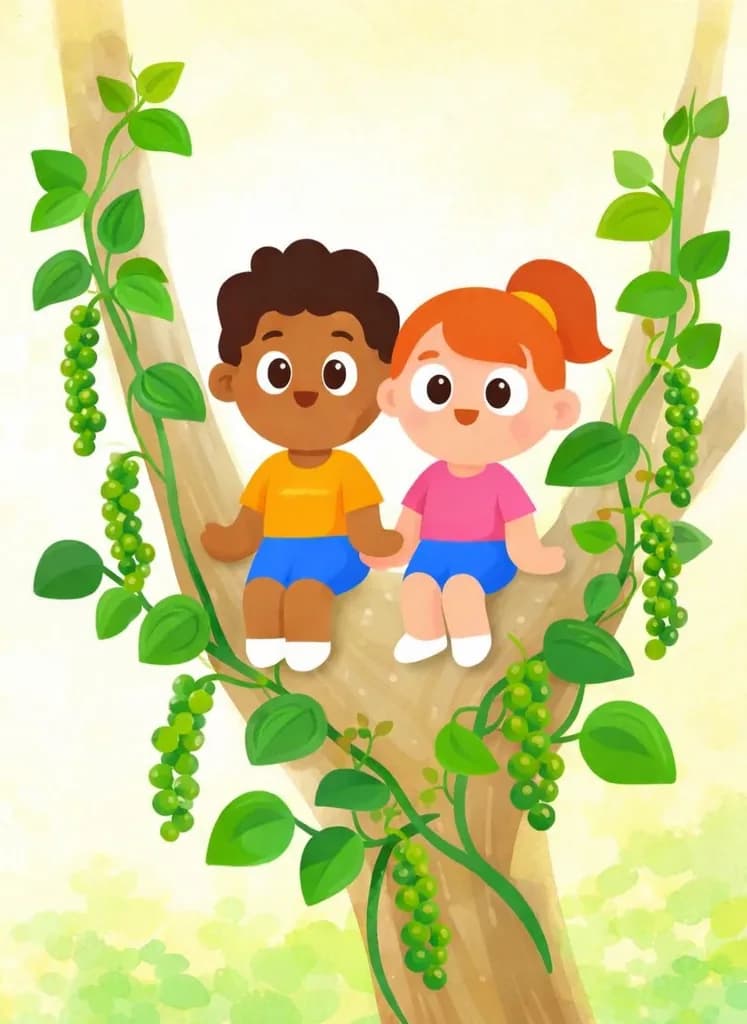
On the right side of the image, a watercolor illustration shows a tree fork where green leafy vines have split and grown in two directions, climbing up both branches. The vines are lush with broad heart-shaped leaves and dangling clusters of small green berries. Two children sit side by side in the fork of the tree: a boy with dark brown skin and short curly dark hair, wearing an orange t-shirt, blue shorts, and white shoes, and a girl with light skin and orange hair in a ponytail, wearing a pink t-shirt, blue shorts, and white shoes. The left side of the image is a plain warm yellow-cream watercolor wash, left open for text. The scene is an outdoor daytime setting with a soft, bright background and hints of green foliage along the bottom edge, rendered in a delicate botanical illustration style.

A vine can split in two when it hits a fork in a tree. Each part keeps climbing up its own branch. Both reach for sunlight and room to spread out. The two parts do not disagree at all. They just go their own ways! That way, one vine can cover twice as much tree.
Page 8
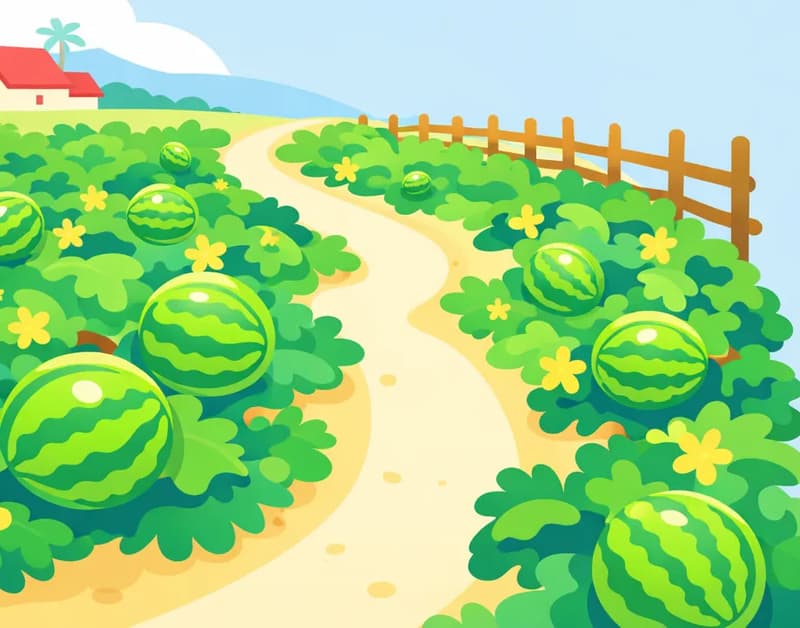
On the left side of the image, sprawling watermelon vines cover the ground on both sides of a dirt path that cuts through an American farm field. Large round watermelons sit among broad green leaves, with a rustic wooden fence running along the right edge of the field. In the background on the far left, a small farmhouse with a red roof is visible under a bright, sunny sky. The right portion of the image is open, plain sky suitable for text overlay.

Some vines grow food on a farm. These watermelon vines sprawl across the ground from end to end. Big round fruits rest among the wide green leaves. The farmer cuts a path across the patch so the vines do not disrupt the picking. That way the watermelons are easy to reach and grab.

Page 9
In the lower half of the image, a cross-section of soil reveals sweet potato vines growing above ground with broad green leaves and trailing stems, while large reddish-pink sweet potatoes and rounded tubers grow beneath the surface among brown earth and roots. A yellow dragonfly hovers near one of the vine stems on the left side. In the background to the right, a small house with a white fence sits in a flat suburban landscape under a pale sky with soft clouds. The top portion of the image is open white and light sky, clear of detail.

Some vines grow food under the ground! These vines are distinct from the rest. Their leaves soak up sunlight up top. Then the leaves send that food down to the roots. That is how sweet roots grow big and plump under our feet. A yellow bug hums by a stem close by.
Page 10
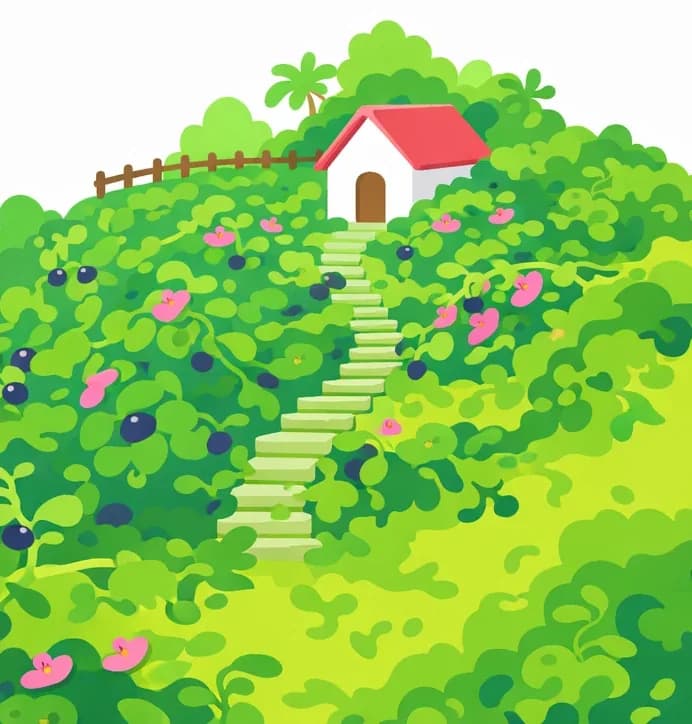
A lush, overgrown outdoor landscape painted in watercolor style, with thick, wild vines bearing pink flowers and dark berries sprawling across the bottom and left of the scene. On the right side, a small house with a peaked roof sits on a hillside behind a wooden fence, with stone steps leading up to it — the surrounding yard and trees are being overtaken by dense, tangled greenery. The scene is set in bright daylight with a white sky, conveying how invasive vines have spread across the entire rolling hillside.

Wild vines can take over a vast hillside! They creep across yards, climb up fences, and choke big trees. Some vines come from a distant land. They grow too fast and displace the plants that belong in this spot. We look on in dismay as the vines eat up the land bit by bit. We must keep them in check before it is too late!
Page 11
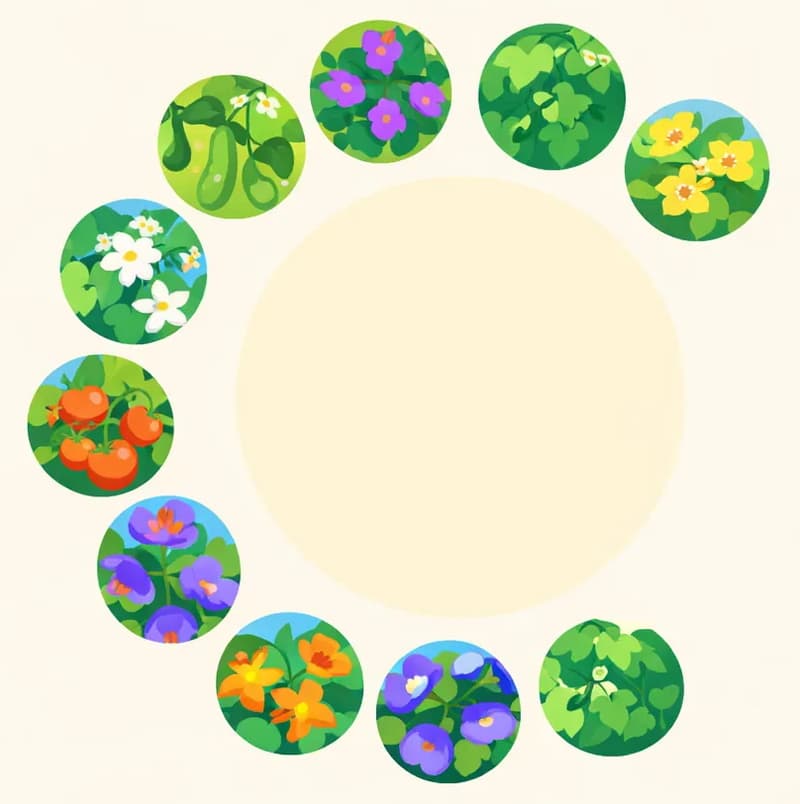
On the left side of the image, circular photo thumbnails are arranged in a curved arc, each showing a different type of vine or climbing plant — including cucumbers, flowering vines, leafy green creepers, and other garden varieties. The thumbnails form a partial wreath pattern against a soft cream background, with a large pale circle in the center left. The right side of the image is plain cream-colored background, clear for text overlay.

Vines come in so many shapes and sizes! Some grow sweet fruit. Some grow pretty flowers. Some just spread their green leaves far and wide. Next time you walk down a street, by a farm, or out in the wild, see how many kinds of vines you can spot. Then we can sit down and discuss every one!

Page 1 of 11

Bookbot is not endorsed by or affiliated with UFLI (the University of Florida Literacy Institute) or Jolly Learning Ltd. UFLI Foundations and Jolly Phonics are trademarks of their respective owners.

Download Bookbot now to
GET STARTED