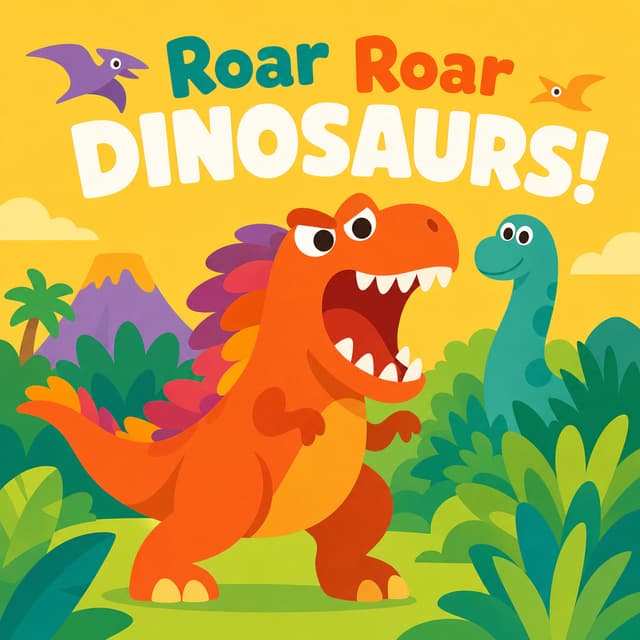
Roar Roar Dinosaurs (3+ syllables)

4 Books are rated by kids in the Bookbot app
Dinosaur Decodable Reader with 3+ Syllable Words

Practice Words

Words containing three or more syllables, requiring more complex decoding strategies.

accurate actual amazing animal animals carnivores dangerous defended different dinosaurs educated eventually evolution family fossilized herbivores history however hyenas important impressions incredible incredibly individuals manipulate originally predators prehistoric remember something theories theropod together understand understanding unfortunately velociraptor vestigial
Page 1
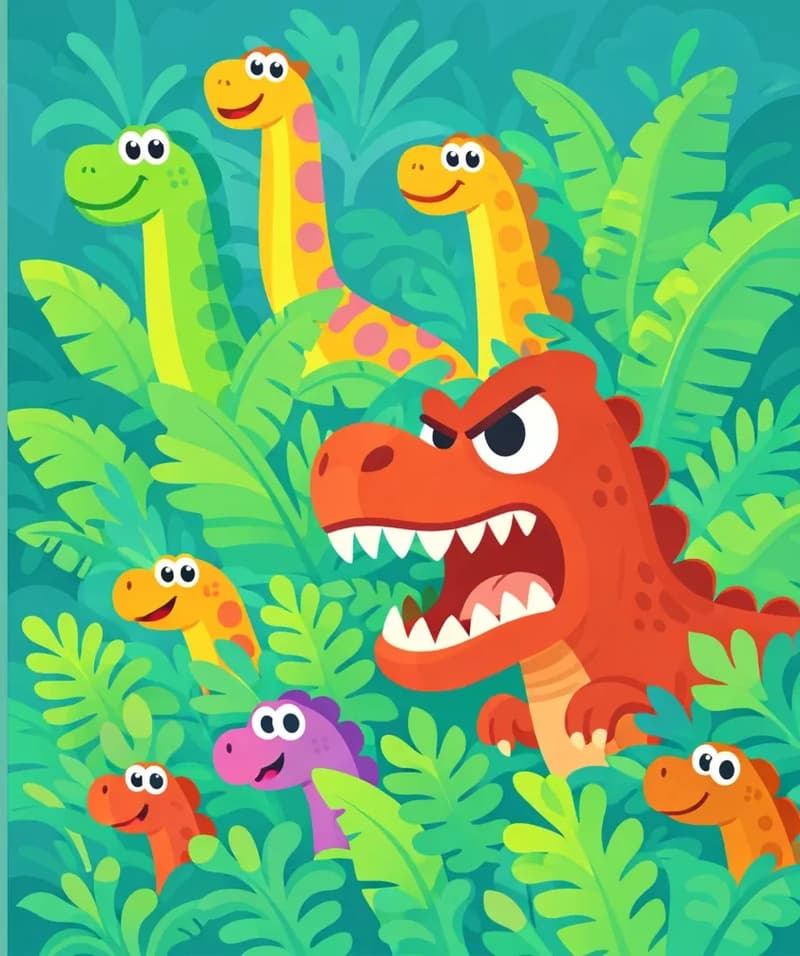
On the right side of the image, a group of cartoon dinosaurs peek out from dense tropical foliage and tall ferns. Several long-necked dinosaurs stand upright in the background with wide eyes and cheerful expressions, while in the foreground a fierce-looking T-rex-type dinosaur snarls with an angry expression and bared teeth. Smaller dinosaurs with googly, surprised eyes poke their heads through the greenery at various heights. The scene is set outdoors in a lush prehistoric jungle environment with large leafy plants in teal and green tones. The left ~40% of the image is a plain muted teal background reserved for text.

Roar! Dinosaurs! We have learnt a lot from prehistoric fossils. They have helped us to guess at the ways that different dinosaurs acted. The more fossilized bones that we find, the more accurate our thinking becomes.
Page 2
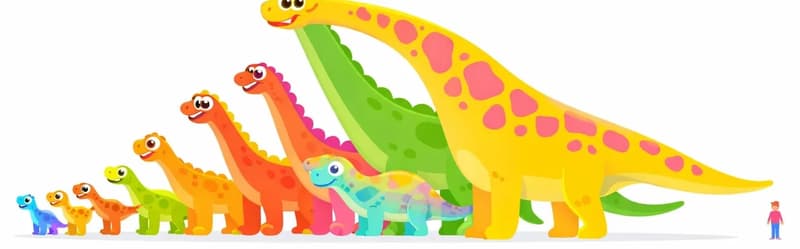
On the left and center of the image, a colorful lineup of cartoon-style dinosaurs stands arranged by size from smallest to largest, all facing left with friendly, wide-eyed expressions and toothy grins. The parade ranges from tiny raptor-like dinosaurs on the far left up through mid-sized theropods and sauropods, culminating in two enormous long-necked sauropods towering above the rest. A tiny human figure stands on the far right at ground level for scale, dwarfed by even the mid-sized dinosaurs. The background is plain white, with the right side open for text.

We live in an incredible time for fossil hunting. There has been a big boom in our understanding of dinosaurs and the ways that they led their lives. We can also connect the ways that animals live today with the bodies of dinosaurs to pinpoint how they might have lived.
Page 3
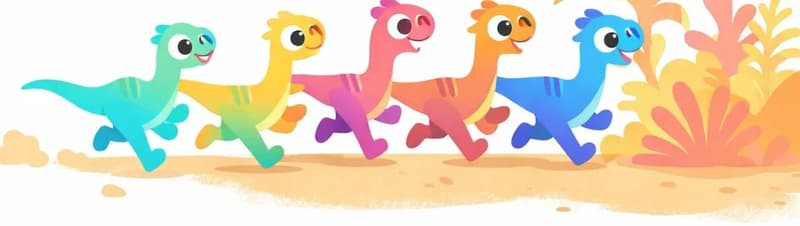
A pack of five small bipedal dinosaurs runs together across the bottom right portion of the image, all moving in the same direction toward the right with sharp, eager expressions and legs pumping fast. They stride across sandy ground with tall, soft-hued prehistoric plants and ferns in warm yellow, orange, and pink tones behind them. The upper left area of the image is open white space suitable for text overlay.

We have found out that some dinosaurs lived and hunted in packs. We can tell this because we have found nests full of bones from different individuals but the same type of dinosaur. They may have worked together the way that predators like hyenas do.
Page 4
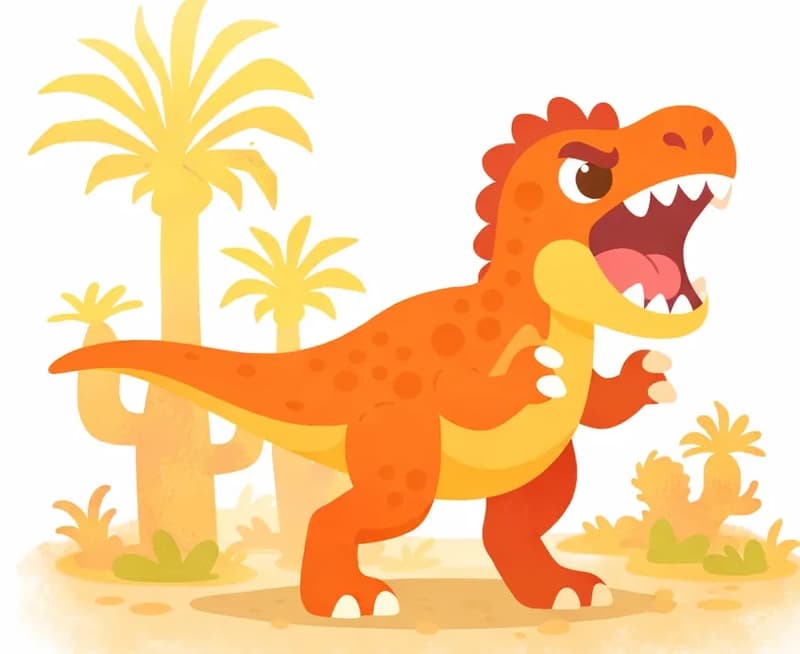
On the left side of the image, a large carnivorous dinosaur (resembling a T. rex) stands in a menacing pose with its mouth wide open, revealing rows of sharp, jagged teeth. It has a fierce, angry expression with narrowed eyes and small clawed arms raised. The dinosaur is mid-stride on dusty, sandy ground surrounded by prehistoric palm trees and low scrubby plants that fade into soft silhouettes in the warm afternoon light. The right side of the image is plain white background, clear for text overlay.

Some preferred to hunt alone. We can get clues from a dinosaur's teeth and bones about what sort of diet they had. Carnivores' mouths are full of dangerous teeth that rip and tear. They don't need any of the flat, grinding teeth that herbivores use to chew on plants.
Page 5
In the lower half of the image, two long-necked sauropod dinosaurs walk side by side across a flat, open plain, with a larger one behind and a smaller one in front, both with gentle, curious expressions on their faces. Soft, hazy rock formations rise in the background on the left and right. Warm afternoon light bathes the scene. The top portion of the image is plain white background, clear for text overlay.

The color of a dinosaur's skin is something that we have guessed at. This is because of how fossils form and how different parts of the body rot over time. Dinosaurs lived such a long time ago. Unfortunately, not all of them became fossils. We have found impressions of skin but no actual skin samples.
Page 6
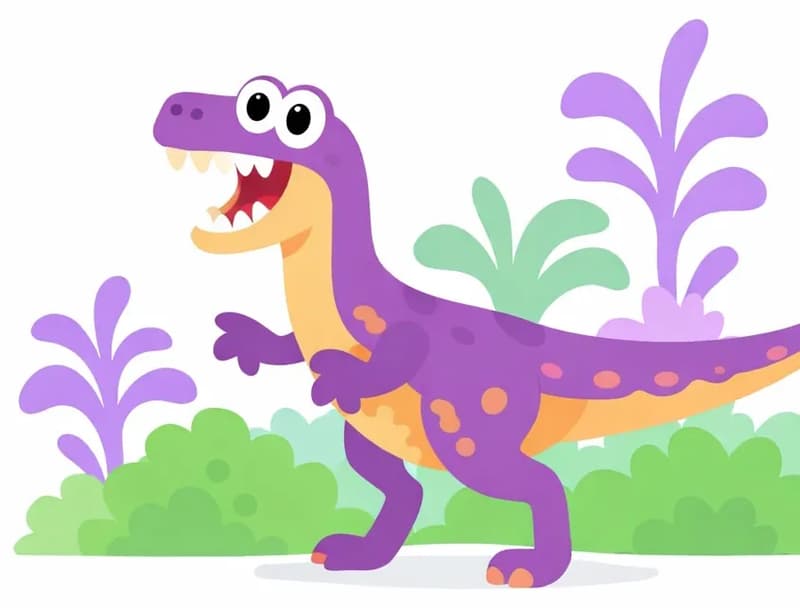
On the right side of the image, a cartoon theropod dinosaur stands mid-stride in a prehistoric outdoor setting, mouth open with a surprised, comical expression showing its teeth, with small clawed arms outstretched. The dinosaur is depicted with smooth, scaly skin and without feathers — representing the outdated understanding of theropod appearance mentioned in the text. It is surrounded by soft green bushes and stylized purple tropical plants against a plain light background on the left.

We used to think that theropod dinosaurs originally looked like this. However, we now understand that dinosaurs like T-rex and velociraptor had feathers. We can tell this from a line around their bodies in fossils where the feathers rotted away. Theropod dinosaurs got smaller over time and started to be able to fly. Eventually, they evolved into birds. Even chickens come from dinosaurs!
Page 7
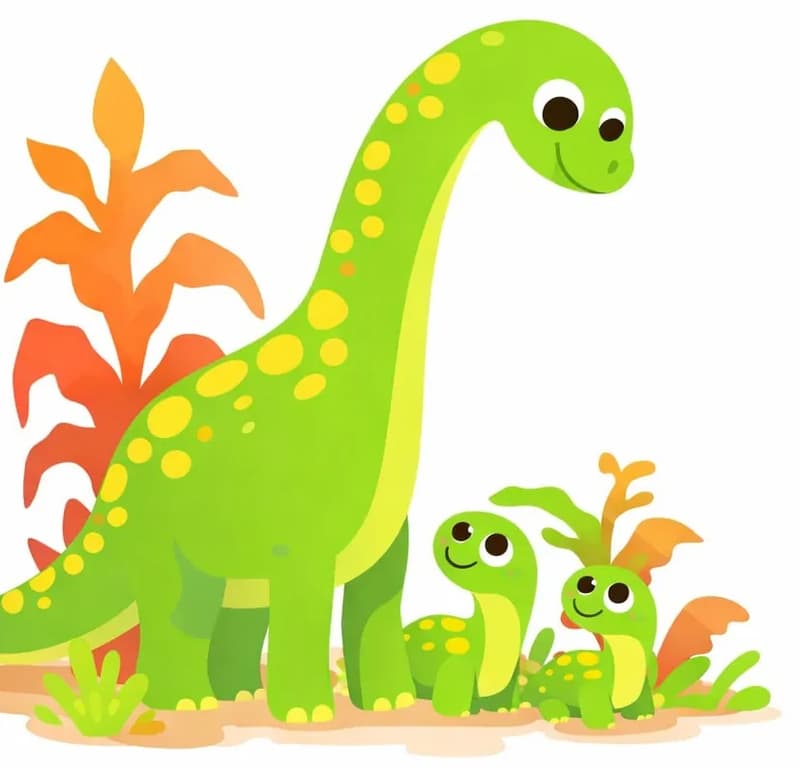
On the left side of the image, a large green long-necked plant-eating dinosaur stands upright with a gentle, watchful expression, looking down toward two smaller baby dinosaurs nestled among low prehistoric plants and foliage at its feet. The two young dinosaurs peer up with wide, curious eyes and tiny smiles. Tall reddish-orange prehistoric plants frame the scene on the far left, while the right side of the image is open white background suitable for text overlay.

We can even get a sense of how some dinosaurs raised their young. Animals today vary a lot when it comes to looking after their family. It was no different for the dinosaurs. We understand more about how plant-eating dinosaurs raised their family because there were a lot of them.
Page 8
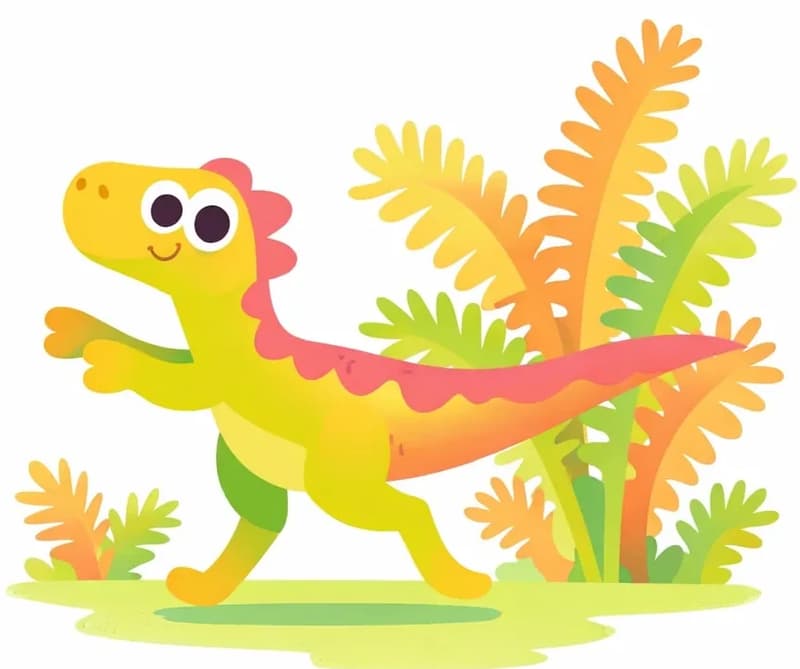
On the right side of the image, a small bipedal dinosaur strides forward on its hind legs in a walking pose, with its short arms reaching out in front and its long tail stretched out behind for balance. The dinosaur has wide, curious eyes and looks alert as it moves through an afternoon scene with tall, feathery fern-like plants surrounding it. The left side of the image is plain white background, free of detail.

From a dinosaur's bones, we can make some educated guesses about the way that it moved. We can do this from clues in the bones with regard to how much weight they could hold on their limbs and also from footprints that have been preserved.
Page 9
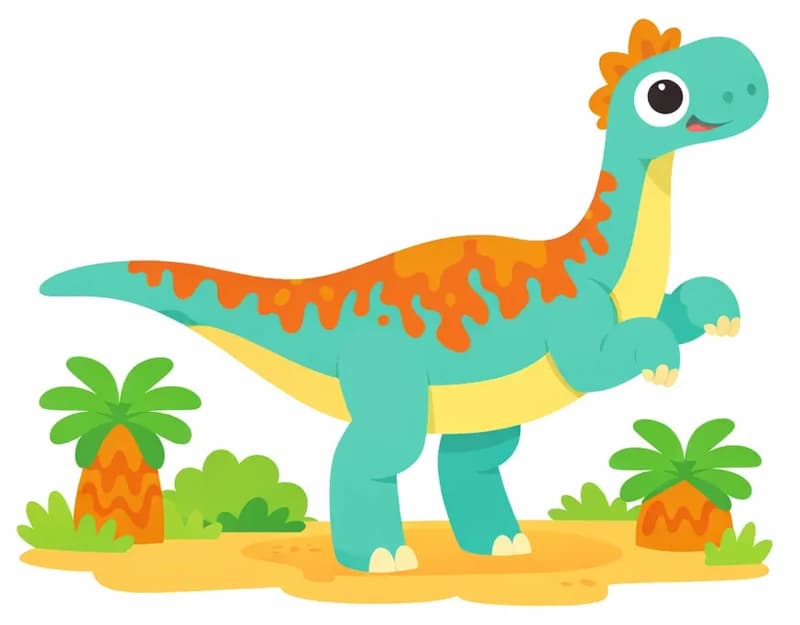
On the left side of the image, a friendly cartoon dinosaur (resembling a prosauropod) stands upright on its two strong hind legs with a happy, curious expression, its front limbs raised like arms in front of its chest with small pale claws. The dinosaur is teal-turquoise with a yellow belly, mottled orange markings running along its back and tail, and a small orange crest on its head. It has a long neck and tail, and is surrounded by low prehistoric-looking green shrubs and orange-trunked cycad-like plants on warm, sandy yellow ground. The right side of the image fades to a plain white background.

Some were able to walk on all four legs or stand up on their hind legs and use their front legs to manipulate objects. They could have grasped things. They could have defended themselves. It would have been very useful.
Page 10
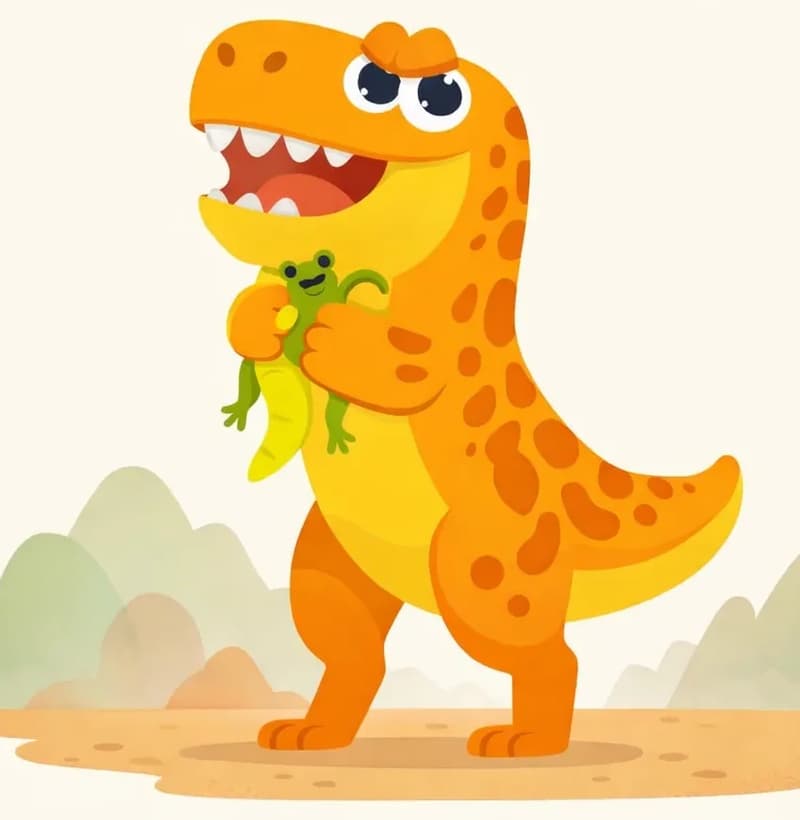
A T-rex stands on the right side of the image in a powerful upright pose, mouth slightly open with teeth visible, gripping a small wriggling creature in its notably short but strong arms. The dinosaur has a slightly humorous, determined expression. The scene is set outdoors against a backdrop of soft, hazy rocky hills and dusty ground, with the left side of the image open as plain background.

Some dinosaurs had funny parts, like the incredibly short arms on a T-rex. For a while we thought that these limbs were vestigial, which means that they were of less and less use over time as this animal evolved. However, these arms still helped T-rex to cling onto prey and mates to some degree.
Page 11
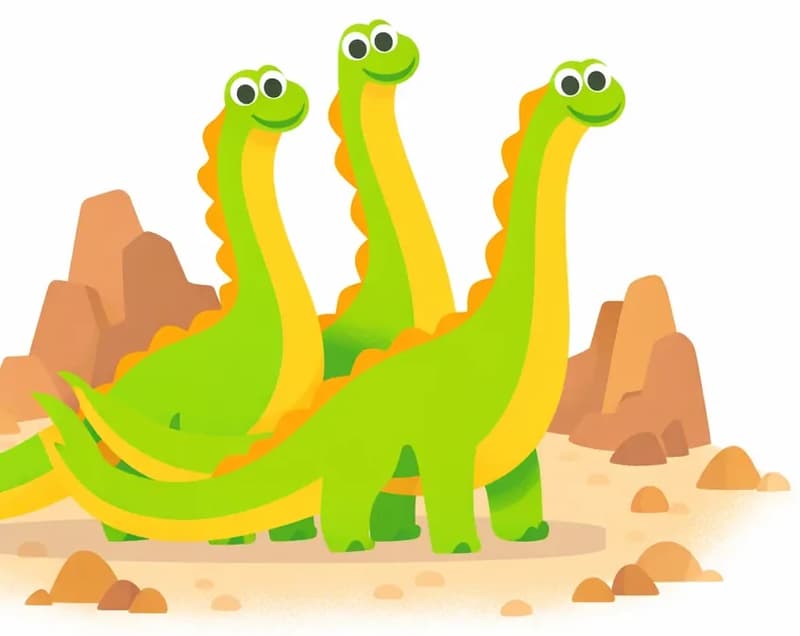
On the left side of the image, three long-necked dinosaurs (sauropods) stand together in a group on rocky ground, all facing slightly right with their necks raised and friendly, smiling expressions as if they know a secret. Their long tails sweep and intertwine behind them to the left. Brown rocky formations rise in the background behind them, with the right side of the image opening to plain white/light background.

We need to remember that our understanding of dinosaurs is always changing. The more research that we do and fossils that we find, the more we can confirm different theories that have been put forward. It is so cool to live in the best time so far to understand dinosaurs!
Page 12
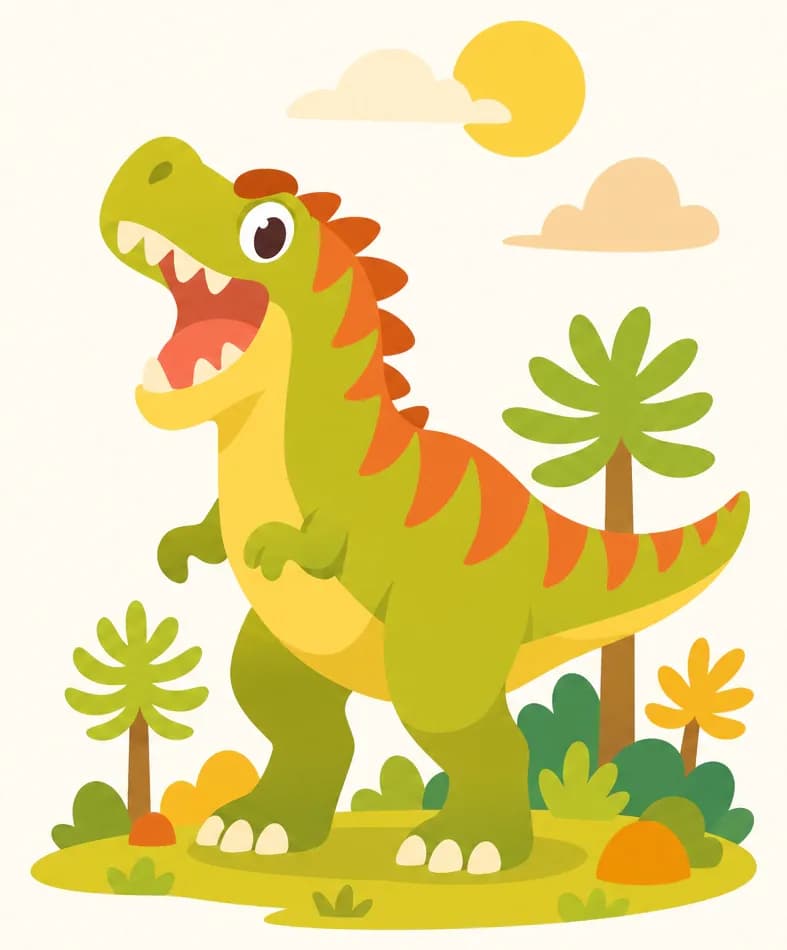
On the right side of the image, a T-Rex stands tall among small prehistoric trees and bushes, roaring but with a proud expression on its face. The scene is set outdoors in a warm, sunlit prehistoric landscape with soft pastel clouds in the sky. The left side of the image is open white/light background, suitable for text overlay.

Give a roar for dinosaurs! They were such amazing creatures, and an important part of our planet's history. Learning about dinosaurs is not just fun, it also helps us to advance the way that we understand evolution and the ways that our world changes.

Page 1 of 12

Download Bookbot now to
GET STARTED