


Little Book of Big Facts: Komodo Dragon (3+ syllables)
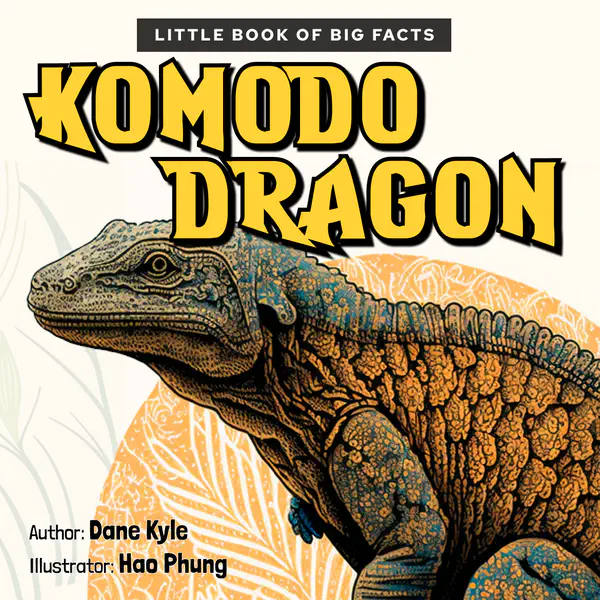
Wow! What's that? It's a Komodo dragon, also sometimes called the Komodo monitor. They are large lizards and fierce hunters. Cool, aren't they?

They're so scary! Are they lizards from space? No! They're from Indonesia. We call them Komodo dragons because they mainly live on Komodo Island, which is in the Lesser Sunda Islands. That's the only place in the whole world that they can be found in the wild.
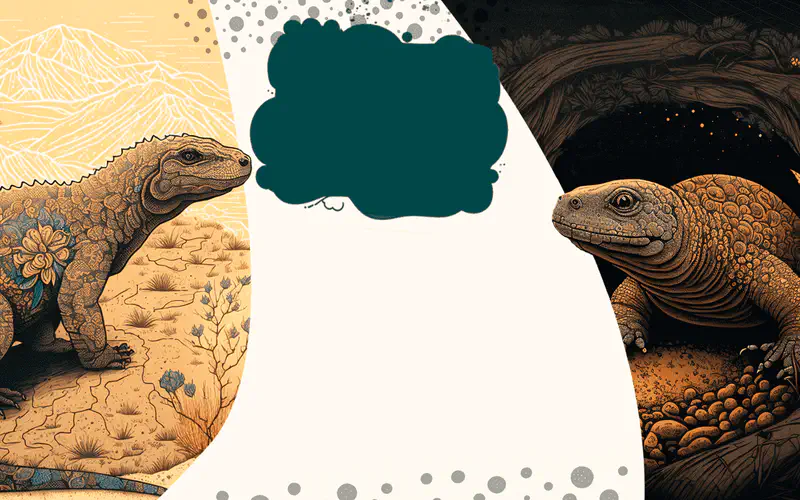
What kinds of places do they like to live in? Komodo dragons like hot and dry places. Like all lizards, they rely on outside heat to keep their blood warm, and without it they get slow and sleepy. During the night time when it is cold, they burrow underground with their strong claws to make sure they don't freeze.

So how big are they? They are the largest lizards still living in the world. Their tails are as long as their bodies, and they have about sixty sharp teeth. Most adult Komodo dragons weigh around 70 kilograms, and can grow up to ten feet long!

That's so big! What do they eat? Komodo dragons are apex predators, which means no other animal hunts it or eats it as food. They mainly eat a type of deer common in Indonesia called the Javan rusa deer, but they have also been known to eat birds, small mammals, goats and pigs. They love all kinds of meat, and eat a lot of it.
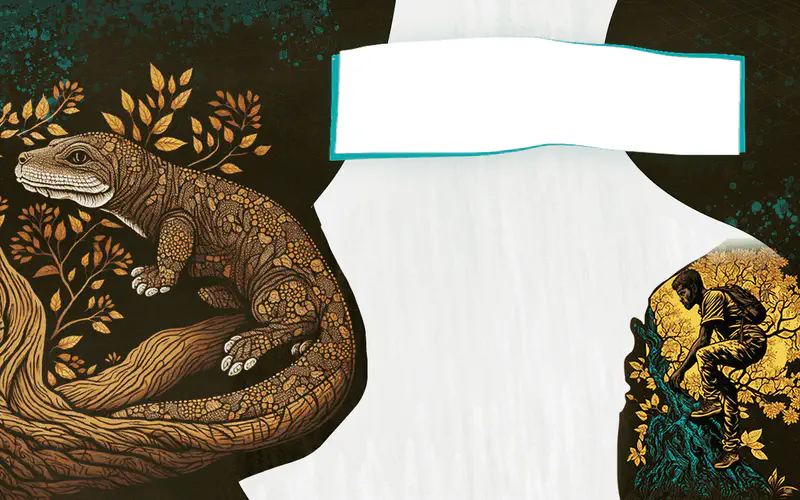
But I'm made of meat! Are they dangerous? Komodo dragons are wild animals and they have attacked humans before. They are very large and strong, and it is best to run away if you see one in the wild. They can be fast, though, so climb a tree. Adult komodo dragons can't climb! But if one bites you, you need to get medical help right away.

So are they venomous? Their bite can be deadly, and some scientists think that this is because the Komodo dragon has venom, like a snake or scorpion. But other scientists don't think so, and say their bite is just really powerful and shocking. The scientists can't agree about that. But what they do agree about is that you should never, ever be bitten by a Komodo dragon!

Komodo dragons are lizards, right? Do they lay eggs? They do. The female Komodo dragons lay their eggs in deep holes or in the abandoned nests of other animals, such as land birds like scrubfowl. There is a strange thing about female Komodo dragons though. They can make baby Komodo dragon eggs through parthenogenesis!

Partheno what? What do you mean? Parthenogenesis is where a female animal makes a baby all by herself, without a male animal. Only a few animals can do this, and the Komodo dragon is one of them. The female makes living eggs in her body all by herself, and they hatch into healthy baby Komodo dragons. However, the babies made this way are always male.
That's so weird! Are you sure they're not from space? They're not from space! It's actually more common in plants than in animals, but other animals that can do it are some scorpions, geckos, and sharks! This can be useful because the Komodo dragon is an endangered species, and there are fewer of them than there were before.

They might be scary, but I don't want them to die out! Why are they endangered? Volcanic activity, earthquakes, fire, and loss of habitat and prey due to human beings hunting them or taking over their territory. However, where they live has been made the Komodo National Park by Indonesia and is a protected space, because they are an important species.

So Komodo dragons are important? Yes! They are one of the national symbols of Indonesia, and because they are the world's largest lizard, are famous all over the world. They may be a little scary, but Komodo dragons are awesome animals!