


Caterpillars! (V/V syllable division)
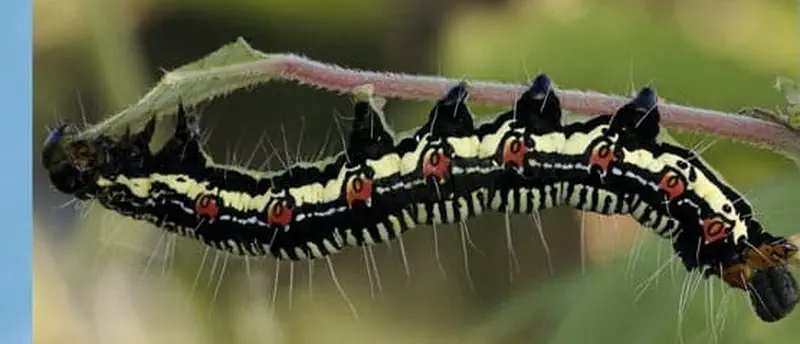
It is a trial to be a caterpillar. Birds like to grab them as an easy snack. They need to protect themselves in different ways so that they do not get eaten. The red spots along this caterpillar are like eyes. That is one way to make a bird think again.
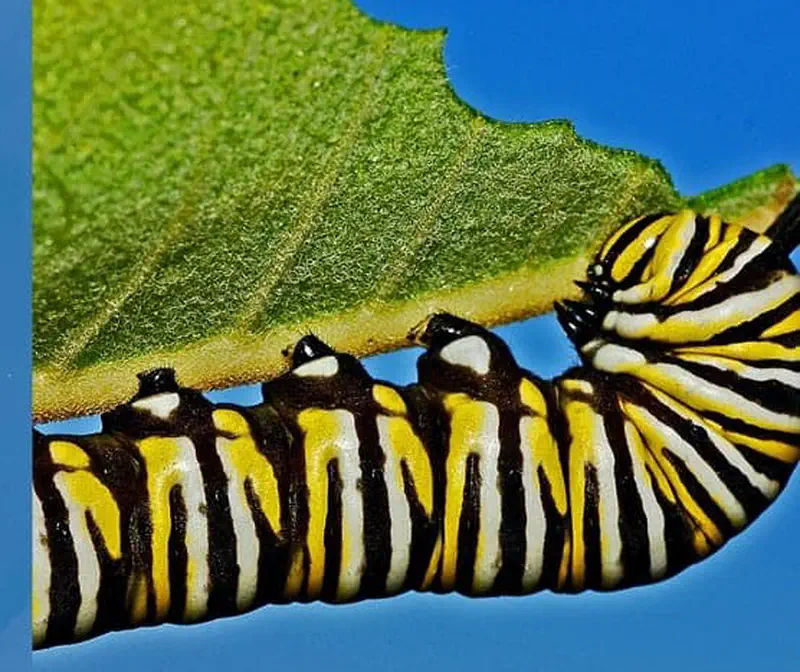
A caterpillar can also have a sickly colour. These yellow bands say that it is not a good move as a meal. A bird might think that they will get sick. A lot of animals with bright colours in nature have poison.
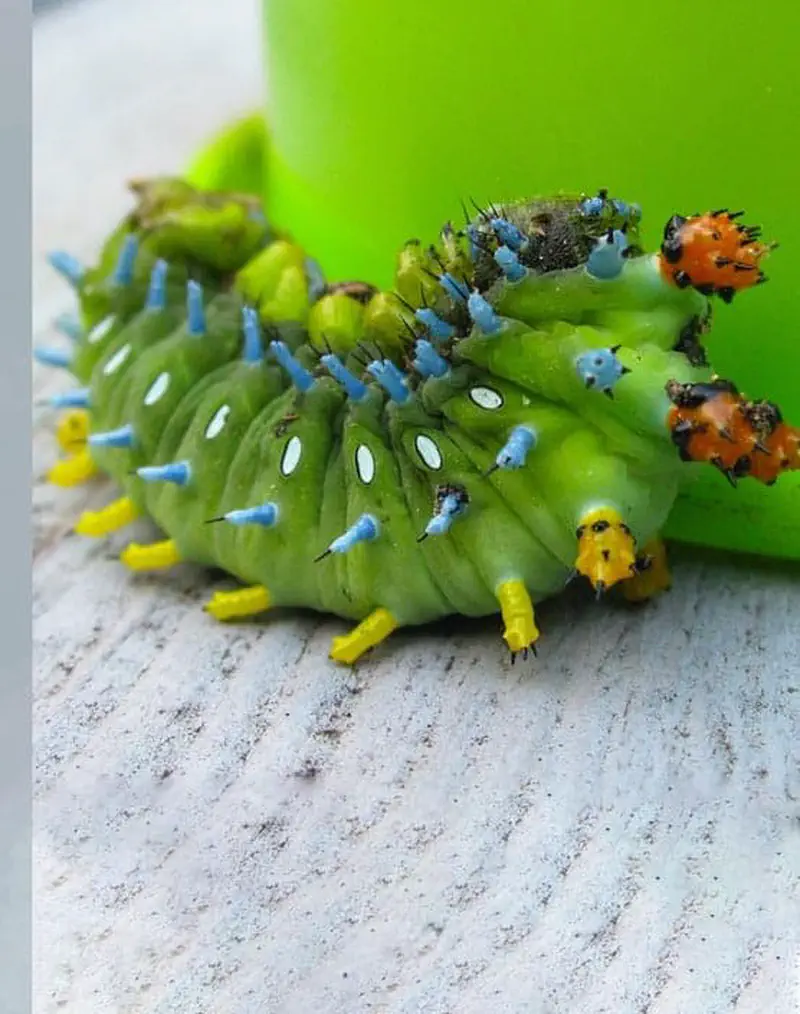
This caterpillar has lumps and bumps all over it. This helps to break up its shape. A bird might find this caterpillar confusing. It might not see it as a whole. This would be helpful near flowers.
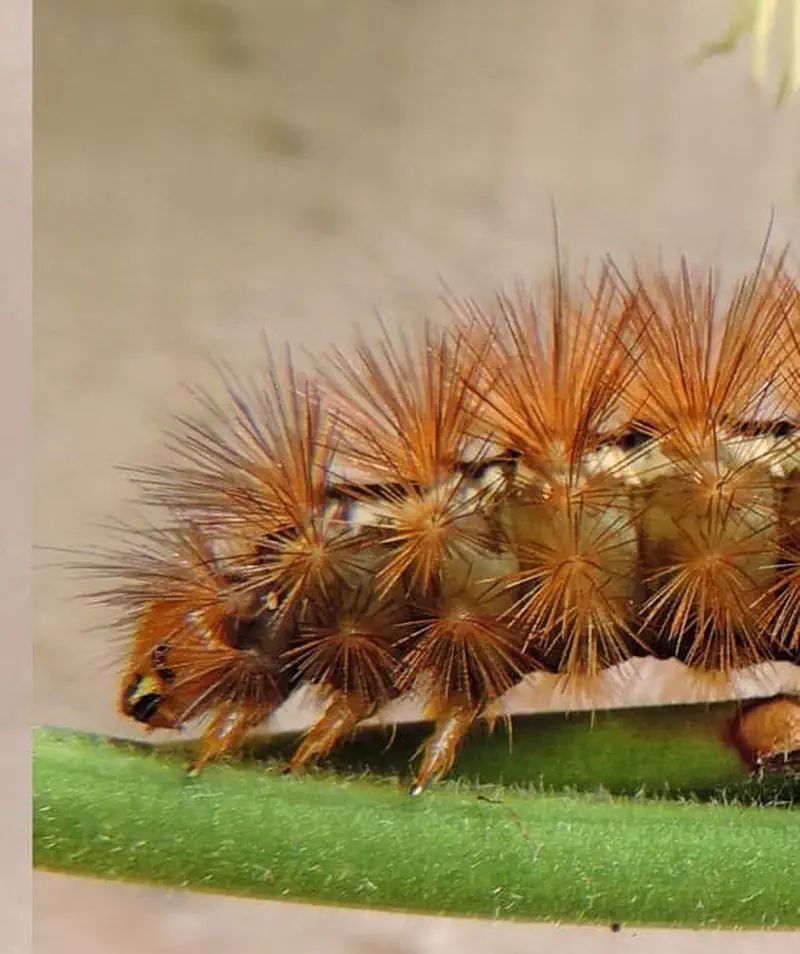
This caterpillar has long, sharp spines. These spines will stick into an animal that tries to eat it. A bird might try to grab it in its beak and then think again. This is a great way for the caterpillar to defend itself.
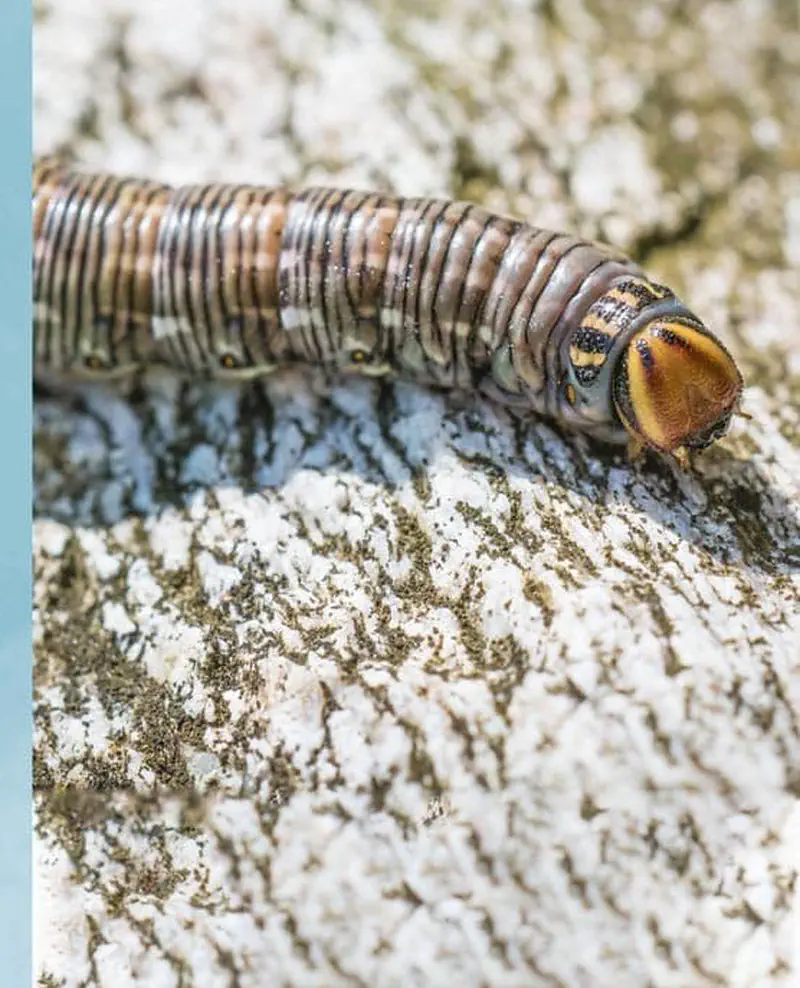
This caterpillar blends with the rocks that it lives by. Just like the caterpillar with lumps and bumps, this helps to break up the shape of the caterpillar. It also might make it seem like there is no caterpillar there at all.
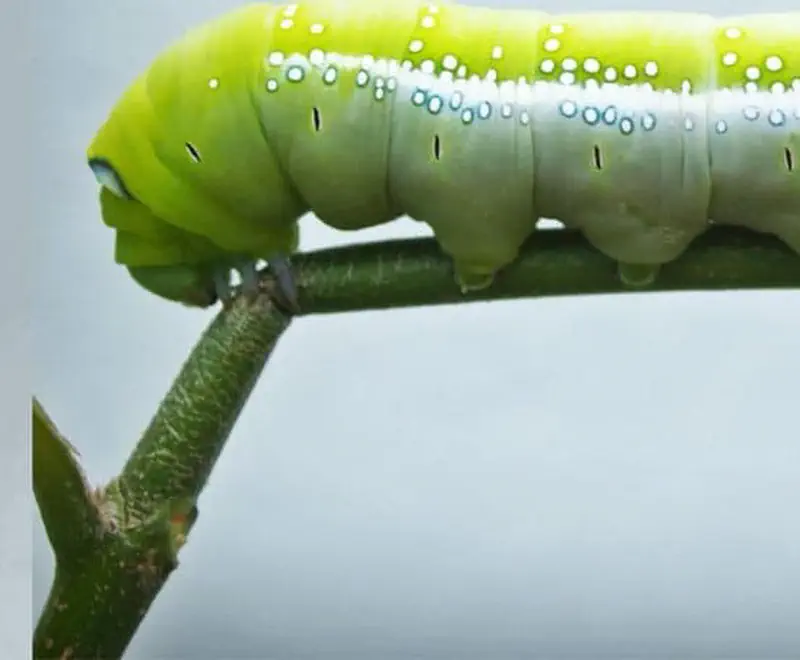
This caterpillar is very big. They go through different molts on their way to being ready for a cocoon. When they are in a new instar, they need time for their new skin to become hard. This can be a dangerous time. Most caterpillars have five instars.
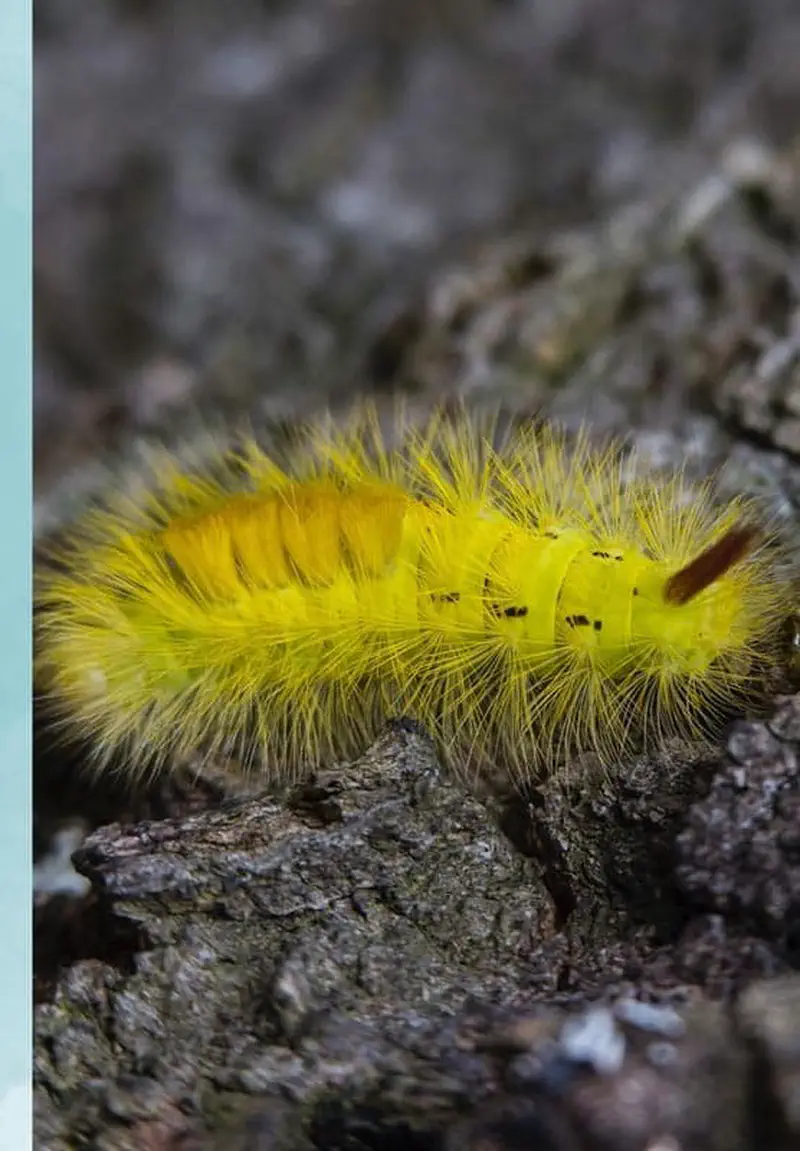
Some throw up fluid that stinks a lot! It makes birds flee. These are caterpillars that focus more on attack than defense. Caterpillars can also protect themselves with the way that they feed. They make sure they are not out in the open too long.
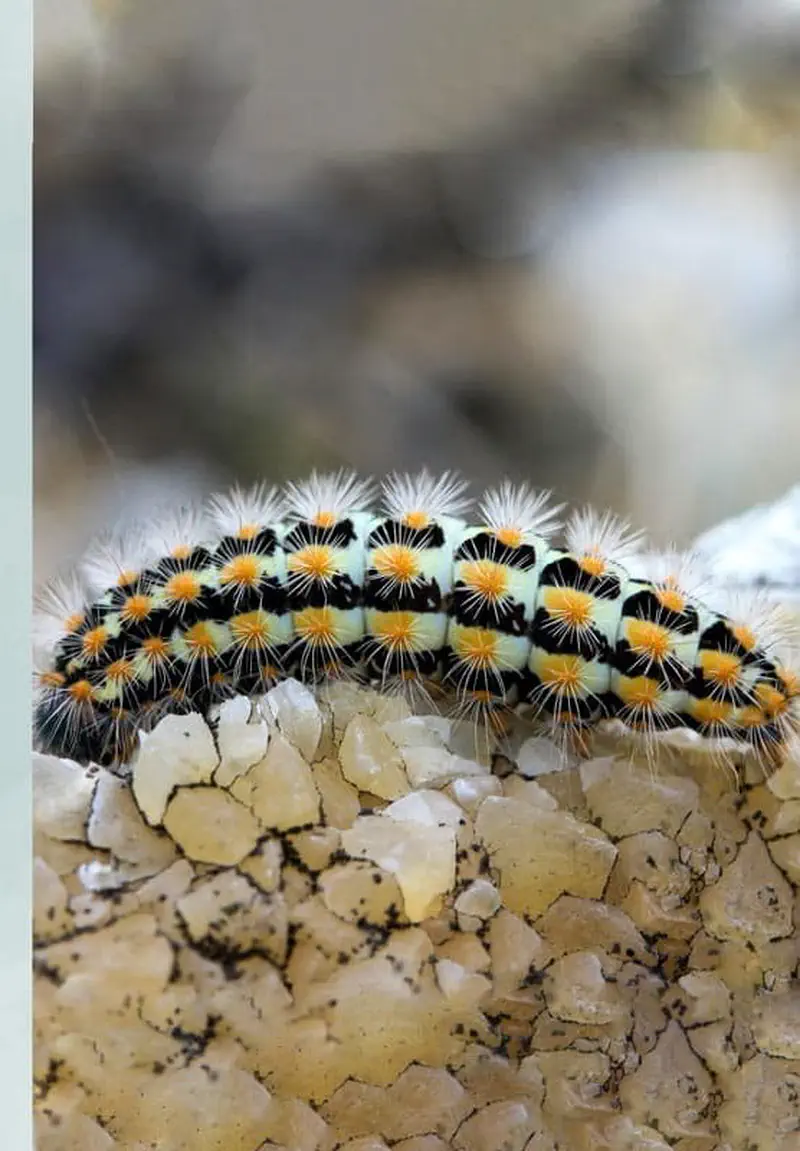
Caterpillars that are poisonous become this way from their diet. The toxins from the leaves build up in the caterpillar and will make a bird sick if it eats them. Some can have spines with venom that can make a bird sick even if it does not eat the caterpillar. These can make people sick too.
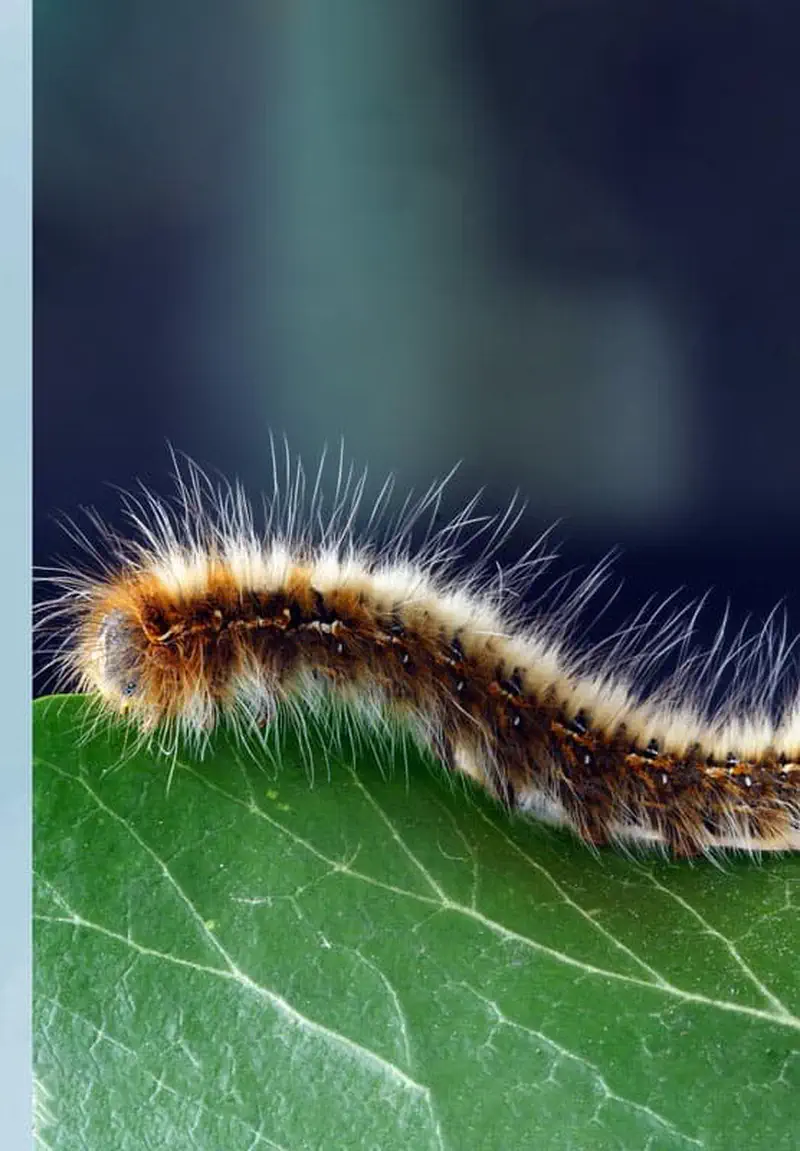
Caterpillars like this are fuzzy, but they can make you itch! This is their way to defend themselves. The hairs can break off in skin and cause a lot of discomfort. Many birds will not go for fuzzy caterpillars as a result.
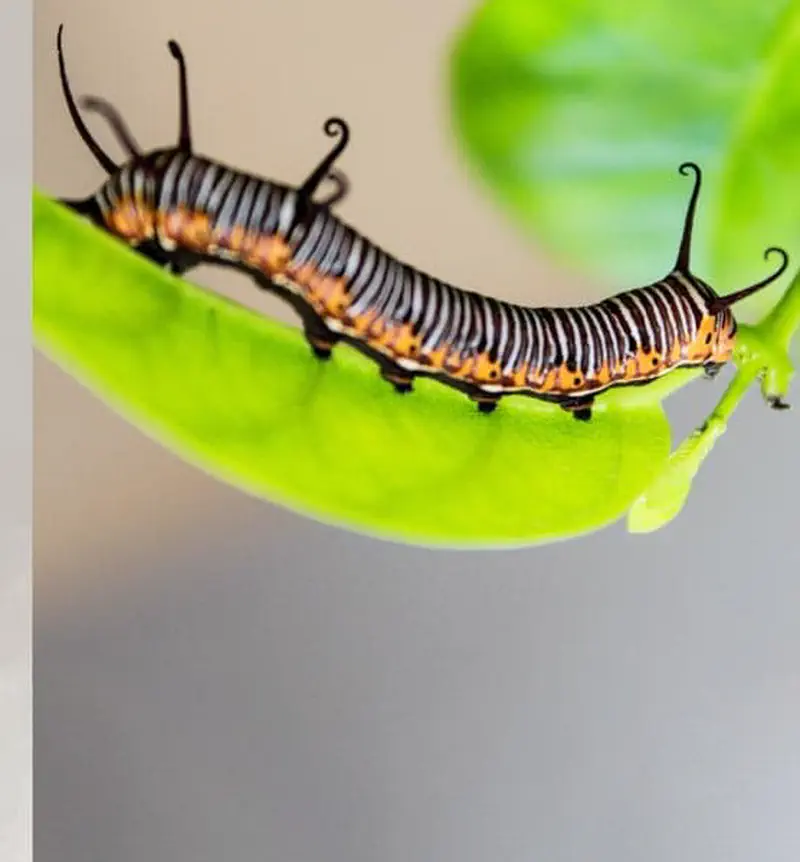
This caterpillar had a lot of long, black feelers along its body. This creates confusion for animals that want to eat it. They will not be able to tell which is the front and which is the back.
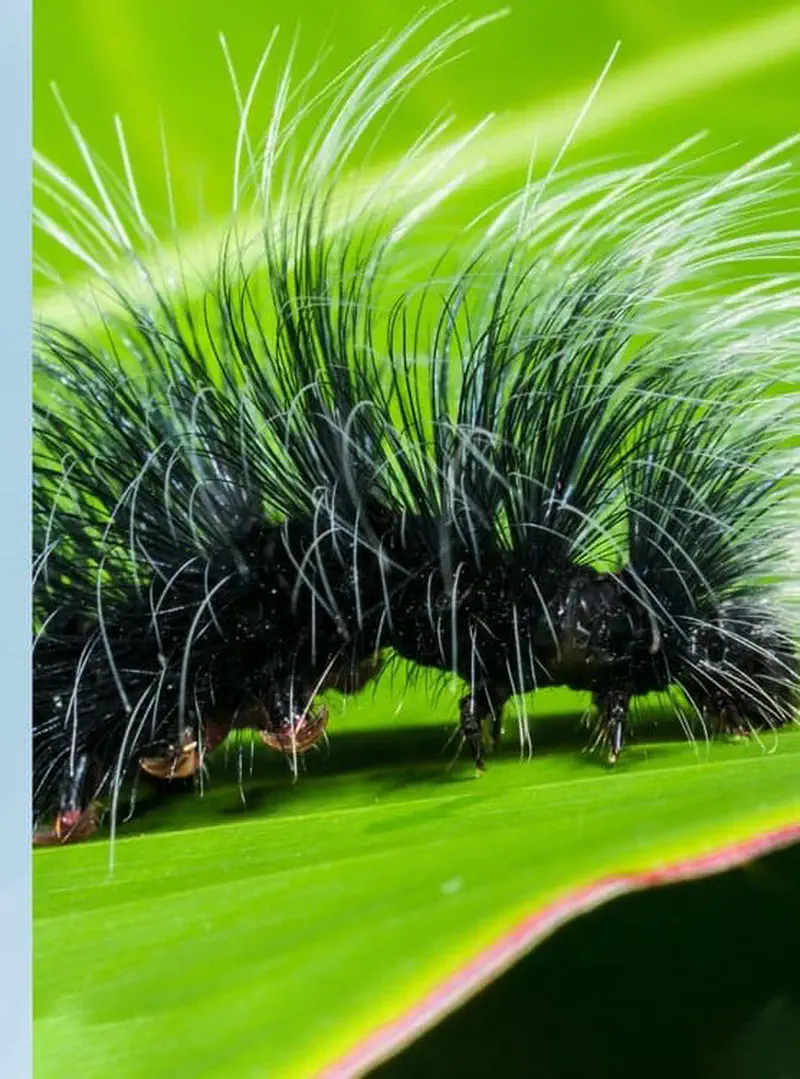
If a bird does come along, a lot of caterpillars will drop from the leaf that they are on. They go down to the ground on a long thread of silk, like a spider. You might have seen a caterpillar hanging from thread under a tree.
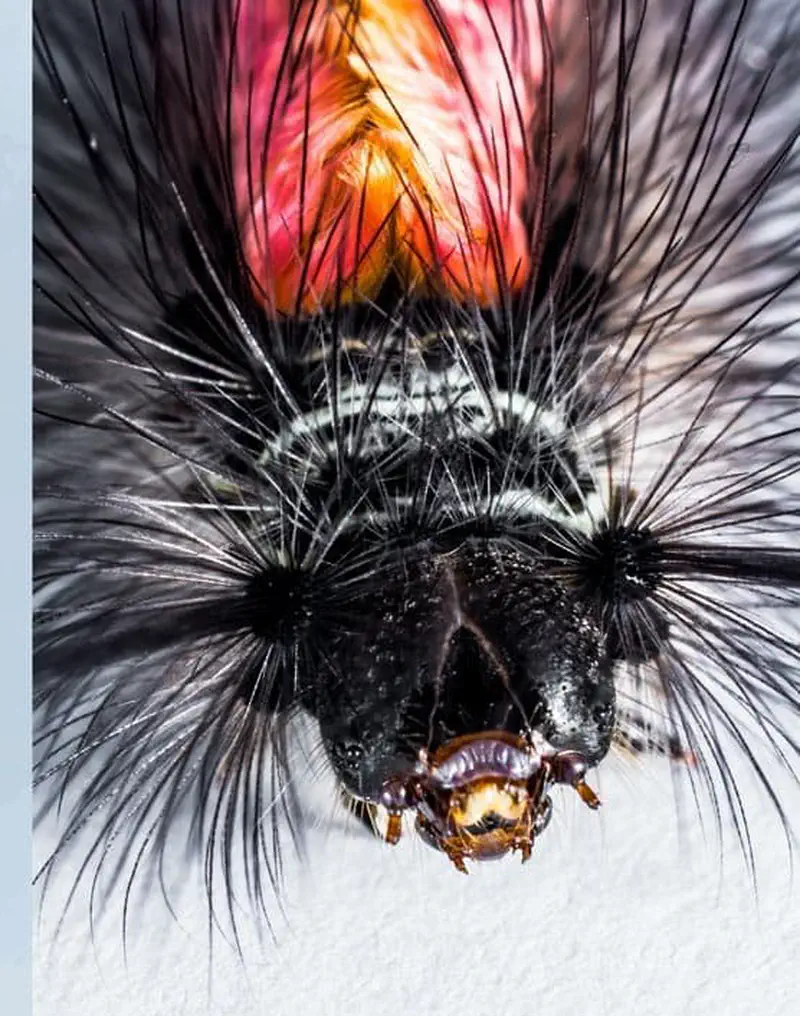
This caterpillar has come inside. Now you know of the different ways that caterpillars can defend themselves, you know it is not a good move to touch them. It is ok to look and take a picture. Then you can grab a cup and help it back into the garden.