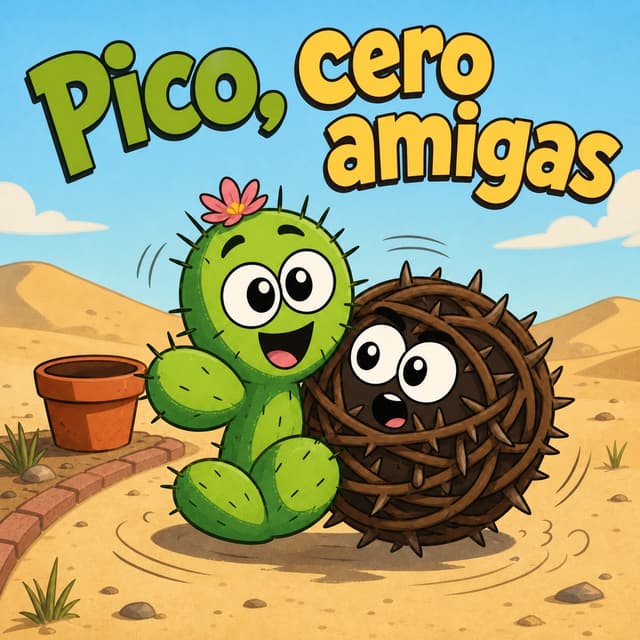
Pinchín, cero amigos Nivel 43

3.9 Los niños califican los libros en la app Bookbot
Pinchín, cero amigos | Libro ATAL de vida cotidiana nivel 43

Palabras de Práctica

/s/ — C c (ce, ci): c suave antes de e, i; equivale a /s/ en regiones de seseo.

cerca cero cielo
Página 1
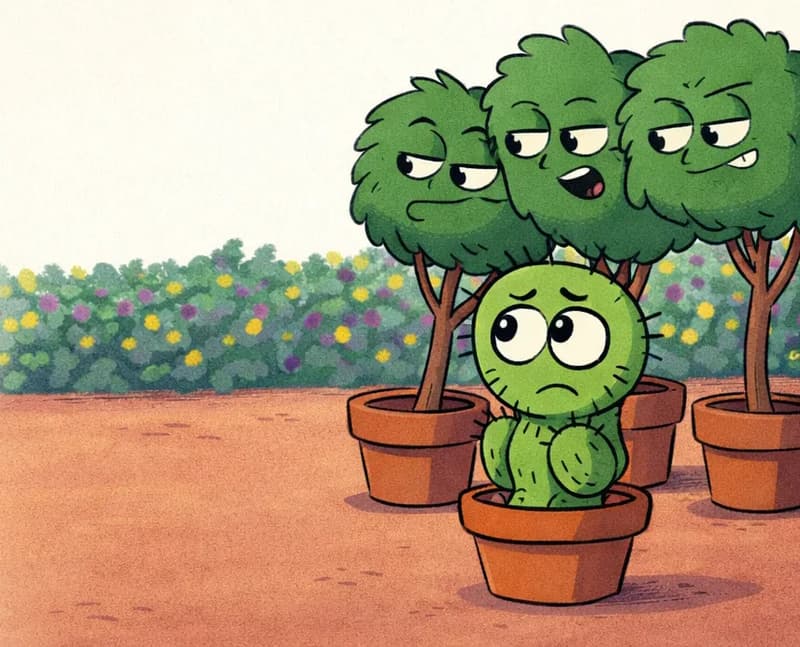
On the right side of the image, Spike stands in his terracotta pot looking sad and hopeful, facing a group of three potted trees who are clustered together with smug, dismissive expressions. The scene is set outdoors on reddish-brown ground with a colorful flowering hedge running across the background under a white sky. Spike's posture is slightly hunched and uncertain, while the trees lean together as a clique, clearly rejecting him.

Pinchín es un cactus. Busca un amigo. Ve unos árboles cerca. —¿Quién quiere un abrazo? —dice. Los árboles se ríen.
Página 2
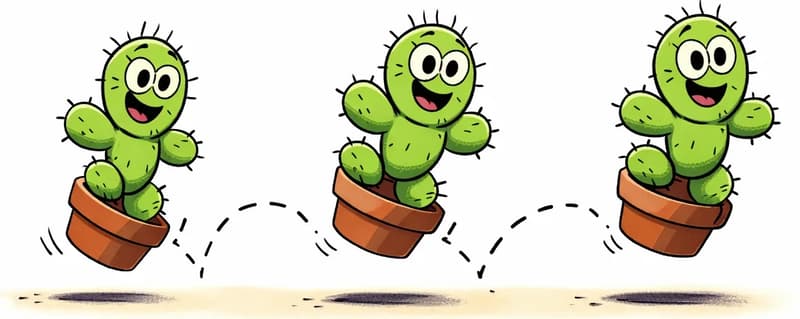
In the lower half of the image, Spike is shown in three sequential poses hopping cheerfully from left to right in his small terracotta pot, conveying movement across the scene. In each pose Spike has a happy, optimistic smile — unbothered and determined to keep going. Dashed bouncing lines between each position emphasize the hopping motion. The top half is plain white background, and the overall setting is a simple, minimal outdoor ground plane with soft shadows beneath the pot.

¿Llora Pinchín? No. Cero llanto. Salta contento por el jardín y canta su canción: alguien lo va a querer.
Página 3
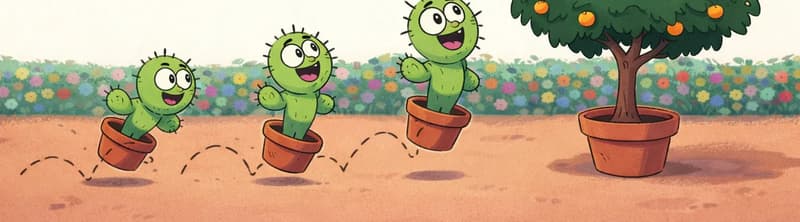
On the right side of the image, Spike is shown in a sequence of poses hopping across the scene in his terracotta pot, with dashed lines indicating his bouncing path. In the center-right, Spike stands in his pot looking up hopefully with a friendly smile at a grumpy orange tree, which has narrowed, annoyed-looking eyes peering out from its foliage. The outdoor scene features a warm peachy-orange ground with a colorful flower hedge running along the background.

Cerca hay un naranjo solito. Pinchín se acerca. —¿Quieres charlar? —dice. —No —responde el naranjo—. Vete.
Página 4
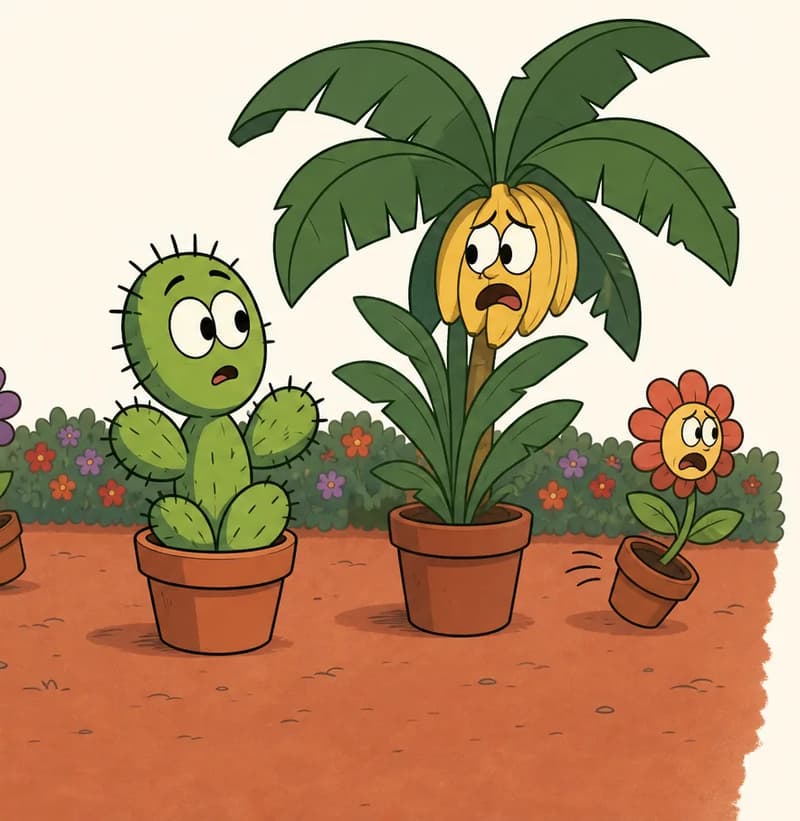
On the left side of the image, Spike stands in his terracotta pot on reddish-brown ground, facing a banana tree (also in a pot) that has a worried, fearful yellow face peeking out from its leaves. Spike has a slightly confused or uncertain expression, appearing to approach the banana tree. The scene is set outdoors in a garden with a colorful flower hedge running along the background under a plain white sky. Two additional small potted plant characters are visible — a flower to the right of the banana tree turning away, and another flower on the far left also moving away, both with small fearful facial features, fleeing the scene.

Después ve un banano cerca. El banano le mira las espinas y chilla: —¡Púas! ¡Púas! ¡Púas! —Bueno, sí —dice Pinchín—. Tengo unas púas.
Página 5
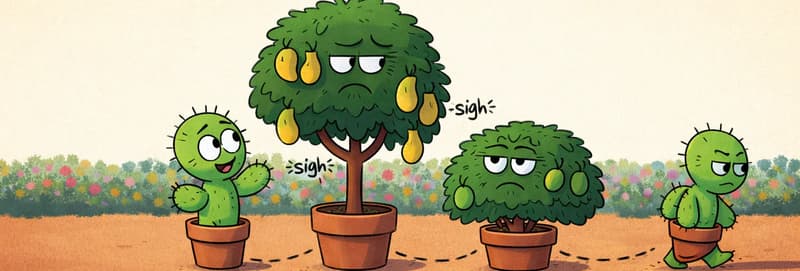
On the right side of the image, Spike is shown multiple times in a sequence — standing in his terracotta pot beside a tall mango tree and a smaller guava bush, both in pots with annoyed, sighing facial expressions. Spike appears with a hopeful but slightly sad expression as he approaches each tree. The scene is set outdoors in a sunny garden yard with a row of colorful flowering bushes in the background and warm reddish-brown ground. A dashed trail on the ground shows Spike's path moving from tree to tree, with one instance of Spike walking away toward the far right looking dejected.

El mango y la guayaba no lo aceptan. —No nos toques. Pinchín se aleja y su canción se queda en silencio.
Página 6
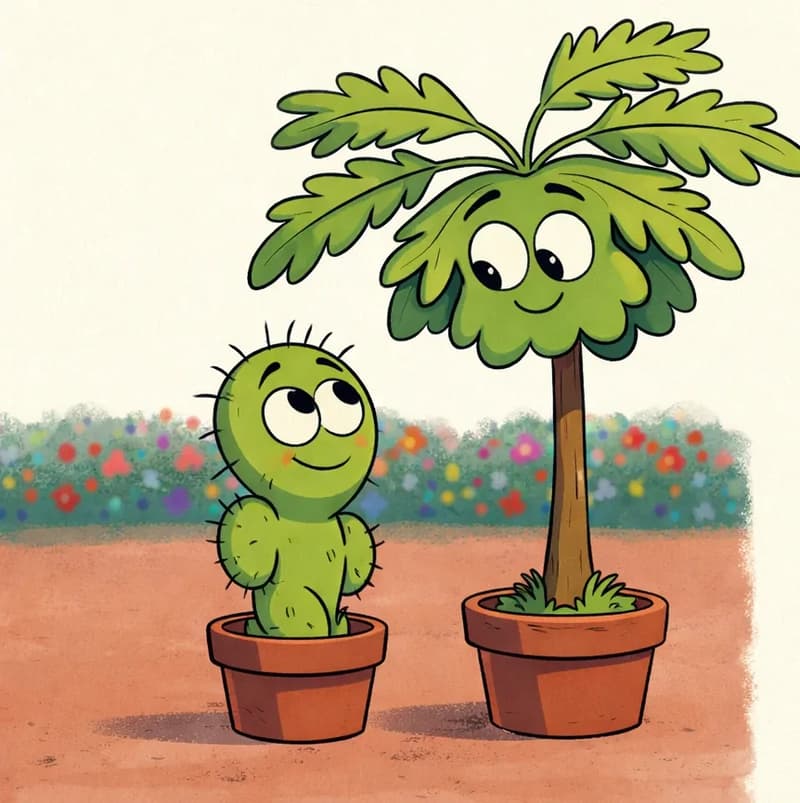
On the left side of the image, Spike stands in his terracotta pot looking up at Pawpaw tree with a hopeful, slightly shy expression. Pawpaw tree, also in a terracotta pot, towers over Spike and looks down at him with a calm, knowing expression. Pawpaw tree has a straight slender brown trunk, a round green leafy canopy forming its head with large round white eyes, small dark eyebrows, and a subtle smile, with several large lobed green fronds extending outward from the top like hair. They are outdoors in a garden setting with a colorful flower bed visible behind them, and the right side of the image is plain white background.

Pinchín ve un papayo enorme. ¡Casi toca el cielo! Se acerca despacio. —¿Buscas un amigo? —dice el papayo—. Yo no tengo miedo de tus espinas.
Página 7
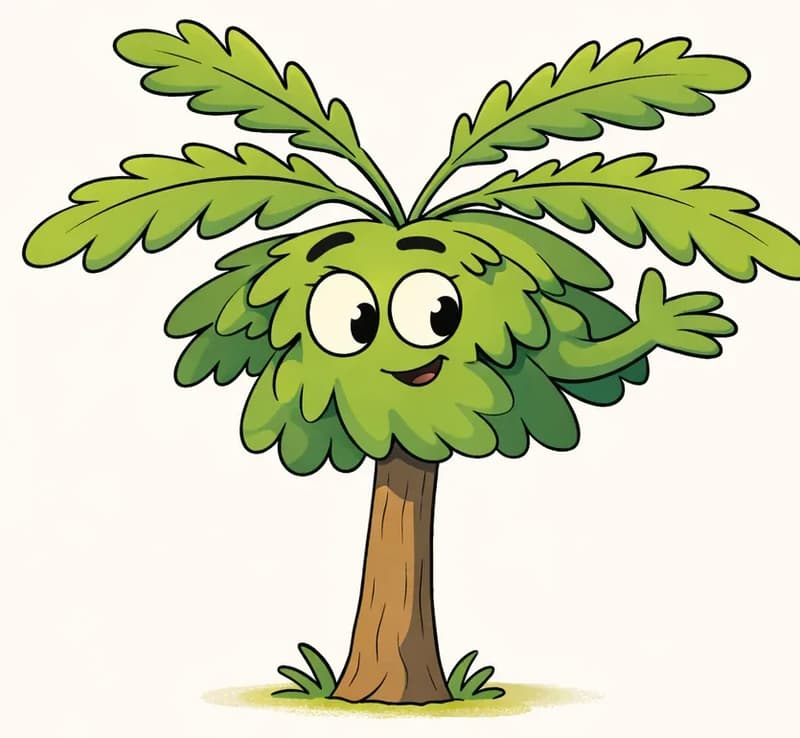
Pawpaw tree stands on the right side of the image with a warm, welcoming smile and gentle eyes, looking slightly downward as if inviting someone closer. The tree's large leafy fronds spread outward like open arms against a plain white background. The scene is set outdoors in bright daylight with a calm, welcoming atmosphere.

El papayo abre sus hojas enormes. —Ven, siéntate cerca de mí, Pinchín. —¿De verdad? —dice Pinchín, feliz.
Página 8
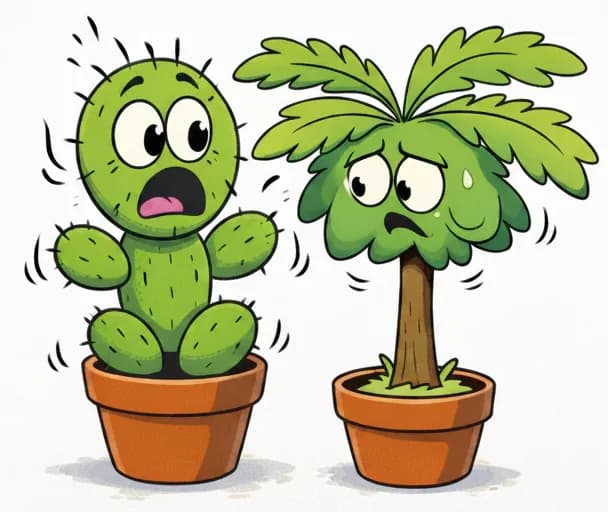
On the left side of the image, Spike stands in his terracotta pot next to Pawpaw tree (also in a pot), both with surprised, wide-eyed expressions. Spike is shaking, mouth open in shock with his small arms raised, and Pawpaw tree looks upset and is trembling, with a worried frown, drooping green fronds, and a single sweat drop on her leafy crown. Motion lines surround both characters, suggesting an agitated reaction. The right side of the image is plain white background.

Charlan felices y cuentan chistes. Pero Pinchín se inclina y ¡pum! Una espina pincha una hoja. —¡Ay! —chilla el papayo—. ¡Esa es mi hoja!
Página 9
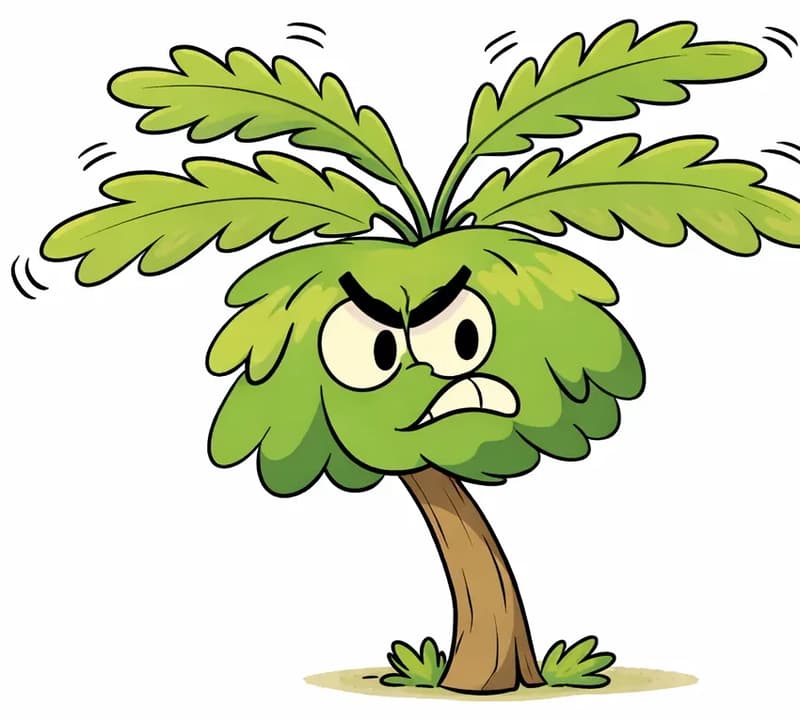
On the right side of the image, Pawpaw tree stands with an angry, furrowed expression, frowning and looking upset, leaning away as if pulling back from someone. Its large leaf fronds are trembling with agitation, indicated by small motion lines above them. The left side of the image is plain white background, leaving ample space for text overlay.

El papayo tiembla de enojo. —¡Fuera, Pinchín! ¡Cero abrazos para ti! Pinchín se aleja muy callado.
Página 10
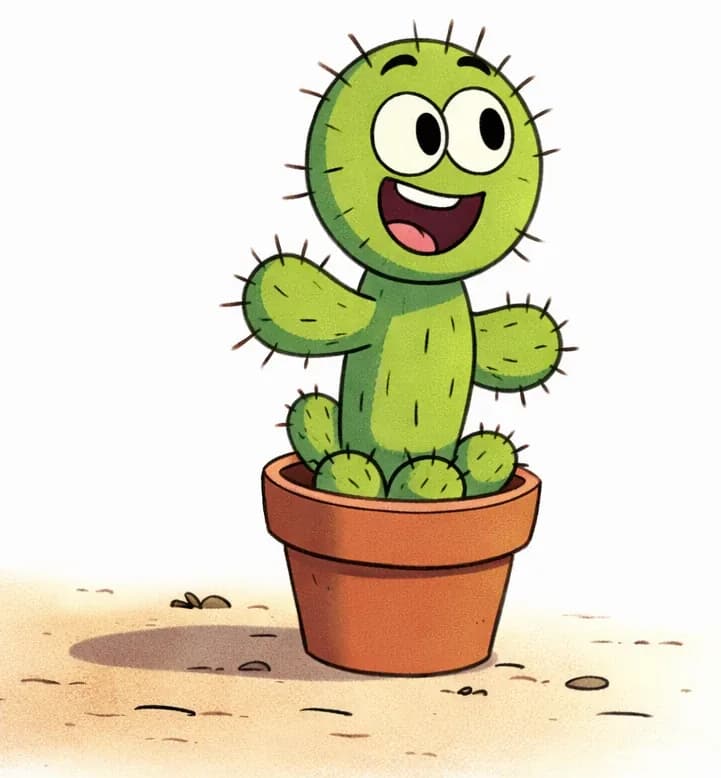
On the left side of the image, Spike stands in his terracotta pot in an empty garden, looking outward with a bright, determined smile — as if he has just decided to find somewhere new. The garden around him is bare and quiet, emphasizing that he is alone with no other spikey plants in sight. The background is plain white, suggesting open space and possibility ahead.

Pinchín se sienta solo. Cero amigos. Se mira las espinas. —¿Y si busco un amigo espinoso como yo? Decide salir del jardín.
Página 11
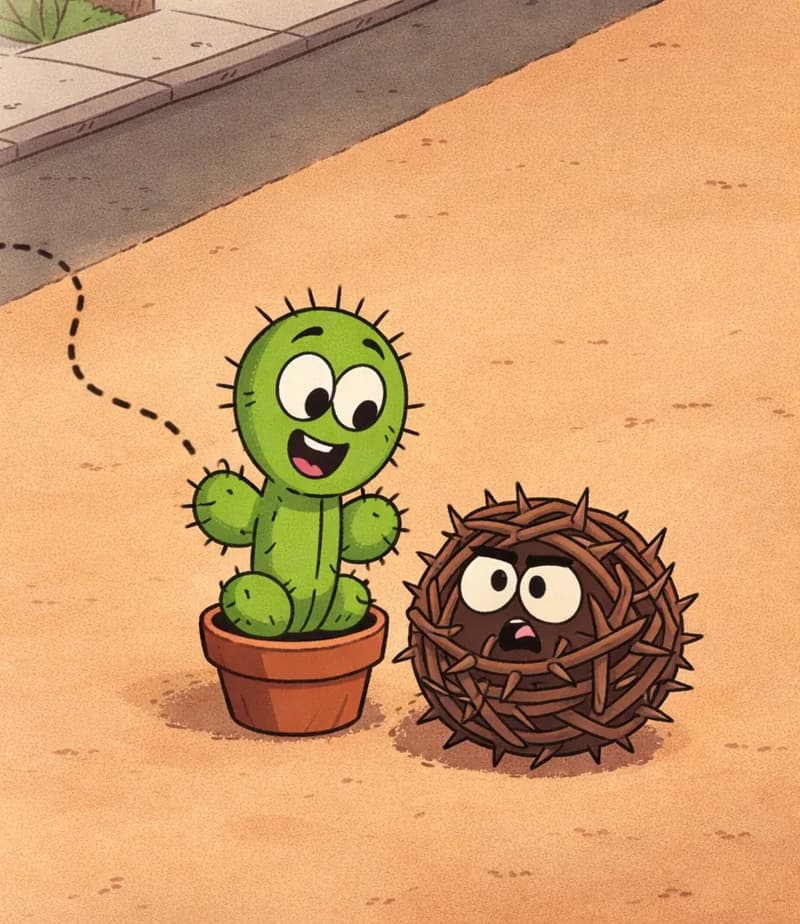
On the right side of the image, Spike stands in his terracotta pot on sandy, dry terrain just beyond a road, looking curiously at Thorn bush with a happy, excited expression. A dashed line traces Spike's path from the road across to his current position. Thorn bush sits beside Spike as a round, ball-shaped tangle of dark brown thorny vines with small spikes protruding in all directions, with two large white mismatched eyes and a small open dark mouth, looking back at Spike. The scene is set outdoors in a sandy, arid landscape with a paved road and sidewalk visible in the upper-left corner, along with a hint of greenery near the roadside.

En la arena, cerca del camino, hay un arbusto con púas: es César. —¡Qué espinoso eres! —dice Pinchín—. ¿Quieres un abrazo? —¡Sí! —responde César.
Página 12
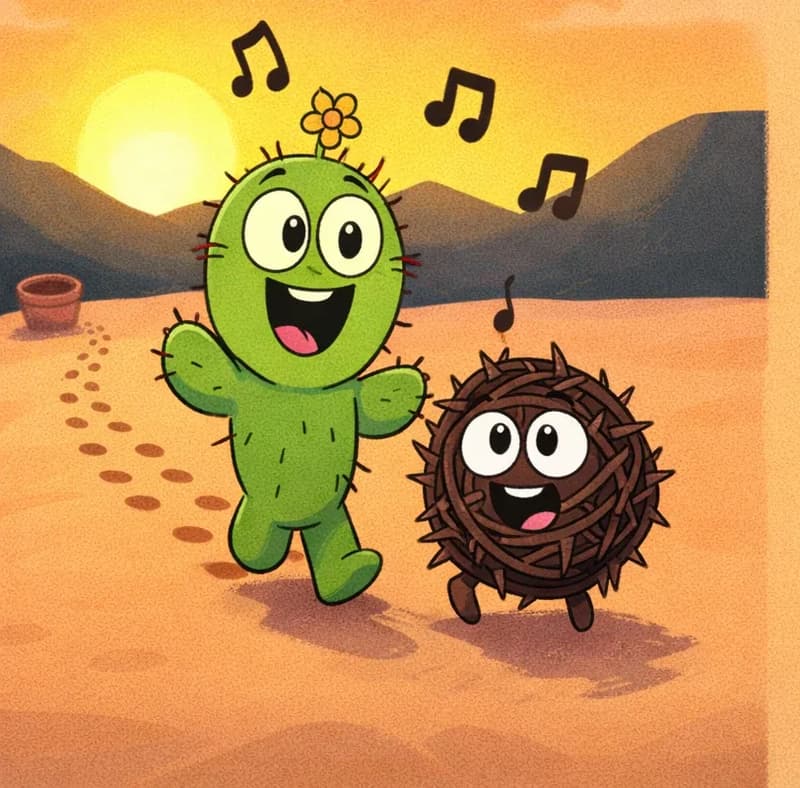
On the left side of the image, Spike and Thorn bush walk together across sandy dunes at sunset, both with wide joyful smiles as if singing together. Spike stands upright in the center-left without his pot, smiling broadly, with a small flower blooming from the top of his head and a dotted trail of footprints behind him leading back to a clay pot left by the road in the far background. Thorn bush — a round, dark brown ball of thorny vines with mismatched white eyes and a small open mouth — bounces along beside Spike on the right. Dark mountains and a glowing sun sit on the horizon. The right side of the image is plain sandy background with warm golden sky.

Se abrazan y nadie dice ay. Los dos parten por las dunas, cantando bajo el cielo. A Pinchín le crece una flor. Pinchín ni la ve: está feliz con su amigo César.

Página 1 de 12

Descarga Bookbot ahora para
COMENZAR