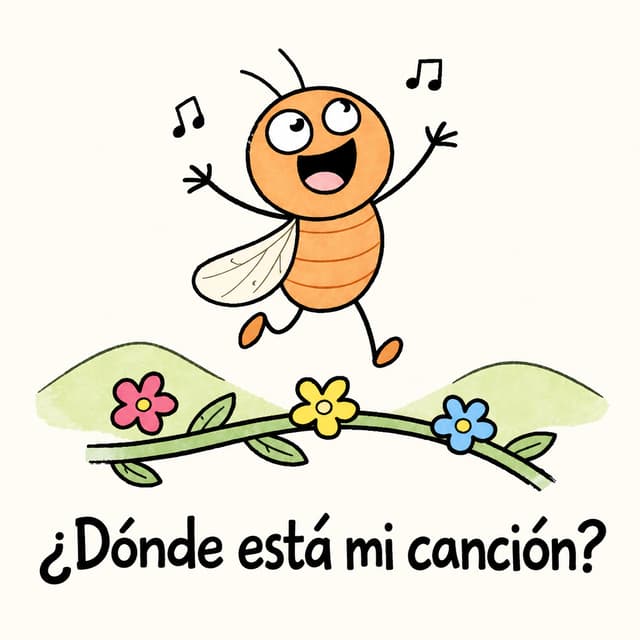
¿Dónde está mi canción? Nivel 64

3.8 Los niños califican los libros en la app Bookbot
¿Dónde está mi canción? | Libro ATAL de animales nivel 64

Palabras de Práctica

Repaso de acentuación: clasificación de palabras en agudas, graves y esdrújulas.

canción pájaro árbol así música también después fácil quizás
Página 1
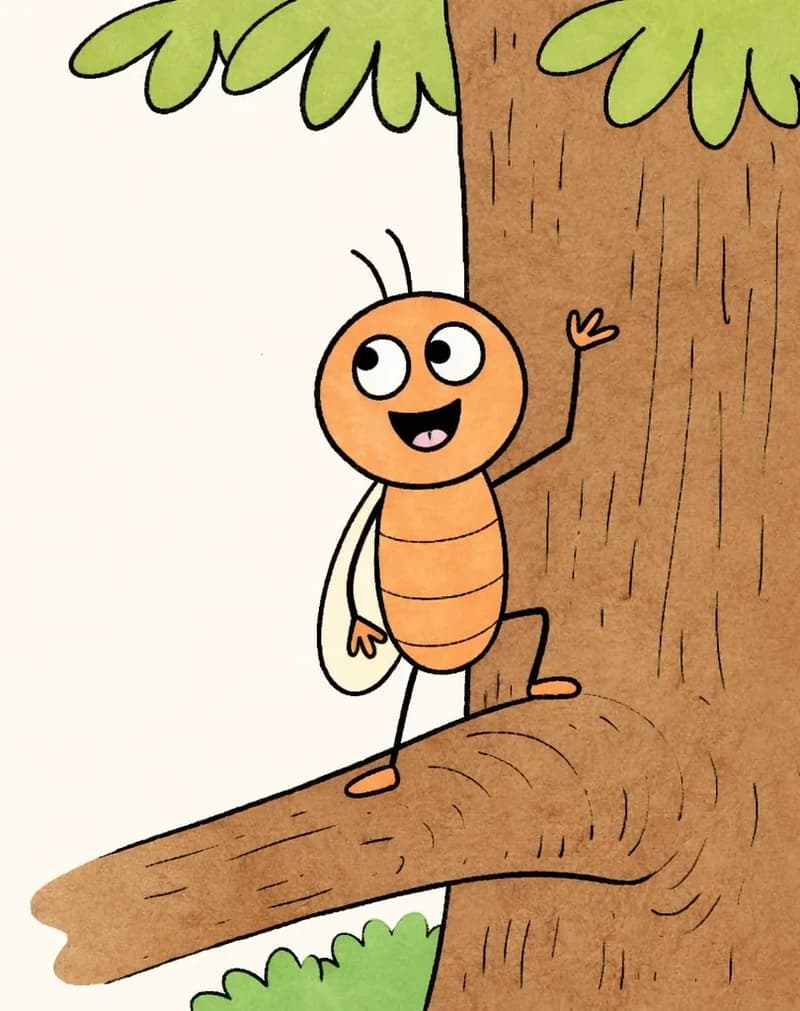
Bug stands on the right side of the image on a large tree branch, gripping the branch with her legs and grinning widely, looking excited and determined. The outdoor springtime scene features a large tree trunk filling much of the background, with green leaves overhead and lush green bushes and foliage visible in the bright, sunny background behind Bug.

Llega la primavera. Bichín está en la rama de un árbol y siente algo en la barriga. ¡Algo le burbujea por dentro! —¡Quiero cantar! —grita, con una sonrisa enorme. Pero hay un problema. Bichín nunca canta ni una sola nota. Ni una.
Página 2
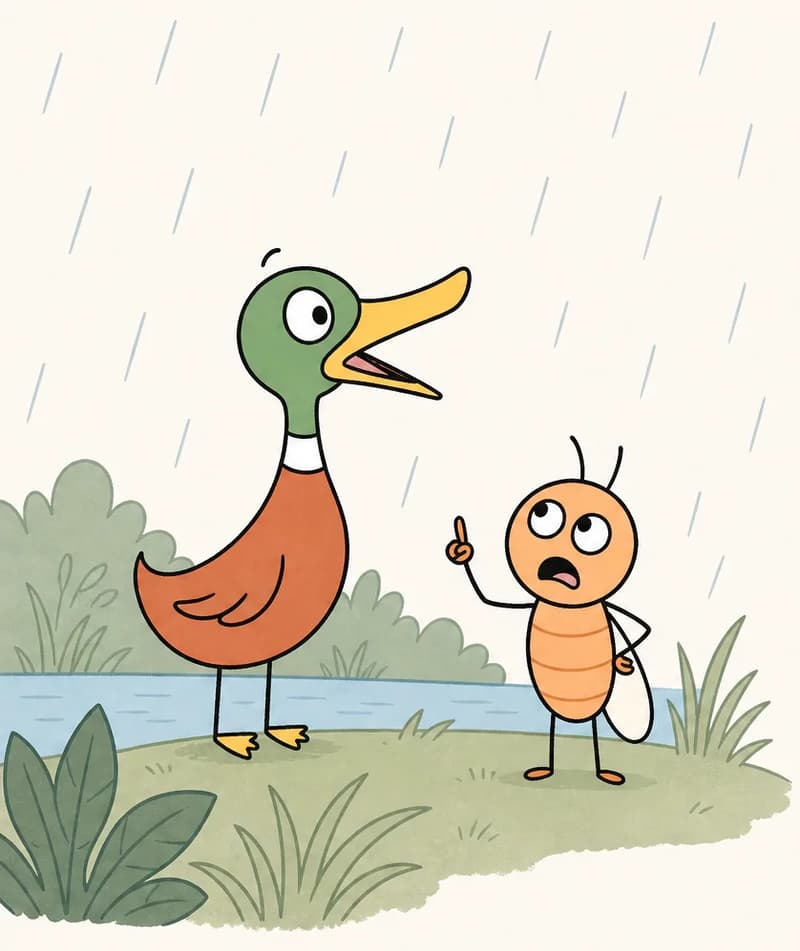
Duck stands on the left side of the image, beak open wide and head tilted upward, singing joyfully in the rain. Duck appears happy and carefree, standing upright on a grassy bank beside a pond or lake. Bug stands on the bank to Duck's right, frowning with her mouth open and one arm raised in a correcting gesture, clearly telling Duck the song is wrong. Rain falls steadily across the scene, with lush green bushes and foliage in the background and tropical-looking plants in the foreground.

Bichín encuentra a Pato junto al estanque. Pato canta bajo la lluvia, con el pico hacia el cielo. —¡Cuac, la la la, cuac! —¡Enséñame! —dice Bichín. —No se puede cantar sin lluvia —dice Pato. Bichín se mira las alitas mojadas. —¡Yo quiero una canción sin agua!
Página 3
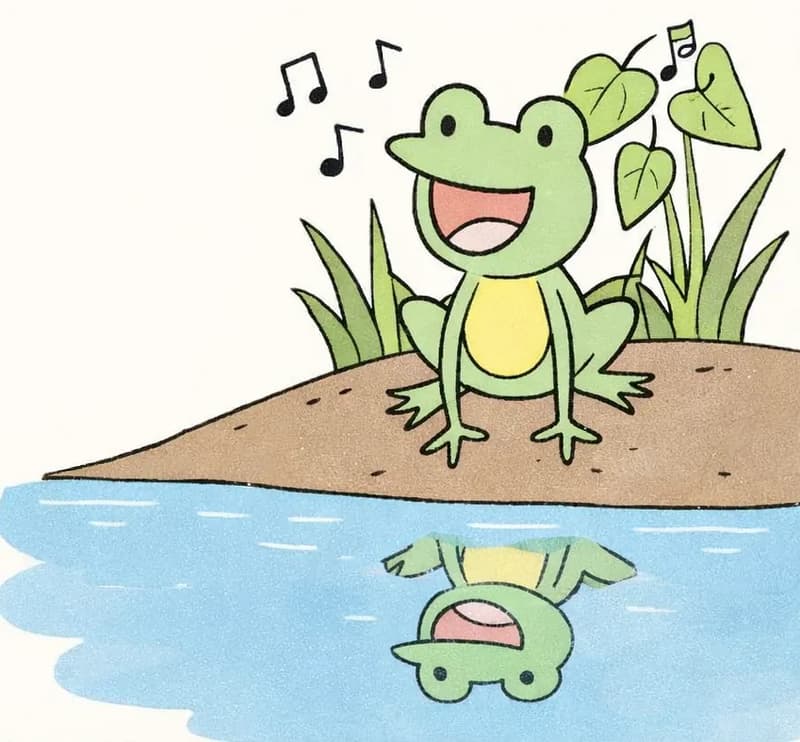
Frog is sitting on the right side of the image on a muddy bank at the edge of a pond, mouth wide open and singing happily with black musical notes floating in the air beside him. He has a cheerful, joyful expression as he performs his song, with green grass blades and broad heart-shaped leaves growing behind him on the bank. The pond water sits in the lower right portion of the scene, showing Frog's upside-down reflection on its surface. The entire left side of the image is open white space above the curving shoreline, leaving clear space for text.

Sapo canta a la orilla del estanque. Su canción sigue y sigue y sigue. —¿Me enseñas una más corta? —pregunta Bichín. —¿Corta? ¡Mi canción es muy larga, y así me gusta! —responde Sapo.
Página 4
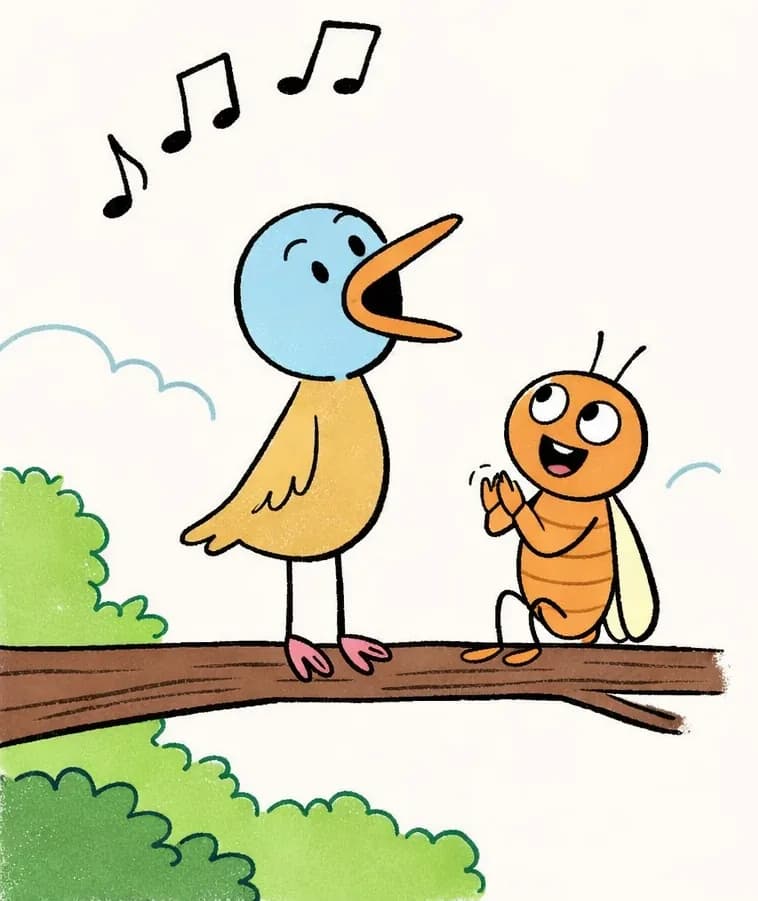
On the left side of the image, Big Bird stands on a tree branch with her orange beak wide open, singing enthusiastically with black musical notes floating above her head; she has a round blue head and a tan-yellow body with pink feet. Bug, a small orange insect with antennae, striped belly, and pale translucent wings, stands upright on the same branch beside Big Bird, clapping her front legs together with a cheerful, smiling expression as she looks up at Big Bird. The scene is set outdoors during the day, with the branch extending in from the lower left, green leafy bushes in the bottom-left corner, a small light-blue cloud outline behind the characters, and the right side of the image left as open, plain pale-cream sky with no other elements.

Pájara Grande canta muy fuerte en el árbol. ¡La rama tiembla! Bichín aplaude y aplaude. —¡Enséñame eso! Bichín abre la boca y lo intenta. Pero su voz apenas suena. —Quizás con algo más pequeño —dice Pájara Grande.
Página 5
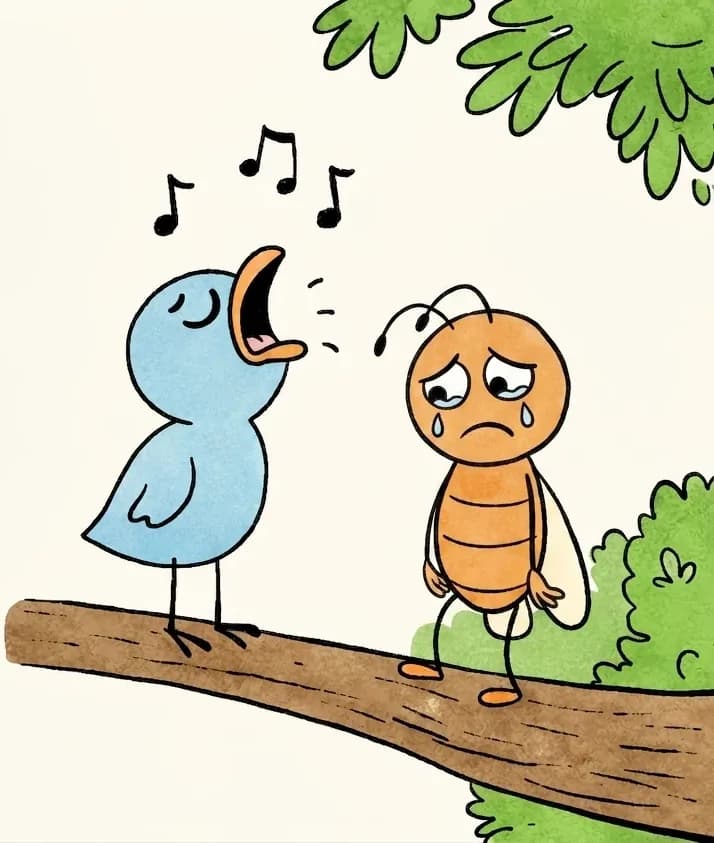
On the right side of the image, Sad Bird, a small blue bird, is perched on a thick tree branch with eyes closed and beak wide open, singing with black music notes floating above her head. Bug, an orange insect with antennae and pale wings, stands next to Sad Bird on the branch, frowning sadly with tears on her cheeks and both arms hanging down at her sides. Green foliage hangs from the upper-right corner, and bushes sit in the background behind the characters. The left side of the image is plain white background.

Pájaro Triste canta bajito y lento en la rama. —Ay... el cielo está gris... todo está mal... Bichín escucha y llora también. —¿Y si cantas algo feliz? —pregunta Bichín. —¿Feliz? No. La tristeza es linda —dice Pájaro Triste.
Página 6
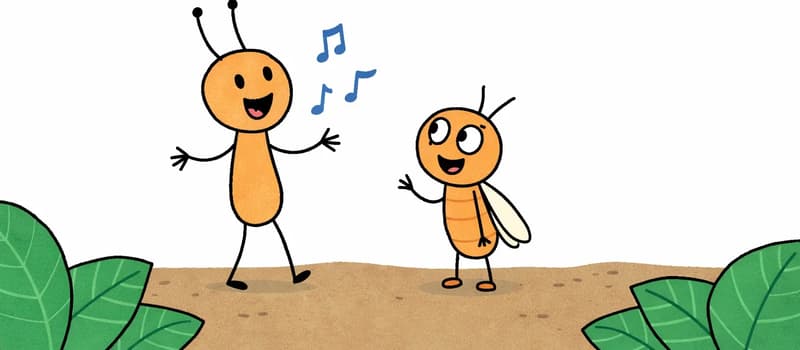
In the lower-left portion of the image, Crick stands with mouth open wide, singing happily with blue music notes floating above, one arm gesturing outward in a cheerful pose. Bug stands beside Crick, looking up at him with a smiling, eager expression and mouth open as if speaking. Both characters are on a patch of earthy ground outdoors, framed by large green leaves in the corners, with the top half of the image left as plain white background.

Después, Bichín oye un sonido brillante. ¡Es Grillín, que salta y canta cri, cri, cri! —¡Esa es la canción que quiero! ¡Es divertida! —grita Bichín. Grillín sonríe. —Es fácil. Solo abre la boca y suelta tu música.
Página 7
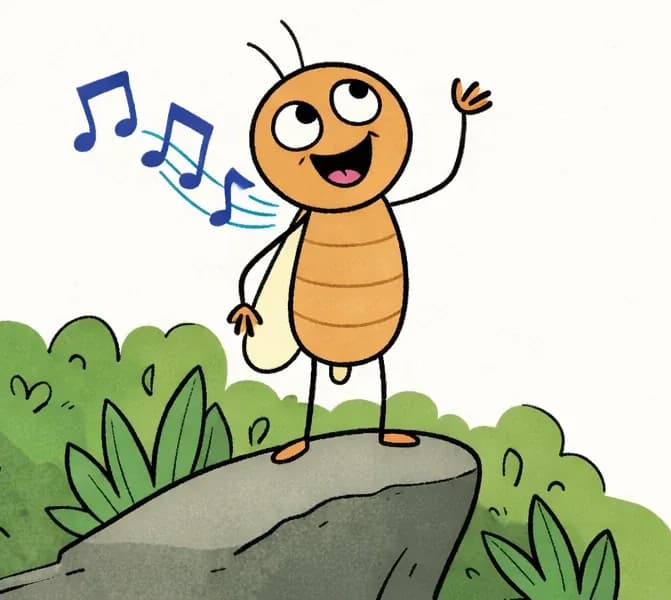
Bug is standing on a rock on the left side of the image, surrounded by green bushes and leaves. Bug has a wide, joyful smile with mouth open, singing happily with one arm raised in the air while musical notes float nearby. The outdoor scene is brightly lit with a plain white background filling the right side of the image.

Bichín se trepa a una roca. Su corazón late rápido. Abre la boca. —¡Cri! Una nota brillante resuena entre los árboles. Bichín lo intenta otra vez. —¡Cri, cri, cri! No es una canción larga ni fuerte. ¡Pero es su canción! —¡Puedo cantar! —grita Bichín.
Página 8
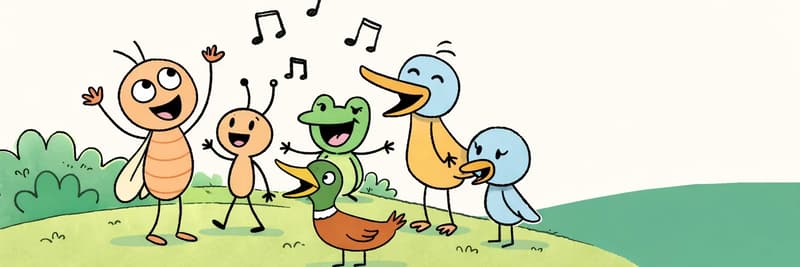
In the lower-left portion of the image, Bug stands at the front with arms raised enthusiastically, appearing to conduct the group as they sing together. Crick stands nearby, also with mouth open, joining in. Frog is behind them with mouth wide open, singing energetically. Duck stands among the group with beak open, singing along. Big Bird towers above the others in the back, looking down with a cheerful, wide-eyed expression and mouth open mid-song. Sad Bird is near the center, beak open and appearing to make an effort to sing, looking slightly uncertain. Musical notes float in the air above the group. The scene is set outdoors on a grassy hillside with bushes and trees in the background, under daylight. The top half of the image is open background with a teal-green color block on the right side.

Bichín tiene una idea: ¡cantar todos juntos! Al inicio es un montón de ruido. Pato grazna, Sapo croa muy fuerte y Pájara Grande tapa a los otros. —¡Alto! —grita Bichín—. ¡Así no! ¡Escuchen a los amigos! Lo intentan de nuevo. Pato canta bajito. Pájara Grande tararea suave. Poco a poco, la canción empieza a resonar.
Página 9
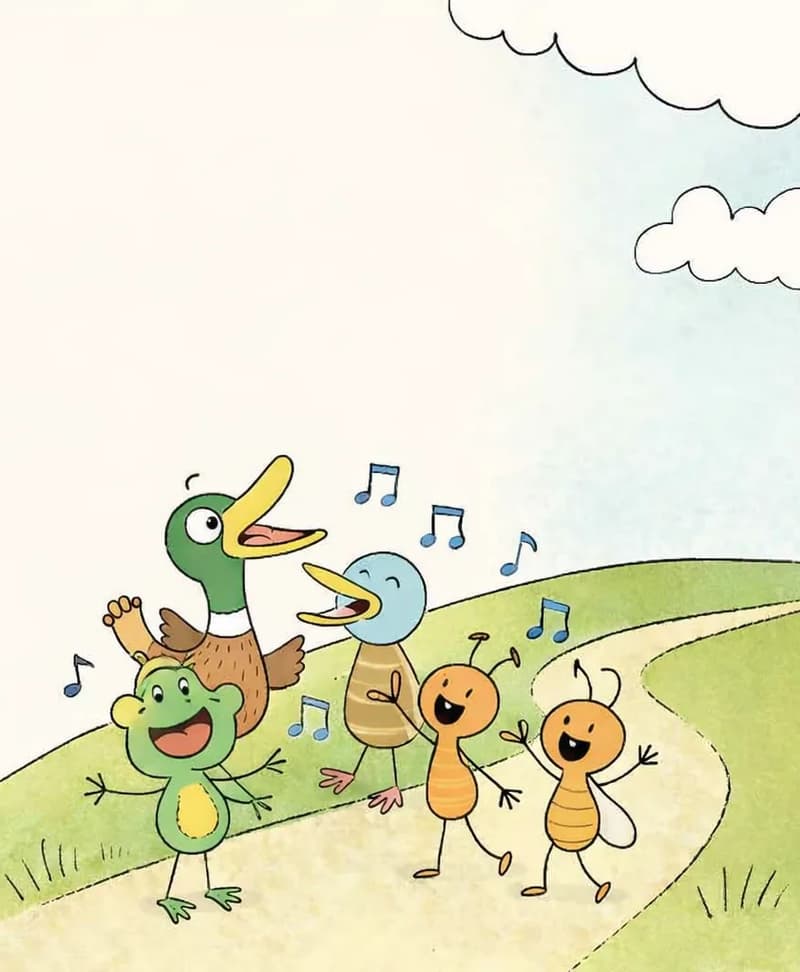
On the right side of the image, five characters are gathered together on a winding dirt path atop rolling green hills, singing joyfully with blue music notes floating around them, while the left side of the image is open empty space in a soft cream tone. Duck stands at the back of the group with one wing raised, beak wide open singing happily toward the sky. Sad Bird stands just in front of Duck with eyes closed and beak wide open in cheerful song. Frog is in the foreground, standing upright with arms outstretched and mouth wide open in a big grin, singing enthusiastically. Crick stands to the right of the group, arms raised and mouth open in a happy smile, singing along. Bug, with small translucent wings, stands beside Crick with arms raised and one leg kicked up, singing happily. The scene is set outdoors on a bright, sunny day with soft white clouds in a pale blue sky in the upper right and tufts of grass along the hillside path.

Todos cantan juntos en la cima de la colina. Sapo la hace corta. Pájaro Triste sonríe. Pato canta sin una gota de lluvia. Y en medio de todo, el cri de Bichín une al grupo. —¡Qué linda música! —dice Bichín. Y la cantan toda otra vez.
Página 10
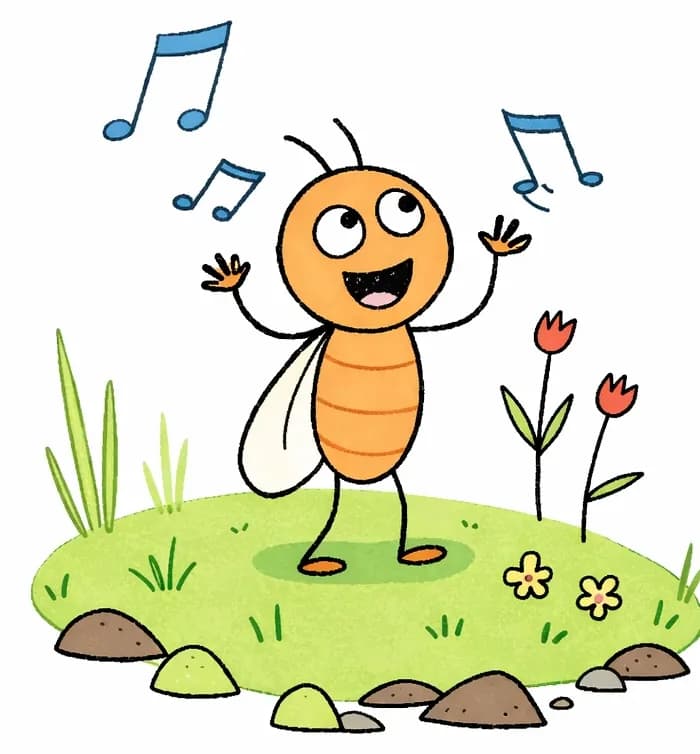
Bug stands on the left side of the image on a small grassy mound, dancing joyfully with both arms raised and mouth open wide in song. Blue music notes float in the air around her. She has a happy, exuberant expression. The outdoor scene features small wildflowers, tufts of grass, and scattered rocks around the mound, with the right side of the image left as plain white background.

Esa noche, y todas las noches, Bichín canta su canción. Se la canta a las flores, a las rocas y también a un gusano. No es la canción más larga. No es la más fuerte. Pero si pasas por su colina en primavera y escuchas con atención... la vas a oír. ¡Y vas a cantar con ella!

Página 1 de 10

Descarga Bookbot ahora para
COMENZAR