


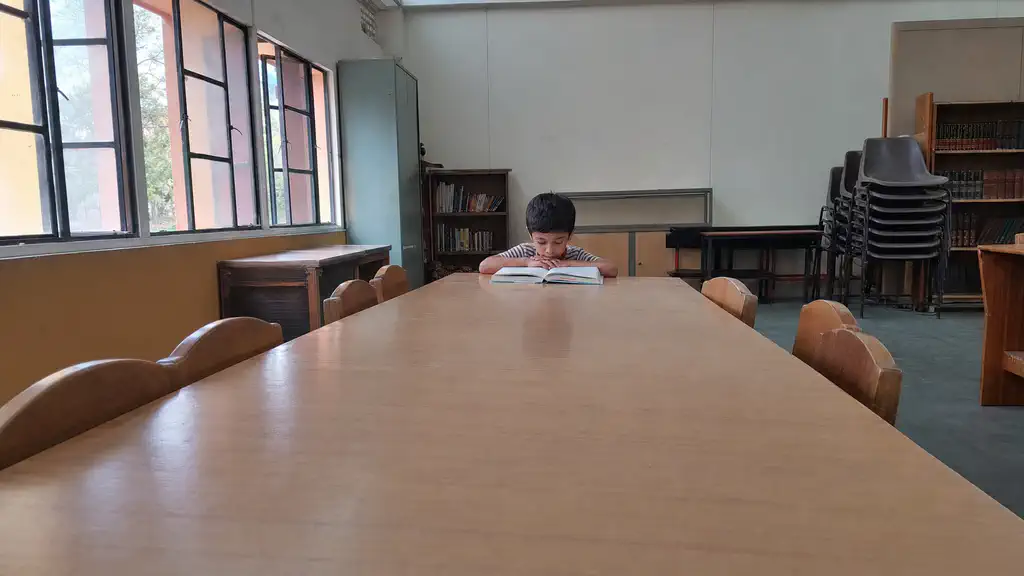

There is a moment parents describe to me again and again. The reading folder comes out of the school bag, and suddenly their seven-year-old needs the toilet. Then a drink of water. Then a stomach ache that was not there four minutes ago.
Most parents read that as avoidance, and they are right. What is easier to miss is what sits underneath it.
Reading anxiety is the specific fear of reading, and it is not the same thing as general worry or test nerves. For decades it sat at the edge of reading research, studied rarely. That has changed quickly, and a meta-analysis published this year gives us the clearest picture we have ever had of how tightly fear and reading skill are bound together.
What 64 Studies Found
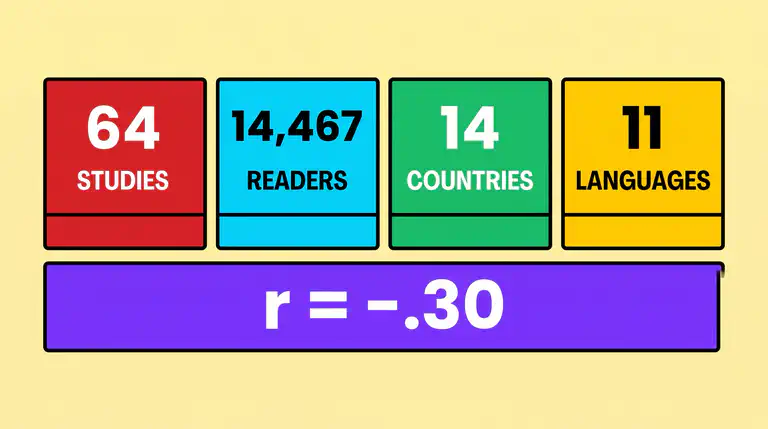
Johnson and colleagues (2026) published a meta-analysis in Psychological Bulletin, which means a study that statistically combines the results of many earlier studies to find the most reliable overall answer. They pooled 64 studies, 180 separate results, and 14,467 participants from 14 countries and 11 languages.
Across all of it, reading anxiety and reading achievement correlated at r = -.30 (meaning that as reading anxiety goes up, reading skill reliably goes down, and the link is moderate rather than absolute).
I want to be honest about what that number is and is not. It does not prove that anxiety causes reading struggles. It tells us the two travel together, consistently, across nearly fifteen thousand readers.
What I find more striking is what did not change the result. The team tested four things that should have mattered: the reader’s age, their gender, whether they had a learning disability, and which reading skill was measured. Not one shifted the strength of the link.
Age made no difference across a range from 6 to 28 years old, running from -.27 in early elementary to -.32 in middle school. Boys (-.23) and girls (-.25) were statistically indistinguishable. Samples where every participant had a learning disability (-.22) were not significantly different from samples with almost none (-.29). It held across every reading skill too: comprehension (-.31), accuracy (-.28), and fluency (-.25).
Reading anxiety, in other words, is not only a struggling-reader problem or a young-child problem. It rides along with reading skill nearly everywhere researchers have looked.
What This Means for Your Child
The obvious question is which comes first. When I review the research, the honest answer is that we have only two longitudinal studies, meaning studies that follow the same children over time, and they do not fully agree.
Ramirez and colleagues (2019) followed 607 children through first and second grade. The relationship ran in both directions, but not equally. Anxiety at the start of the year predicted achievement at the end of it about a third as strongly as achievement at the start predicted anxiety at the end. The bigger arrow points from reading struggles toward fear, not the other way around. Cui and colleagues (2026), following 790 Finnish children from second into third grade, found only that direction.
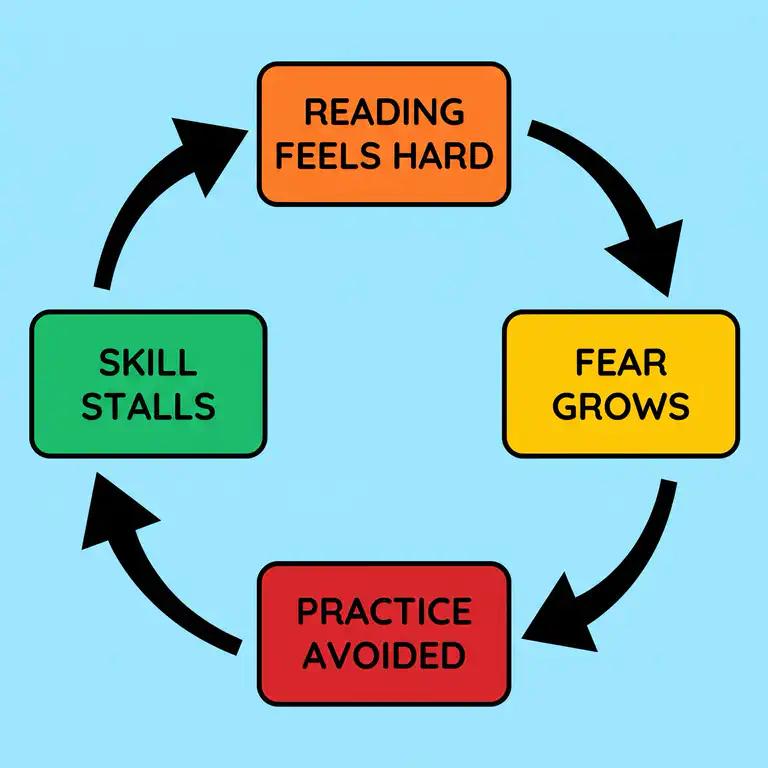
So the most defensible reading of the evidence is this. For most children, difficulty comes first. Fear follows. Then fear adds a second problem on top of the original one.
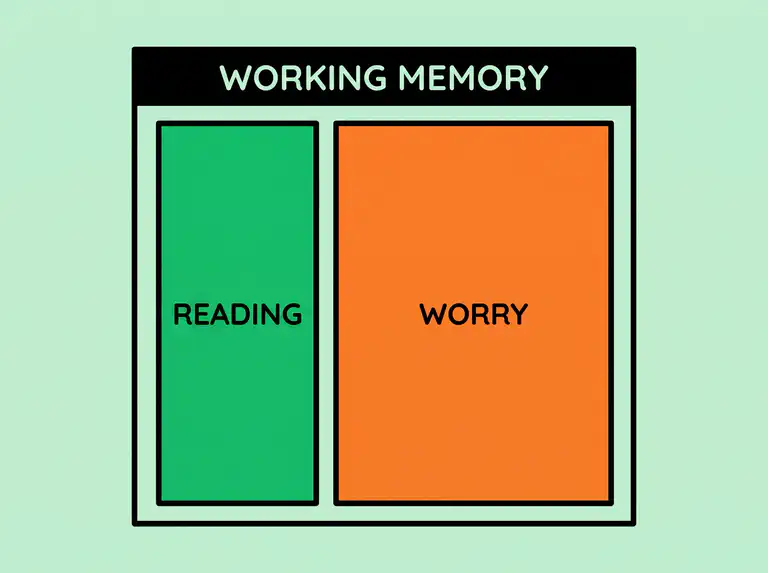
That second problem has a mechanism worth understanding. Reading is cognitively expensive, and anxious thoughts are expensive too. When a child worries about being wrong, that worry consumes the same working memory (the small amount of information anyone can hold in mind at once) that decoding and comprehension need. The child is trying to read with part of their mind already occupied.
This is part of why supporting struggling readers has to address more than phonics. At Bookbot and Flinders University, I analyse reading data from thousands of children, and the pattern that keeps showing up is that the children who most need practice are the ones avoiding it.
Francis and colleagues (2019) reviewed 34 studies and 16,275 participants and found poor readers had meaningfully higher anxiety than typical readers (d = 0.41, a moderate difference), and that anxiety was a bigger concern for this group than depression (d = 0.23).
How to Help a Child With Reading Anxiety
None of this is cause for alarm. It is a reason to change how reading practice feels at home.
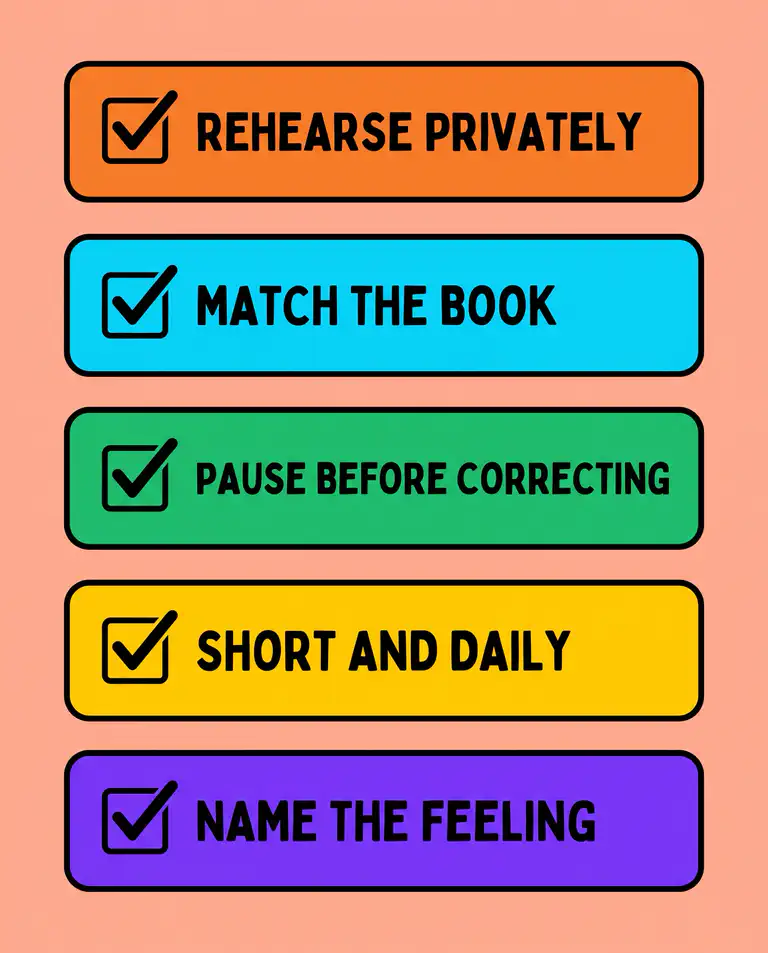
- Separate practice from performance. The fear of reading out loud is the most common form this takes, because reading aloud makes every error public. Let your child rehearse a passage privately before they read it to anyone.
- Match the book to the child, not the year level. Choose books they can read with roughly 95% accuracy. Reluctant readers are often reluctant because every book they have been handed is slightly too hard.
- Wait before you correct. Give three to five seconds of silence when your child stalls. Immediate correction teaches them that a stumble brings an interruption.
- Keep it short and daily. Ten focused minutes every day beats an hour on Sunday, and short sessions are easier to agree to when a child is dreading them.
- Name the feeling out loud. Vaughn and colleagues (2022) ran a randomised trial with 128 third and fourth graders who had reading difficulties. Those who got reading instruction plus anxiety management outperformed the comparison group on reading comprehension with an effect size of 1.22, a large difference.
- Watch for the physical signs. A genuine reading phobia often shows up in the body first, as stomach aches, headaches, or fatigue that appear only around reading time.
- Do not wait for it to pass. Because fear and skill reinforce each other, waiting usually means both get harder to shift.
Vaughn’s team also found the children with the highest anxiety benefited least, which argues for addressing fear early rather than after years of accumulated reading struggles.
Where This Leaves Us
Research on reading anxiety barely existed for thirty years. Johnson and colleagues found only two studies between 1992 and 2014, then 41 in the last five years. We are early in understanding this, and the researchers are clear that experimental work is still needed before anyone can claim cause.
But the correlation itself is solid. A conservative adjustment for missing studies still produced -.21, and removing any single study never moved the result outside -.28 to -.31.
What that means practically is that helping struggling readers is not only a decoding problem. A child who has learned to expect failure brings that expectation to every page.
This is one reason Bookbot has children read aloud to software that listens and responds immediately, with no classroom audience and no one waiting for them to slip. The levelled, phonics-aligned books adjust to what a child can actually do, so practice stays where success is normal. That is what my research at Bookbot and Flinders focuses on: giving children enough successful repetitions that reading stops feeling like a test.
If your child goes quiet when the reading folder comes out, they are not being difficult. They are telling you something. The good news is that what reduces the fear also builds the skill: unhurried, unjudged practice at a level they can handle.
References
Cui, S., Khanolainen, D., Koponen, T., Salminen, J., & Torppa, M. (2026). Reading anxiety’s longitudinal associations with reading skills and reading interest from second to third grade. Cognition and Emotion. https://doi.org/10.1080/02699931.2026.2700441
Francis, D. A., Caruana, N., Hudson, J. L., & McArthur, G. M. (2019). The association between poor reading and internalising problems: A systematic review and meta-analysis. Clinical Psychology Review, 67, 45–60. https://doi.org/10.1016/j.cpr.2018.09.002
Johnson, R. M., Schaefer, M., Norris, C. U., Wagner, R. K., & Hart, S. A. (2026). The association between reading anxiety and reading achievement: A meta-analysis and systematic review. Psychological Bulletin, 152(3), 288–325. https://doi.org/10.1037/bul0000517
Ramirez, G., Fries, L., Gunderson, E., Schaeffer, M. W., Maloney, E. A., Beilock, S. L., & Levine, S. C. (2019). Reading anxiety: An early affective impediment to children’s success in reading. Journal of Cognition and Development, 20(1), 15–34. https://doi.org/10.1080/15248372.2018.1526175
Vaughn, S., Grills, A. E., Capin, P., Roberts, G., Fall, A.-M., & Daniel, J. (2022). Examining the effects of integrating anxiety management instruction within a reading intervention for upper elementary students with reading difficulties. Journal of Learning Disabilities, 55(5), 408–426. https://doi.org/10.1177/00222194211053225